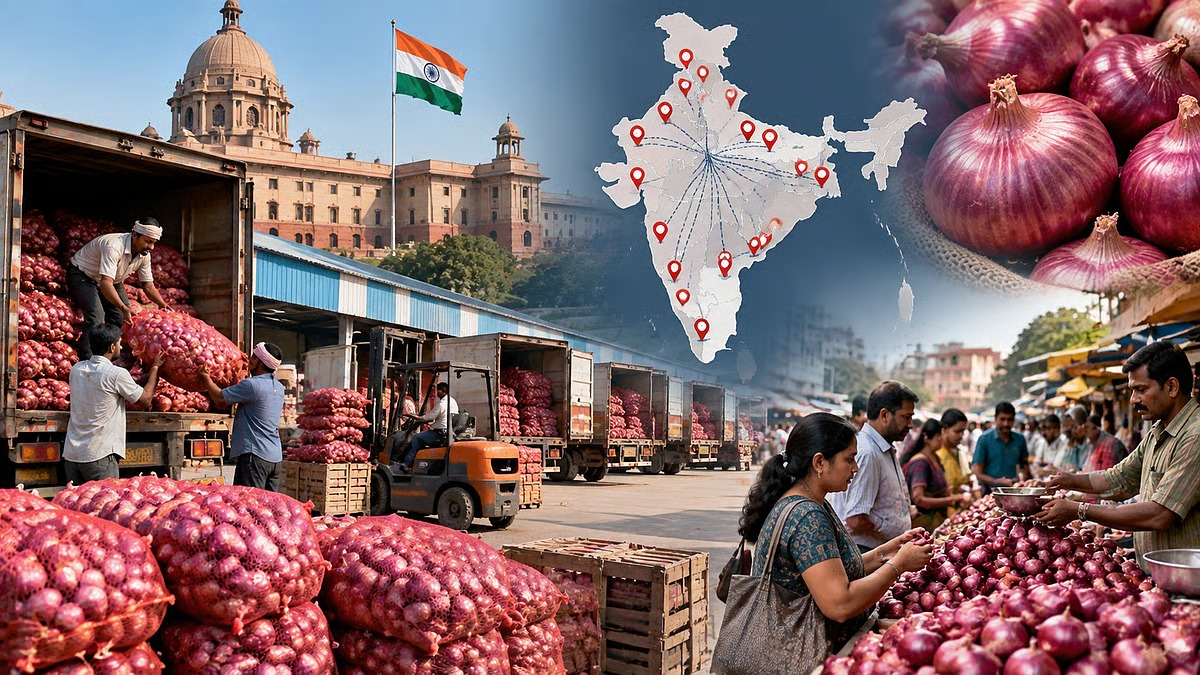
The central government has distributed 4,000 tonnes of subsidised buffer onions at ₹35 per kg across 17 cities in ten days to combat inflation. Utilizing dedicated rail rakes like the Kanda Express, agencies such as NCCF and Nafed aim to cool retail prices ahead of the upcoming kharif harvest arrivals.
The central government has sold approximately 4,000 tonnes of subsidised buffer onions across 17 cities in ten days to curb rising retail prices.
New Delhi — In an aggressive market intervention to stabilize soaring food inflation, the central government has successfully distributed approximately 4,000 tonnes of buffer onions across 17 urban centres within the first ten days of its subsidised retail rollout. Spearheaded by the Department of Consumer Affairs alongside implementing agencies like the National Cooperative Consumers' Federation of India (NCCF) and the National Agricultural Cooperative Marketing Federation of India (NAFED), the initiative aims to protect household budgets from volatile vegetable pricing. Officials noted that the targeted distribution has already initiated a marginal price correction of Rs 2 to Rs 3 per kilogram in key consumption markets.
Logistics, Rail Transit, and Subsidy Framework
According to official briefings released by the Ministry of Consumer Affairs, Food and Public Distribution, the government maintains an aggregate buffer stock of 1.21 lakh tonnes of onions for 2026.
Subsidised Retail Pricing: Stocks are being retailed directly to consumers at a flat, highly subsidised rate of ₹35 per kg in designated price-sensitive metropolitan markets.
The Kanda Express: To accelerate transit times from major producing regions like Maharashtra to distant consumer hubs, authorities deployed dedicated railway rakes christened the "Kanda Express" alongside heavy-duty freight trucks.
Targeted Logistics: Bulk rail consignments have already serviced Delhi and Chennai, with a third dedicated rake scheduled for dispatch to Guwahati to expand regional coverage.
The Central Warehousing Corporation (CWC) acts as the nodal handler, managing strict quality control, sorting, grading, and packaging protocols before dispatching the produce to state-level cooperative outlets and mobile vans.
Supply Context and Kharif Crop Outlook
Government analysts highlighted that the current price pressures partially stem from harvest-season damages sustained by the rabi onion crop due to untimely rains earlier in the year. However, agricultural outlooks for the upcoming kharif harvest remain optimistic. Fresh supplies are projected to enter commercial APMC mandis starting mid-October, which is expected to normalize supply-demand curves and relieve broader inflationary pressures.
Impact on Citizens, Retail Consumers, and Markets
For everyday consumers navigating high food expenditures, the availability of quality onions at ₹35 per kg offers vital financial relief. Local retail markets across the National Capital Region, Tamil Nadu, Uttar Pradesh, and Punjab have witnessed moderated price spikes as state governments partner with NCCF to scale mobile van distribution.
Official Sources Section
Data concerning buffer stock volumes, distribution metrics, and pricing structures are sourced from official disclosures by the Ministry of Consumer Affairs, Food and Public Distribution and statements released by Consumer Affairs Secretary Nidhi Khare.
Quote Section
"According to officials," the strategic distribution of buffer onions has brought visible relief to consumers and initiated a downward trend in retail prices across major urban centers.
Why It Matters
Releasing strategic agricultural buffer stocks prevents artificial hoarding and shields vulnerable households from inflationary shocks. Timely retail market interventions ensure essential food commodities remain accessible during seasonal supply gaps.
Key Facts at a Glance
Volume Sold: ~4,000 tonnes distributed within 10 days.
Subsidised Price: ₹35 per kg for retail consumers.
Total Buffer Reserve: 1.21 lakh tonnes maintained for 2026.
Executing Agencies: NCCF, NAFED, and the Central Warehousing Corporation.
Frequently Asked Questions
What is the retail price of onions under the government's buffer sale scheme?
Onions from the central buffer stock are being retailed at a subsidised rate of ₹35 per kg.
Which agencies are executing the distribution of subsidised onions?
The retail intervention is managed primarily by NCCF and NAFED in coordination with state-level cooperative networks.
How are bulk onions transported from producing states to consumption hubs?
Apart from road transport via trucks, the government is utilizing dedicated railway rakes known as the "Kanda Express".
When are retail prices expected to stabilize permanently?
Officials anticipate that the arrival of the new kharif crop from mid-October will ease supply pressures and stabilize prices further.
Source: Ministry of Consumer Affairs, Food and Public Distribution, Press Information Bureau (PIB)