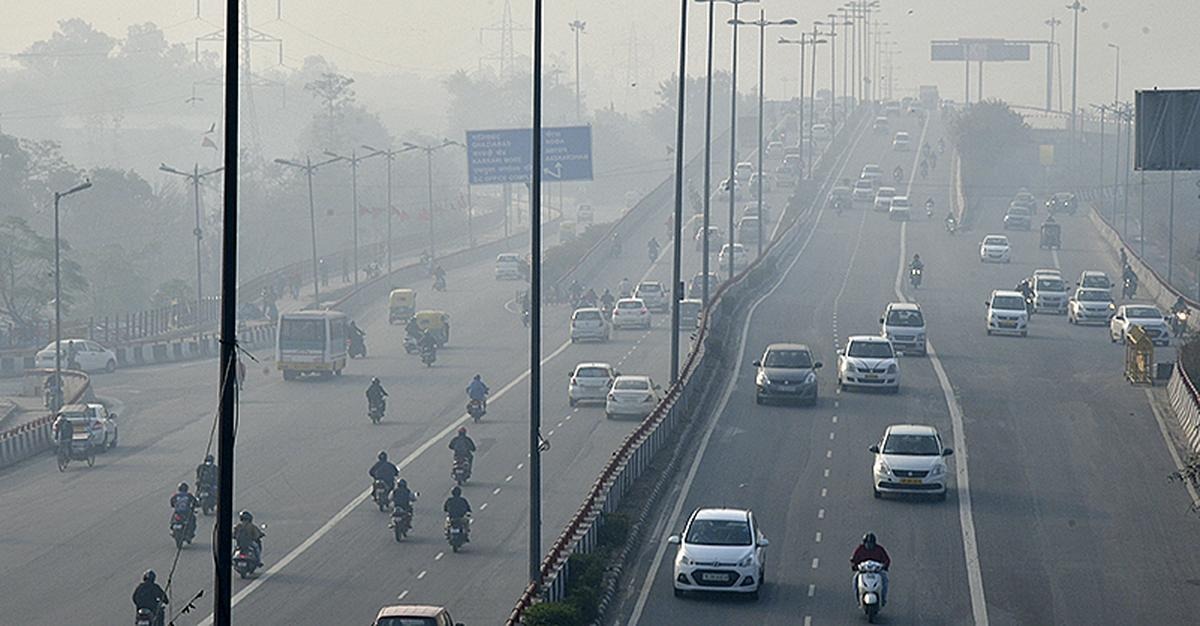
The Delhi government has launched a comprehensive seven-month public awareness campaign to combat air pollution by driving community participation. Operating alongside strict technological monitoring and inter-state regulatory frameworks, the initiative mobilizes schools, RWAs, and civic platforms to tackle dust, vehicular emissions, and waste burning.
The Delhi government has rolled out a comprehensive seven-month public awareness campaign to boost citizen participation in mitigating air pollution ahead of the winter smog season.
New Delhi — In an effort to tackle the capital's persistent air quality challenges, the Delhi government has initiated a wide-ranging, multi-sector public awareness campaign running from September through March. Formulated in coordination with broader regional strategies across the National Capital Region (NCR), the program targets critical pollution vectors—including vehicular emissions, road dust, construction debris, and biomass burning. Unveiled as part of an integrated environmental governance push, the initiative aims to bridge administrative enforcement with grassroots community action to lower particulate matter accumulation during vulnerable winter months.
Multi-Sector Focus and Community Engagement
According to official briefings released by environmental authorities, the campaign relies heavily on structured information, education, and communication (IEC) activities across local administrative zones.
Targeted Sectors: The outreach focuses on curbing emissions from heavy transport, unpaved roads, construction sites, diesel generator sets, and localized waste burning.
Institutional Involvement: Educational institutions, Resident Welfare Associations (RWAs), and designated ward-level "Vayu Rakshak" teams are being mobilized to drive neighborhood compliance and monitor local dust-control measures.
Digital Integration: Citizens are encouraged to utilize upgraded civic platforms, such as the 311 application, to report pollution violations, unmanaged construction waste, and open burning incidents directly to response units.
The framework operates in tandem with regional bodies like the Commission for Air Quality Management (CAQM) to ensure synchronized enforcement across Delhi and neighboring state jurisdictions.
Regulatory Enforcement and Technological Oversight
Complementing the public outreach, administrative agencies have intensified ground-level surveillance. Artificial intelligence-enabled cameras and automated monitoring dashboards track dust and industrial emissions in real time. Furthermore, strict regulations governing Pollution Under Control (PUC) compliance for vehicles and mandatory emission control devices for industrial units are being enforced under the Ministry of Environment, Forest and Climate Change (MoEFCC) guidelines.
Impact on Residents, Commuters, and Local Businesses
For residents and commuters, the campaign translates to heightened visibility on clean-air protocols, cleaner public transit integration, and reduced exposure to hazardous particulate concentrations. Local businesses and construction operators are required to adhere strictly to dust suppression guidelines to avoid heavy penalties or temporary operational closures.
Official Sources Section
Information regarding the launch of the public awareness campaign and regional pollution mitigation strategies is sourced from administrative notifications and press releases issued by the Ministry of Environment, Forest and Climate Change (MoEFCC), the Central Pollution Control Board (CPCB), and the Delhi government.
Quote Section
"According to officials," sustainable improvements in urban air quality require active behavioral shifts and continuous stakeholder engagement at the grassroots level, making public participation as vital as regulatory enforcement.
Why It Matters
Engaging local communities directly bridges the gap between top-down policy directives and bottom-up execution. Fostering civic accountability ensures that municipal anti-pollution measures achieve sustained, long-term effectiveness rather than temporary relief during peak smog periods.
Key Facts at a Glance
Campaign Duration: Seven-month intensive outreach spanning September through March.
Core Objectives: Boosting public participation, curbing road dust, monitoring construction waste, and enforcing vehicular emission norms.
Participating Bodies: Delhi administrative departments, RWAs, eco-clubs, and the Commission for Air Quality Management (CAQM).
Reporting Mechanism: Upgraded 311 citizen feedback and grievance-tracking platforms.
Frequently Asked Questions
What is the objective of the Delhi government's newly launched campaign?
The campaign aims to boost public participation and community awareness to effectively curb air pollution sources ahead of the winter season.
Which key sectors are targeted during the seven-month drive?
The initiative focuses on vehicular emissions, road dust, construction and demolition debris, industrial discharge, and biomass burning.
How can ordinary citizens participate in the pollution-mitigation efforts?
Residents can engage through local RWA meetings, school eco-clubs, and by reporting violations via the upgraded 311 civic reporting platform.
Where can stakeholders track official updates on air quality management?
Official directives, action plans, and air quality indices are published through portals managed by the Central Pollution Control Board (CPCB) and the Ministry of Environment, Forest and Climate Change (MoEFCC).
Source: Ministry of Environment, Forest and Climate Change (MoEFCC), Central Pollution Control Board (CPCB), Commission for Air Quality Management (CAQM)