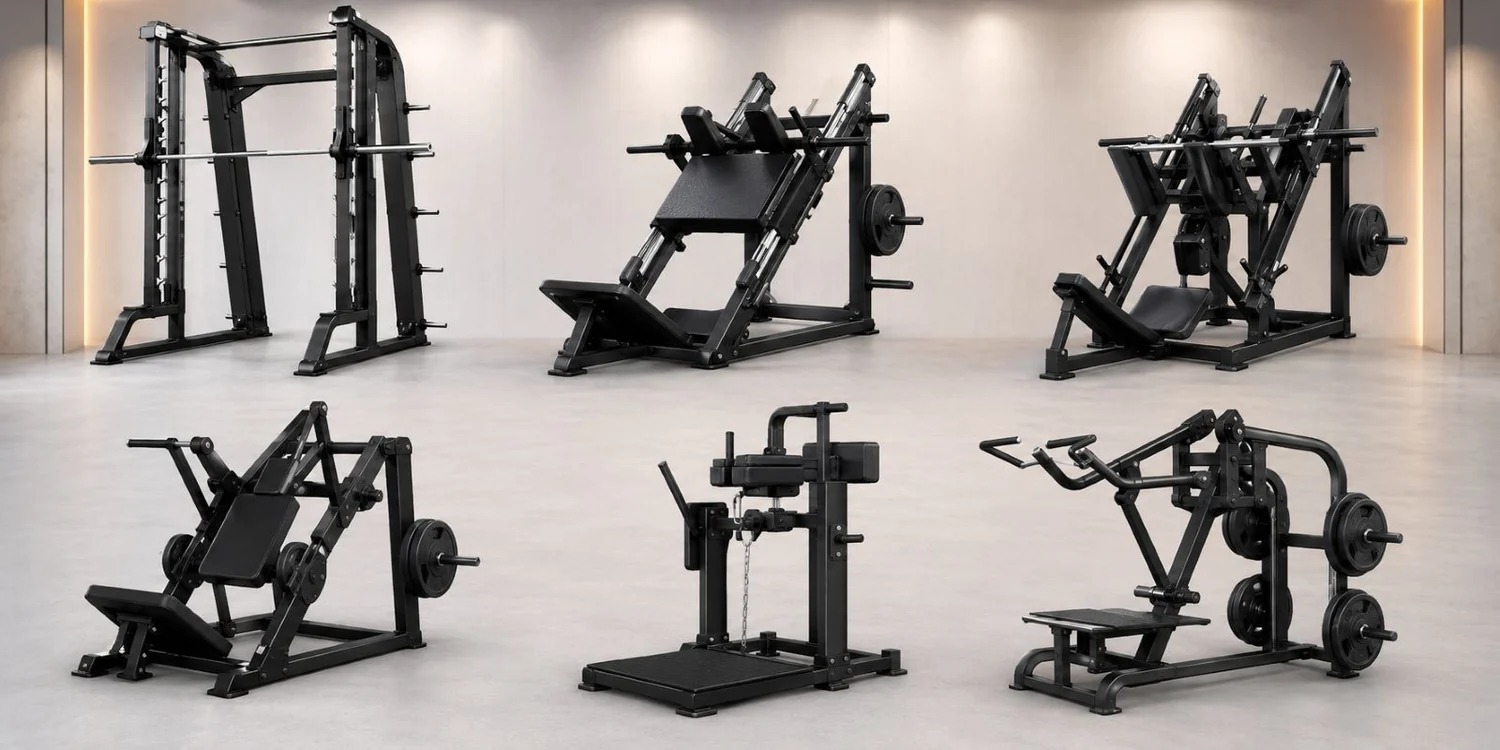
Gym squat machines, including Smith machines and pendulum squats, are vital commercial fitness apparatuses designed to build lower body strength safely. By reducing spinal compression and offering fixed motion paths, these machines enable members to train effectively while minimizing injury risks under professional guidance.
Gym fitness centers are increasingly incorporating specialized squat machines to enhance lower body biomechanics and reduce lower back strain during heavy lifts.
New Delhi — As fitness enthusiasts and gym members increasingly prioritize functional strength and injury prevention, fitness equipment manufacturers have expanded their lines of advanced lower-body training apparatuses. Traditional barbell squats remain a staple of athletic conditioning, but specialized gym squat machines—including Smith machines, pendulum squat units, and vertical leg presses—have become primary fixtures in commercial fitness facilities. According to recent equipment adoption surveys compiled by the International Health, Racquet & Sportsclub Association (IHRSA), modern gym-goers increasingly rely on guided apparatuses to isolate muscle groups while minimizing spinal compression during high-load training sessions.
Categorizing Modern Gym Squat Machines
According to fitness equipment specifications and gym design consultants, commercial facilities typically feature three primary variations of squat-focused apparatuses, each serving distinct biomechanical functions.
Smith Machines: Featuring a barbell fixed within steel rails, the Smith machine provides a vertical or slightly angled fixed path of motion, making it ideal for controlled heavy squats, lunges, and calf raises.
Pendulum Squat Machines: This emerging gym favorite uses a curved lever arm to mimic the natural arc of a free-weight squat, placing maximum tension on the quadriceps while reducing sheer stress on the lumbar spine.
Vertical and 45-Degree Leg Press Machines: While technically distinct from standard squats, these seated platforms allow lifters to move substantial loads using identical lower-body muscle recruitment patterns without requiring core stabilization.
Biomechanics experts note that selecting the appropriate apparatus depends heavily on an individual's joint mobility, injury history, and specific hypertrophy goals.
Safety Protocols and Ergonomic Adjustments
Utilizing commercial gym squat machines requires strict adherence to safety stops, proper foot placement, and progressive overload principles. Fitness instructors emphasize that beginners should always calibrate adjustable safety catches and utilize lighter warm-up sets before engaging in heavy resistance training. Furthermore, facility managers collaborate with equipment manufacturers, such as Life Fitness and Technogym, to conduct regular maintenance checks on cables, pulleys, and weight-stack locking pins to prevent mechanical failures.
Impact on Gym Members, Personal Trainers, and Facility Owners
For gym members, the availability of diverse squat apparatuses ensures safer workout progression and targeted muscle development. Personal trainers benefit from being able to train clients with pre-existing back injuries safely, while gym owners enhance member retention by offering state-of-the-art strength-training infrastructure.
Official Sources Section
Information regarding equipment ergonomics, commercial gym standards, and fitness industry trends is sourced from reports published by the International Health, Racquet & Sportsclub Association (IHRSA) and technical specifications from Technogym.
Quote Section
"According to officials," incorporating advanced gym squat machines into commercial fitness facilities allows members to achieve progressive overload safely while minimizing the risk of lower back injuries.
Why It Matters
Offering versatile lower-body equipment bridges the gap between heavy powerlifting and safe, accessible fitness training. It empowers members of all experience levels to build lower body strength with proper form and structural support.
Key Facts at a Glance
Popular Variants: Smith machines, pendulum squat units, and 45-degree leg presses.
Primary Benefit: Isolates quadriceps, glutes, and hamstrings while minimizing spinal load.
Key Safety Feature: Adjustable safety catches and fixed motion paths.
Industry Standards: Monitored via guidelines from IHRSA.
Frequently Asked Questions
What is the main benefit of using a pendulum squat machine in the gym?
Pendulum squat machines use a curved arc trajectory to maximize quad engagement while reducing lower back and spinal compression.
Are Smith machines safe for beginners doing squats?
Yes, the fixed vertical path of a Smith machine offers stability, but beginners should ensure proper foot placement and use safety stops.
How do leg press machines differ from traditional barbell squats?
Leg presses use a seated platform that removes the need for core stabilization, allowing lifters to focus entirely on lower body muscle output.
Where can gym owners find official equipment safety and maintenance standards?
Standards and compliance guidelines are published through organizations like the International Health, Racquet & Sportsclub Association (IHRSA).
Source: International Health, Racquet & Sportsclub Association (IHRSA), Technogym