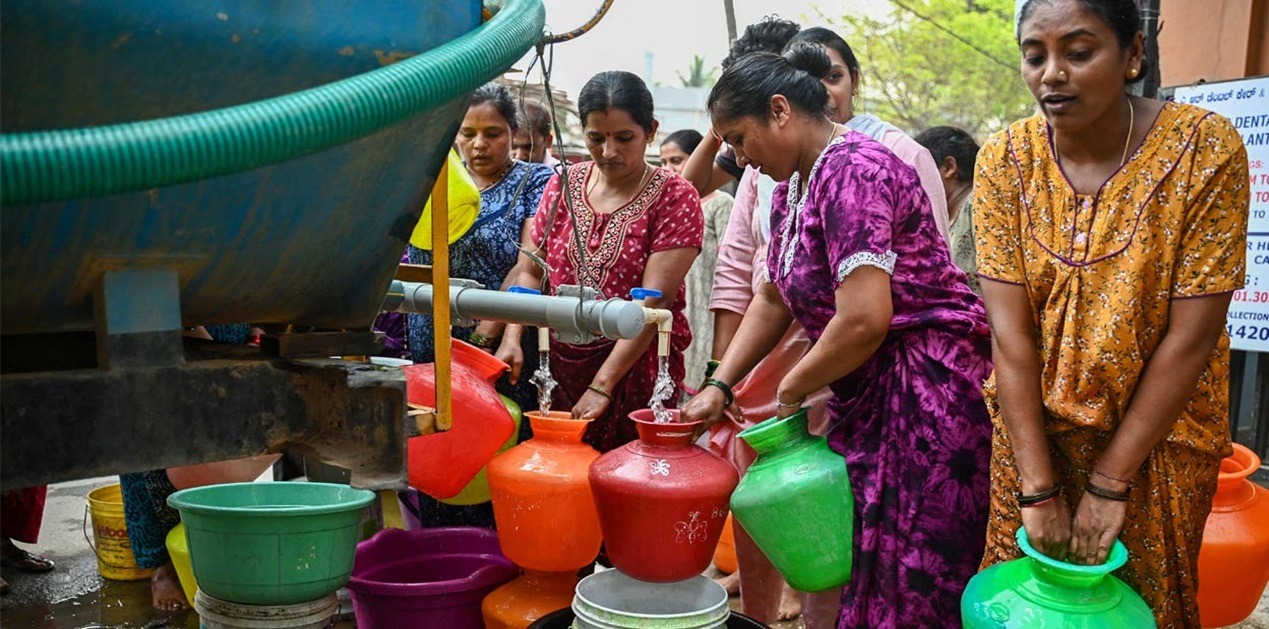
Bengaluru has mandated strict water conservation, including a ban on using potable water for non-essential tasks like car washing and swimming pools. The BWSSB also requires all commercial and public buildings to install aerators by July 31, 2026, as the city faces a severe monsoon deficit and critically low reservoir levels.
Faced with a severe monsoon rainfall deficit, Bengaluru authorities have mandated new water conservation measures to prevent a repeat of last year's crisis.
BENGALURU — The Bangalore Water Supply and Sewerage Board (BWSSB) has introduced a series of stringent directives aimed at curbing non-essential water consumption as the city grapples with a significant rainfall shortfall and critically low reservoir levels.
As of July 5, 2026, Karnataka’s major reservoirs—including those vital to Bengaluru’s supply—report cumulative storage at approximately 21% of their total capacity. This stands in stark contrast to the same period last year, when storage levels were nearly three times higher. The current deficit, linked to the lingering effects of the El Niño weather phenomenon, has prompted officials to move from voluntary appeals to mandatory enforcement.
New Mandates and Enforcement
The BWSSB’s latest orders, issued Saturday, prohibit the use of potable water for several non-essential activities. Under the new regulations, residents and commercial entities are strictly barred from using drinking water to fill swimming pools, wash vehicles, clean roads, or for gardening and construction purposes.
Furthermore, the board has mandated the installation of flow restrictors or aerators on all taps in public spaces, including malls, apartments, commercial complexes, hotels, government offices, and religious institutions. According to the BWSSB, these devices can reduce water consumption by 30% to 50% without compromising water pressure or utility. Establishments have been given a deadline of July 31, 2026, to comply.
"Only judicious use of water and its conservation today can guarantee a water-secure future tomorrow," said BWSSB Chairperson Dr. Manjula. She emphasized that these measures are essential to navigate the current monsoon delay and protect the city’s drinking water reserves for the coming months.
Penalties for Non-Compliance
To ensure adherence, the BWSSB has outlined a clear penalty structure. Violations of the ban on using potable water for non-essential tasks will attract a fine of ₹5,000. For failure to install mandatory aerators by the end of the month, the Board has warned that it may reduce the water supply to the offending premises by up to 50%, alongside further legal action under the Bengaluru Water Supply and Sewerage Act, 1964.
Context: A Precarious Monsoon
The crisis is not limited to Bengaluru; the entire state of Karnataka is facing a challenging hydrological situation. Chief Minister DK Shivakumar has instructed state ministers to conduct urgent review meetings across all 31 districts, noting that inflows into major reservoirs have dropped significantly.
While the BWSSB maintains that the city has enough stored water to meet essential needs for the next four to five months, the administration is prioritizing long-term sustainability. The board is currently working with the Indian Institute of Science (IISc) to monitor groundwater levels and identify potential recharge zones to mitigate the impact of the ongoing drought conditions.
Key Facts at a Glance
Mandatory Aerators: All public and commercial buildings must install flow restrictors by July 31 to avoid a 50% reduction in water supply.
Prohibited Uses: Potable water usage for swimming pools, car washing, road cleaning, and gardening is now banned.
Financial Penalties: Violations of non-essential water usage will incur a fine of ₹5,000.
Reservoir Status: Cumulative storage across major Karnataka reservoirs is currently at 21% of capacity, significantly lower than the 60% recorded at this time last year.
Exemptions: Swimming pools used for professional sports training are currently exempt from the ban.
FAQ
Why are these restrictions being implemented now?
The monsoon season has seen a significant rainfall deficit. These measures are preventative, intended to preserve current reservoir stocks for essential drinking water needs.
How do aerators help?
Aerators mix air into the water stream, maintaining the feel of a steady flow while reducing the actual volume of water consumed by 30% to 50%.
What should I do if I have a swimming pool?
Private and public pool operators must stop using drinking water to fill pools. They are encouraged to transition to treated water or other approved alternative sources.
Who is affected by the new rules?
The rules apply to all residential buildings, apartments, commercial establishments, government offices, hotels, and industries within the BWSSB’s jurisdiction.
Source: