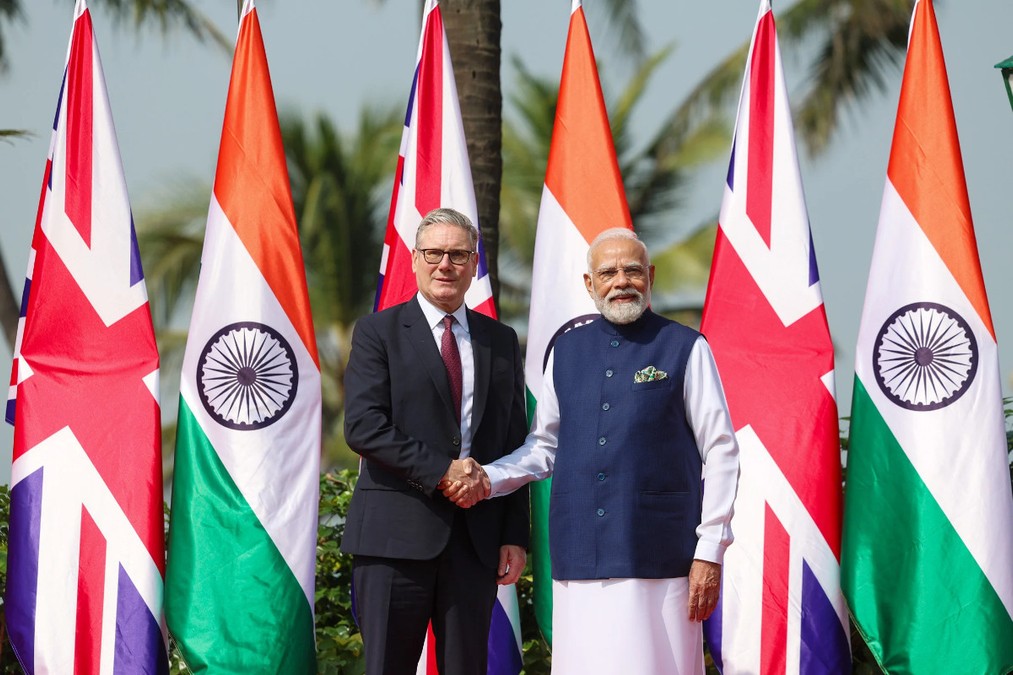
The United Kingdom has accelerated efforts to bring the landmark UK-India Free Trade Agreement (FTA) into force, with top-level meetings and implementation discussions taking place this week. The move highlights growing urgency on both sides to unlock trade benefits, strengthen economic cooperation, and capitalize on one of the most significant bilateral trade agreements in recent years.
The UK government has confirmed it is ramping up work to operationalize the UK-India Free Trade Agreement as quickly as possible. The development comes as UK Business and Trade Secretary Peter Kyle travels to India for key discussions with Commerce Minister Piyush Goyal aimed at expediting the agreement’s rollout.
Implementation Push Gains Momentum
The UK-India Comprehensive Economic and Trade Agreement, signed in 2025 after more than three years of negotiations, is widely regarded as the UK's most economically significant bilateral trade agreement since Brexit. Officials from both nations are now focusing on legal, regulatory, and procedural measures needed to bring the agreement into force.
The agreement is expected to reduce trade barriers, improve market access, and strengthen commercial ties between two rapidly growing economies. Current trade between India and the UK stands at approximately £47.2 billion, with projections suggesting the deal could boost bilateral trade by £25.5 billion annually over time.
What The Trade Pact Delivers
The FTA includes tariff reductions across a wide range of sectors. India has agreed to lower duties on several UK exports, including automobiles and Scotch whisky, while Indian exporters are expected to gain expanded access to the UK market across textiles, leather, footwear, engineering goods, gems and jewellery, and marine products.
Economic Impact Insights
UK exports to India were valued at approximately £19 billion in the year to September 2025, while imports from India reached £28 billion. According to UK government assessments, the agreement could increase UK GDP by around £4.8 billion in the long term and significantly enhance trade in goods and services.
Current Challenges In Focus
Despite strong momentum, a few unresolved issues remain. Discussions this week are expected to address concerns surrounding UK steel safeguard measures and Britain's proposed Carbon Border Adjustment Mechanism (CBAM), both of which have emerged as sensitive points in the implementation process. India has also raised concerns over potential impacts on steel exports.
FTA Rollout Highlights
- UK government intensifying efforts this week to activate the agreement
- Peter Kyle meeting Piyush Goyal to accelerate implementation
- Trade deal projected to increase bilateral trade by £25.5 billion annually
- 99% of Indian exports expected to benefit from zero-duty access
- Tariff reductions planned across automobiles, whisky, textiles, engineering goods, and services
- Agreement expected to support jobs, investment, supply chain resilience, and long-term economic growth
What Happens Next?
The coming days could prove critical for the future timeline of the UK-India FTA. While both governments remain committed to bringing the agreement into force quickly, ongoing discussions around trade safeguards and carbon-related measures will likely determine the pace of final implementation. Businesses, exporters, and investors across both countries are now closely watching the outcome of this week's negotiations.
Sources: gov.uk, Reuters, The Economic Times