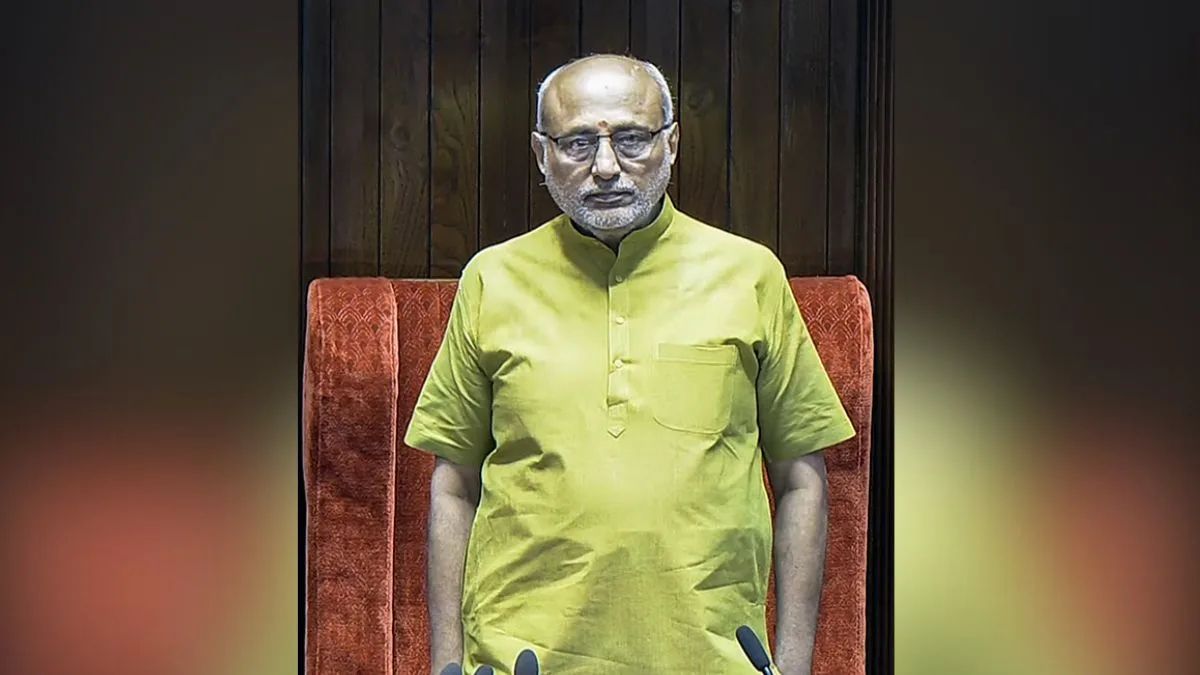
Vice-President Jagdeep Dhankhar has urged Indian entrepreneurs to embrace artificial intelligence as a vital growth opportunity rather than a threat. Highlighting the necessity of indigenous innovation, he advocated for integrating AI into key sectors to boost productivity, ensure economic self-reliance, and secure India's position in the global digital landscape.
NEW DELHI — Vice-President Jagdeep Dhankhar delivered a strong message to the nation’s burgeoning entrepreneurial class on Saturday, June 27, 2026, urging them to shed apprehensions regarding artificial intelligence (AI). Speaking at a national technology summit in New Delhi, the Vice-President characterized the rapid evolution of AI not as a displacement tool for human labor, but as an essential frontier for innovation and economic scalability.
The Vice-President’s remarks come at a time of heightened global debate regarding the integration of AI into traditional business models. As India solidifies its position as the world's third-largest startup ecosystem, the government is increasingly focused on ensuring that the domestic industry remains competitive while navigating the ethical and workforce implications of high-speed automation.
Reframing the AI Narrative
Addressing an audience of business leaders, policymakers, and innovators, the Vice-President emphasized that AI should be viewed as a force multiplier for productivity. He argued that the perception of AI as a threat is a legacy mindset that fails to account for the efficiency gains and new market creation inherent in machine learning and generative tools.
"We stand at a unique juncture where the adoption of advanced technologies will dictate the trajectory of our economic self-reliance," the Vice-President stated. He encouraged founders to focus on "indigenous AI solutions"—applications tailored to the specific demographic and developmental needs of the Indian market—rather than relying solely on imported frameworks. By embedding AI into sectors such as healthcare, agriculture, and financial services, he noted, entrepreneurs can solve deep-rooted structural challenges that were previously deemed intractable.
Policy Frameworks and Future Readiness
The call for adoption aligns with the government’s broader "IndiaAI" strategy, which seeks to democratize access to computing power and data. The administration is currently refining regulatory frameworks to ensure that AI development remains "safe, inclusive, and trustworthy," as mandated by the Union Cabinet’s guidelines issued earlier this year.
According to official briefings, the government intends to incentivize businesses that demonstrate clear AI integration paths that enhance human output rather than simply automating roles. This policy stance is intended to mitigate societal anxiety regarding job displacement while ensuring that Indian firms remain at the cutting edge of global trade and service export markets.
Why It Matters
The Vice-President’s intervention is significant for investors and business owners who have been weighing the risks of large-scale automation. By framing AI as an opportunity, the government provides a clear signal that the regulatory environment will favor innovation and structural integration. For the workforce, the emphasis remains on upskilling and the transition into high-value roles, ensuring that India’s vast youth population can harness these tools to participate in a technology-driven global economy.
Key Facts at a Glance
Strategic Stance: The government advocates for treating AI as a growth catalyst rather than a threat to employment.
Focus Area: Emphasis on creating indigenous AI solutions tailored to India's unique socio-economic challenges.
Economic Context: AI integration is seen as a key component for achieving the national vision of a self-reliant economy by 2047.
Infrastructure Support: The government is providing subsidized GPU access for startups to encourage AI experimentation.
FAQ
Why is the Vice-President encouraging businesses to adopt AI?
The Vice-President aims to reframe the narrative around AI to encourage businesses to view it as a productivity tool that can solve large-scale structural problems in sectors like agriculture and healthcare.
What are the government's concerns regarding AI adoption?
While encouraging adoption, the administration is focused on ensuring AI is "safe, inclusive, and trustworthy," with a push toward indigenous frameworks rather than total reliance on external technology.
How does this impact the Indian workforce?
The government suggests that by embracing AI, the workforce can transition into higher-value, high-skilled roles, ultimately fostering long-term economic growth and resilience.
Source: Vice-President’s Secretariat (Official Press Release), Ministry of Electronics and Information Technology (MeitY), ANI News Coverage