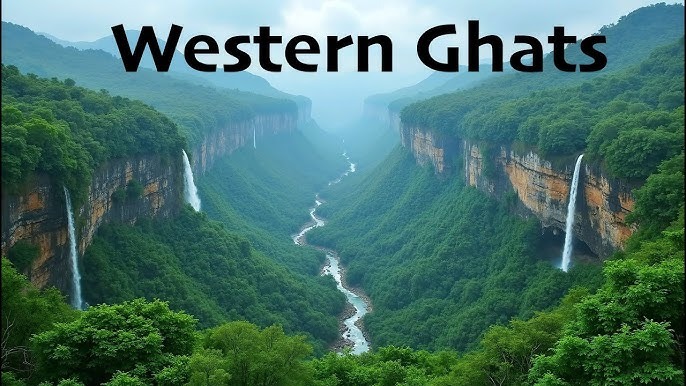
The Indian government is moving to finalize the Ecologically Sensitive Area (ESA) notification for parts of the Western Ghats, imposing strict curbs on mining and large construction. This 13-year-old initiative aims to protect one of the world's most critical biodiversity hotspots while balancing regional development needs in the affected states.
The Indian government is moving closer to granting final legal protection to the Western Ghats—one of the world's eight "hottest hotspots" of biodiversity—by notifying large swaths of the region as Ecologically Sensitive Areas (ESAs). According to recent reports, authorities are preparing to move forward with the notification for states that have already reached a consensus on the demarcation, marking a decisive shift after over a decade of administrative deliberation.
The proposal, which covers over 56,000 square kilometers across six states, is based largely on the 2013 recommendations of a high-level working group led by former ISRO chairman K. Kasturirangan. While the draft has undergone six revisions since its inception in 2014, the Environment Ministry is now prioritizing states where disagreements have been largely resolved, including Gujarat, Goa, and Maharashtra.
What Are Ecologically Sensitive Areas?
Ecologically Sensitive Areas (ESAs)—often referred to as "shock absorbers"—are regions designated for special environmental protection due to their critical ecological value, biodiversity, or sensitivity to human-induced change. Notified under the Environment (Protection) Act, 1986, these areas act as a buffer to regulate industrial and developmental activities that could degrade fragile landscapes.
The primary objective of an ESA designation is to minimize the negative impact of "anthropogenic" activities. Under the proposed framework, activities such as large-scale mining, quarrying, the establishment of thermal power plants, and the operation of highly polluting "red-category" industries would be either completely banned or heavily restricted. Furthermore, large construction projects—specifically those with a built-up area of 20,000 square meters or above—would face stringent oversight to prevent habitat loss.
A Decade of Consultations
The journey toward this notification has been complex. The initiative began in 2010 with the Madhav Gadgil-led Western Ghats Ecology Expert Panel (WGEEP), which recommended protecting the entire 129,037-square-kilometer range. Following significant pushback from state governments concerned about developmental impact, the Kasturirangan panel was tasked in 2012 with a ground-truthing exercise, eventually scaling the proposed ESA down to roughly 60,000 square kilometers.
While negotiations remain ongoing with Kerala and Karnataka, which have sought adjustments to the demarcated boundaries to protect local community interests, the Ministry of Environment, Forest and Climate Change (MoEFCC) is reportedly finalizing the legal notification for states that have reached an agreement.
Quote Section
According to officials, "The goal is to provide legal teeth to the conservation of this fragile biodiverse landscape. By notifying these areas, the government aims to regulate development in a manner that protects the ecological integrity of the Ghats while addressing the legitimate concerns of the local communities and states involved."
Why It Matters
For India, the Western Ghats serve as a vital water source, feeding major rivers that sustain millions of people in southern India. The region's dense forests act as critical carbon sinks and house thousands of endemic species of flora and fauna. Finalizing the ESA tag is a significant step toward climate resilience, disaster mitigation—particularly in preventing landslides and flooding—and ensuring long-term water security for the peninsula.
Key Facts at a Glance
Proposed Coverage: Over 56,000 square kilometers across six states (Gujarat, Maharashtra, Goa, Karnataka, Kerala, and Tamil Nadu).
Key Restrictions: Complete ban on new mining, quarrying, and highly polluting "red-category" industries.
Legal Basis: Notification under the Environment (Protection) Act, 1986.
Biodiversity Value: Home to tropical evergreen forests, grasslands, and distinctive shola forests, forming one of the world's 36 biodiversity hotspots.
FAQ
1. How do ESAs differ from National Parks or Sanctuaries?
While National Parks are highly protected "core" areas, ESAs function as "buffer zones" or shock absorbers that regulate human activity in surrounding regions to minimize damage to the core habitat.
2. Will this notification stop all development in the Western Ghats?
No. The rules primarily target large-scale, high-polluting industries and major infrastructure projects. Traditional agriculture, organic farming, and small-scale eco-friendly projects are generally permissible.
3. Why is there a delay in notifying Kerala and Karnataka?
State governments have requested specific adjustments to the demarcated boundaries, citing concerns regarding the impact on local livelihoods and regional development, leading to ongoing negotiations.
Source: Ministry of Environment, Forest and Climate Change, The Indian Express, Business Standard