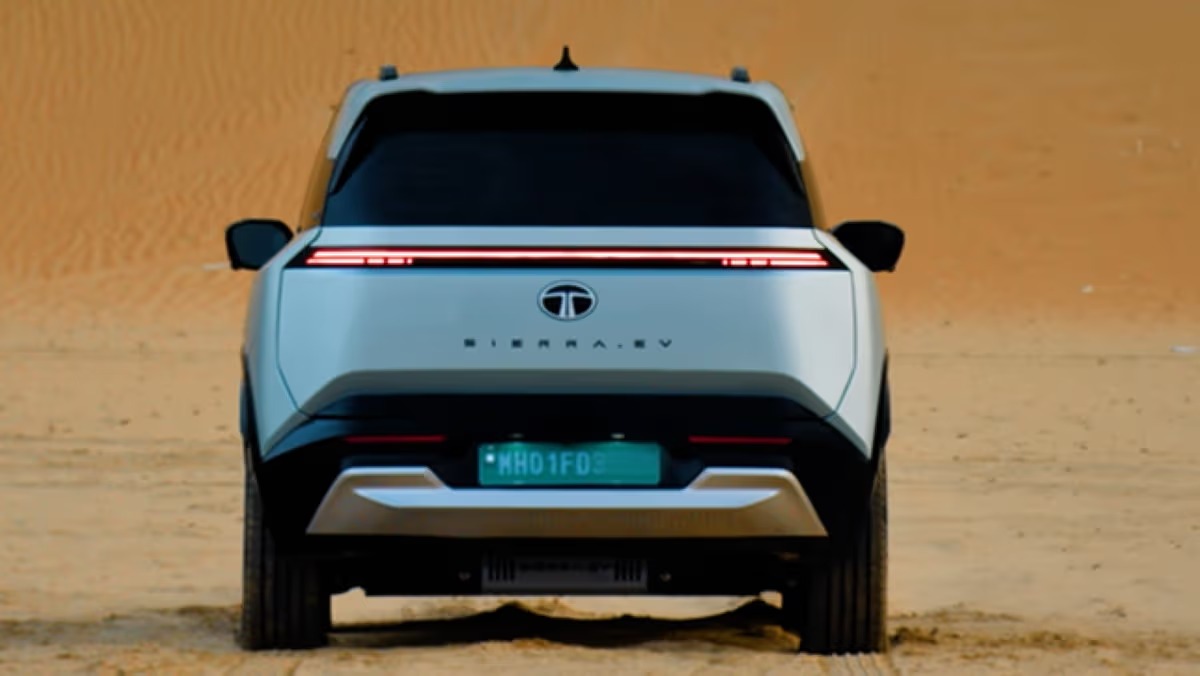
This automotive report tracks Tata Motors confirming a June 30, 2026, launch date for the production version of the Tata Sierra EV. The analysis breaks down newly released teasers that reveal a dual-motor Quad Wheel Drive (QWD) setup built on the acti.ev+ platform, complete with 65–75 kWh battery choices, a premium triple-screen dashboard, and an estimated price point under ₹25 lakh.
MUMBAI — Tata Motors Ltd. (NSE: TATAMOTORS) has officially locked in June 30, 2026, as the market debut date for its highly anticipated Tata Sierra EV. Ahead of the official launch event, the prominent Indian automotive manufacturer released a series of digital teasers confirming that the premium midsize SUV will feature its top-tier Quad Wheel Drive (QWD) dual-motor powertrain setup.
The technical development establishes the vehicle as a lifestyle-focused, all-terrain product rather than a generic urban utility vehicle. The launch represents a vital step in the company's multi-tier electrification strategy, placing the resurrected nameplate directly between the existing Curvv EV and the upcoming Harrier EV.
Technical Architecture and Dual-Motor All-Wheel Drive
The upcoming electric vehicle is built on the advanced acti.ev+ platform. This modular, EV-centric architecture allows the vehicle to move away from standard front-wheel-drive restrictions and offer a dual-motor, all-wheel-drive mechanical layout.
The newly released promotional footage highlights this all-terrain capability, showing pre-production test mules navigating loose desert sand dunes. A close-up frame from the teaser reveals a prominent "QWD Dual Motor" badge stamped onto the tailgate structure.
By deploying a dedicated electric motor on each axle, the vehicle can continuously shift power between wheels to maintain traction on difficult surfaces. While entry-level variants will utilize a standard rear-wheel-drive (RWD) system, the flagship QWD version is expected to deliver peak torque figures approaching the 500 Nm mark.
Retaining Heritage DNA with a Premium Cabin
The overall design successfully blends modern electric vehicle features with the iconic look of the original 1990s internal combustion engine (ICE) Sierra. The front end features a blanked-off aerodynamic grille, a restyled bumper, and a signature edge-to-edge LED light bar. To honor the vehicle's heritage, the rear section retains the iconic wraparound glass styling, modernizing it with connected LED taillamps and unique aero-optimized alloy wheels.
Inside, the cabin layout follows a premium direction aimed at tech-focused car buyers. The dashboard is anchored by a triple-screen display spanning the entire width of the console, which includes a dedicated passenger entertainment screen.
The premium features catalog includes a panoramic sunroof, a custom soundbar-style speaker setup backed by Dolby Atmos audio, dual-zone climate control, ventilated seats, and Level 2 Advanced Driver Assistance Systems (ADAS) for active passenger safety.
Strategic Market Position and Consumer Options
For prospective buyers and automotive investors, the premium SUV lands in a competitive segment. Analysts estimate that ex-showroom pricing will range between ₹19 lakh and ₹25 lakh, placing it directly against key rivals such as the Hyundai Creta Electric, Maruti Suzuki e Vitara, and Mahindra BE 6.
To ease upfront purchasing costs, automotive sector sources indicate that Tata Motors may introduce its flexible Battery-as-a-Service (BaaS) model alongside an extensive lifetime battery warranty package. This financing option separates the initial price of the vehicle chassis from the battery cell chemistry, lowering the initial cost barrier to match conventional combustion-engine family cars.
Official Sources Section
The engineering parameters, platform specifications, launch schedules, and powertrain details cited in this automotive brief correspond directly to official teaser dispatches and promotional video logs issued by the media department of TATA.ev. Model comparisons and pricing estimates are compiled from compliance bulletins logged on national registration and tracking channels.
Quote Section
Addressing the design philosophy and performance testing of the returning nameplate, engineering teams summarized the vehicle's development focus:
"According to officials familiar with the development process, the dual-motor layout was specifically calibrated across variable traction surfaces to ensure that the electric iteration carries authentic all-terrain utility, matching the rugged reputation established by its predecessor decades ago."
Why It Matters
For the wider Indian electric vehicle ecosystem, the launch of an all-wheel-drive lifestyle platform proves that domestic manufacturers are successfully advancing past basic city commuter cars. By introducing high-voltage dual-motor setups to the midsize segment, the vehicle sets a new performance benchmark for domestic manufacturing, demonstrating that electric family SUVs can deliver genuine utility and off-road capability.
Key Facts at a Glance
The Launch Date: Tata Motors will officially launch the production-ready Sierra EV on June 30, 2026.
Flagship Drivetrain: Teaser videos confirm the presence of a "QWD Dual Motor" badge, validating a high-performance all-wheel-drive layout.
Platform Underpinnings: The vehicle is built on the advanced acti.ev+ architecture shared with the Harrier EV.
Premium Interior: The cabin features a triple-screen dashboard layout alongside a Dolby Atmos audio system.
Estimated Pricing: The midsize lifestyle vehicle is expected to retail between ₹19 lakh and ₹25 lakh (ex-showroom).
FAQ Section
What does the "QWD" designation mean on Tata electric vehicles?
QWD stands for Quad Wheel Drive, which is Tata Motors' proprietary terminology for an all-wheel-drive electric layout. It uses separate electric motors on the front and rear axles to continuously adjust power and maximize traction.
What is the expected real-world range of the Sierra EV on a full charge?
Equipped with the long-range 75 kWh battery option, the vehicle is targeted to achieve a certified driving range between 500 km and 600 km, translateable to a real-world range of around 420 km to 450 km under typical highway and urban conditions.
Will Tata offer a conventional petrol or diesel version of the new Sierra?
Yes. Regulatory filings confirm that the company has developed an internal combustion engine (ICE) variant alongside the EV platform. The standard petrol and diesel iterations are scheduled for a separate rollout later in the financial year.
Source: Official Media Bulletins and Technical Spec Sheets from TATA.ev, and platform filings registered with the Ministry of Heavy Industries.