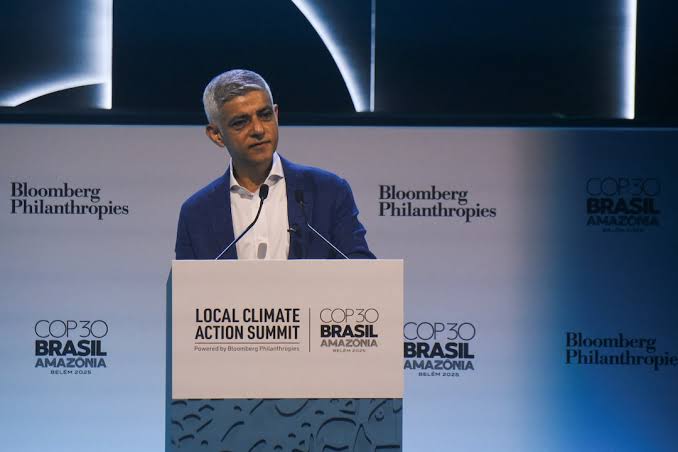
A coalition of 40 global mayors, coordinated by C40 Cities at London Climate Action Week, has launched the Global Urban Data Centres Pact. The framework introduces standardized municipal rules to regulate data centre expansion, protecting local electricity grids, drinking water supplies, and communities from the intensifying resource demands of artificial intelligence.
LONDON — A coalition of 40 international mayors will officially launch the Global Urban Data Centres Pact on Tuesday, establishing a unified municipal framework to regulate the rapid development of data centres. Coordinated by C40 Cities during London Climate Action Week, the international agreement aims to protect urban electricity grids, local water resources, and communities from the unprecedented resource demands of artificial intelligence (AI) and cloud computing infrastructure. City leaders from major hubs including London, Phoenix, and Melbourne announced that the pact will guide localized permitting and urban planning decisions while preventing a regulatory "race to the bottom" as tech firms compete for infrastructure footprint.
Municipal Leaders Confront the AI Infrastructure Surge
The rapid commercialization of artificial intelligence and digital services has triggered a global rush to build data centres. According to data tracked by the World Economic Forum, data centres currently account for an estimated 2.5% to 3.7% of global greenhouse gas emissions, eclipsing the total emissions generated by the commercial aviation sector.
With data centre power consumption outstripping overall grid growth, municipal governments are facing immediate infrastructure constraints. Mayors representing the initial signatories emphasized that while data infrastructure drives critical economic activity, its unmitigated growth threatens municipal climate goals and consumer utility prices.
The Global Urban Data Centres Pact provides a framework for city zoning boards, regulatory bodies, and land-use planners. The agreement outlines strict operational standards for data centre efficiency, mandates the integration of renewable energy portfolios, and encourages the commercial reuse of captured waste heat in district heating networks.
Rising Pressures on Water Supply and Electricity Grids
The resource intensity of high-density computing has emerged as a critical concern for urban planners. The structural challenge is particularly evident in mid-sized and large metropolitan economies, where data facility planning intersects with local climate risks like heatwaves and droughts.
Melbourne Projects Surging Energy Footprint
In Melbourne, Australia, the municipal footprint already includes approximately 50 major data centres. City projections indicate that these facilities will consume 10% of total local electricity demand by 2030, with that figure accelerating to 20% by 2040 in a metropolitan area of 5.5 million people.
Volumetric Water Resource Strain
Beyond electricity, water conservation has become a key focal point of the new pact. Modern facility cooling requires vast amounts of fresh water, often straining municipal drinking networks. The impact on key regions shows clear operational risks:
Melbourne, Australia: Facilities are projected to draw up to 20 billion litres of water annually, representing roughly 4% of the city’s total potable water supply.
Phoenix, United States: Rapid desert development has forced municipal authorities to re-evaluate industrial water allocations for cooling infrastructure to protect residential reserves.
Official Sources Section
The framework has been formally advanced by the leadership of C40 Cities, an international network comprising nearly 100 global megacities dedicated to addressing systemic climate risks. Policy guidelines supporting the initiative were cross-referenced with municipal infrastructure briefs published by the Greater London Authority and regional environmental planning assessments compiled by the City of Phoenix and the City of Melbourne.
Official Statements
"Data centres are the biggest thing to hit the energy grid since air conditioning in the 1950s," stated Melbourne Lord Mayor Nicholas Reece in an official briefing to Reuters. "Where the rollout of air conditioning took decades, this is happening in a few short years. This initiative asks the world's cities and technology companies to build a common framework that promotes energy systems, water use, and supply chains that align with the goals of the Paris Agreement."
London Mayor and C40 Chair Sadiq Khan affirmed the intent behind the coordinated municipal response: "My ambition is clear, I want London to become the world's leading city for environmentally friendly, low emission, high efficiency data centre development. We support data centres in the right locations, where they deliver real value for residents, meet high standards on sustainability, and can support economic growth."
Why It Matters
For citizens and business consumers, unmanaged data centre growth poses a direct financial risk. When localized infrastructure demand outpaces capacity, utility companies frequently pass grid reinforcement and water infrastructure upgrade costs onto residential ratepayers. Furthermore, excessive industrial demand can jeopardize grid reliability, increasing the frequency of brownouts during peak summer cooling seasons.
For institutional investors and technology developers, the Global Urban Data Centres Pact introduces predictable, standardized criteria for project approvals. While standardizing environmental expectations across 40 major markets, it limits the risk of sudden, reactionary bans on construction, providing a clear regulatory path for sustainable capital placement.
Key Facts at a Glance
Pact Coalition: 40 global mayors, coordinated via C40 Cities, signing a unified resource pact at London Climate Action Week.
Grid Demand: Data centres are projected to consume up to 20% of Melbourne’s total electrical capacity by the year 2040.
Water Impact: Cooling infrastructure risks absorbing up to 4% of drinking water supplies in highly concentrated digital hubs.
Emissions Footprint: Sector operations contribute between 2.5% and 3.7% of total global greenhouse gas emissions.
FAQ Section
What is the primary objective of the Global Urban Data Centres Pact?
The pact establishes uniform guidelines for cities to manage the environmental and infrastructure impacts of data centres, focusing on energy efficiency, water conservation, and strategic urban zoning.
Will this agreement prevent tech companies from building new data centres?
No. The framework does not ban construction but ensures that new developments use low-impact cooling technologies, secure renewable power, and avoid shifting infrastructure costs onto local taxpayers.
How do data centres impact local water systems?
Many facilities rely on evaporative cooling systems that require millions of litres of fresh drinking water daily to prevent high-density computing servers from overheating.
Which cities are leading this global data initiative?
The initiative is championed by prominent international cities within the C40 network, including London, Phoenix, and Melbourne, alongside dozens of other global municipal partners.
Source: C40 Cities Network, Greater London Authority Official Portal, Reuters Corporate Newswire.