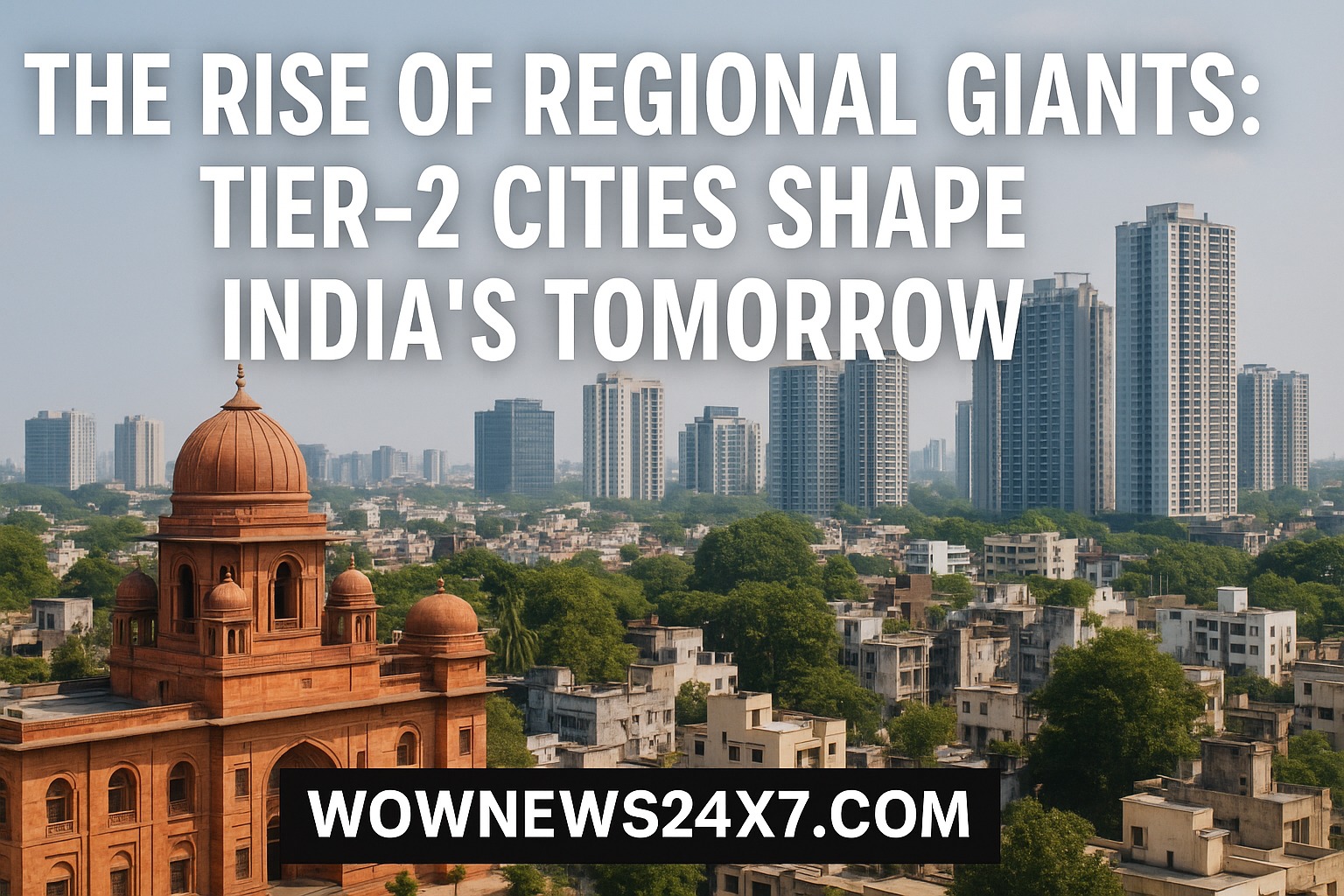
India’s Tier-2 cities are emerging as powerful engines of economic growth in 2025, outpacing metros in job creation, real estate, and startup activity. With government backing, better infrastructure, and affordable living, cities like Jaipur, Lucknow, and Kochi are transforming India’s urban and economic landscape.
While metros like Mumbai and Bengaluru have long dominated India’s growth story, Tier-2 cities are quietly becoming the new economic powerhouses in 2025. These cities are witnessing remarkable progress, driven by affordability, policy focus, and an influx of investments across sectors.
Key Highlights:
Job Market Boom: Tier-2 cities posted a 42% increase in job openings between September 2024 and February 2025, more than double the 19% growth in metro areas. Sectors like manufacturing (+29%) and IT (+17%) are driving this surge, supported by a skilled and aspirational workforce.
Real Estate Growth: Affordable housing demand soars, with capitalize appreciation averaging 17.6% across Tier-2 cities, surpassing metros. Cities such as Pune, Nagpur, Surat, and Jaipur are favored by homebuyers and NRIs for their blend of opportunity and lifestyle.
Startup Hub Expansion: Nearly 50% of India’s 1.2 lakh DPIIT-recognized startups are now based in Tier-2/3 cities, a jump from 35% in 2023. Jaipur leads fintech innovation, while Kochi excels in agritech. Funding hit $1.2 billion in the first half of 2025, marking a 55% year-on-year rise.
Infrastructure & Connectivity: Government’s Smart Cities Mission and large infrastructure projects like metro expansions and expressways are reducing travel times and improving business environments in cities such as Ahmedabad, Surat, and Coimbatore.
Growing Investment Magnet: Over 1,500 Global Capability Centers (GCCs) plan operations in Tier-2 cities, attracted by lower costs and talent availability. State initiatives have secured over $10 billion in investment pledges for 2025, focused on balanced regional development.
Economic Contribution: Together, Tier-2 and Tier-3 cities contribute nearly 40-45% of India’s GDP, a figure steadily growing as these cities foster MSME growth and inclusive economic activity.
Challenges & Opportunities: While issues like water shortages in some cities and skill gaps remain, focused governance and private sector efforts are paving the way for sustainable growth.
Future Projections: McKinsey forecasts $2 trillion in revenue generation from 18 key Tier-2 cities by 2030, reshaping the nation’s economic geography.
India’s Tier-2 cities are no longer peripheral; they are the catalysts redefining the country’s growth trajectory and offering compelling opportunities for investors, entrepreneurs, and citizens alike.
Sources: RP Realty Plus, Godrej Capital, LinkedIn Insights, NASSCOM Reports, KPMG Analysis