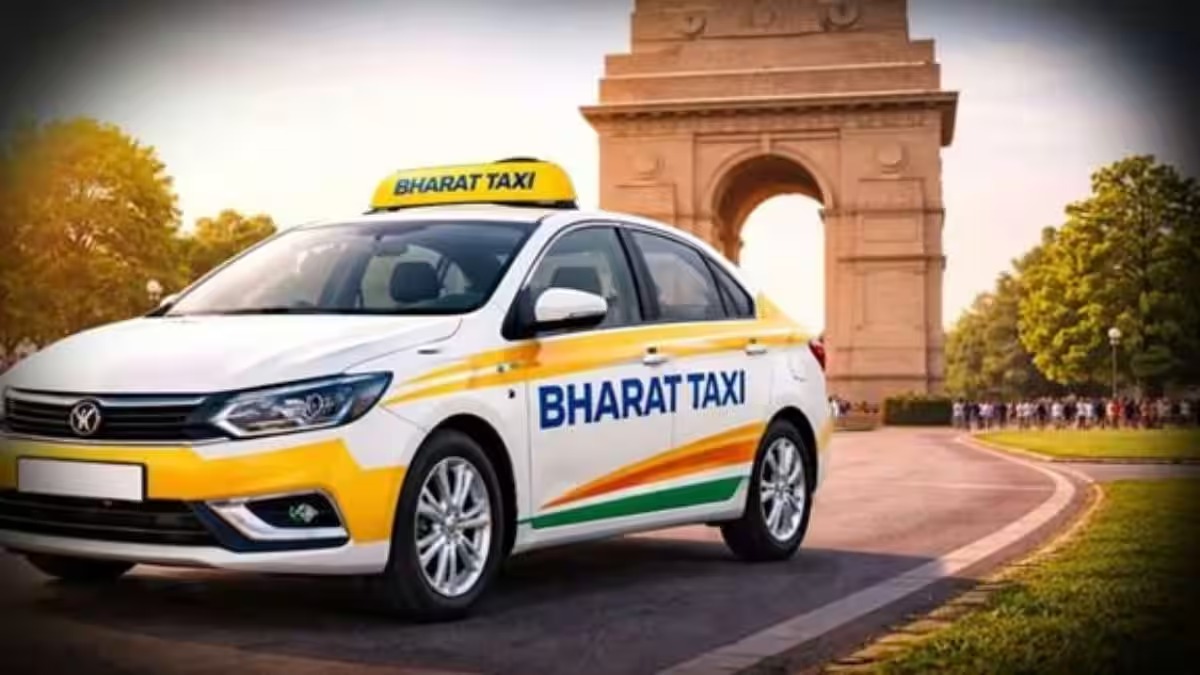
Union Home Minister Amit Shah has launched 'Bharat Taxi,' India’s first cooperative, driver-owned ride-hailing platform. Designed to eliminate commission-based exploitation, the platform grants drivers ownership and welfare benefits. With an aggressive expansion plan targeting 500 cities, it aims to offer a transparent, dignifying alternative to traditional private cab aggregators.
Union Home Minister Amit Shah has unveiled a driver-owned platform designed to bypass the traditional commission-based systems that have long frustrated India’s cab operators.
A New Era for India’s Ride-Hailing Ecosystem
Union Home and Cooperation Minister Amit Shah officially launched "Bharat Taxi" in Gujarat on June 27, 2026, marking a pivotal shift in the country's mobility sector. Positioned as India’s first cooperative, driver-owned ride-hailing platform, the initiative is a direct response to widespread grievances from both drivers—referred to as "Saarthis"—and passengers regarding the practices of private aggregator companies.
The launch, held at the Mahatma Mandir in Gandhinagar, signals the government's intent to apply the successful cooperative models seen in India’s dairy and fertilizer sectors to the rapidly expanding transportation industry. By operating under the Multi-State Cooperative Societies Act, 2002, Bharat Taxi aims to eliminate the "commission-based exploitation" that Shah argues has characterized the ride-hailing market for years.
Addressing Systemic Grievances
During the launch, Minister Shah laid out a sharp critique of existing private taxi aggregators. He highlighted recurring complaints, including arbitrary commission deductions, delayed payments to drivers, and the frequent suspension of driver accounts without a fair hearing.
"Various problems were emerging in the taxi services of the private sector," Shah stated. "For their own profits, they exploited countless Saarthis and citizens. Sometimes they deducted commissions from earnings, and fares did not reach them for days. If any customer complained, they would cancel the Saarthi's registration without even listening to him."
The Minister asserted that rather than relying solely on legislative intervention, the government opted for a structural alternative: the cooperative model. Under this framework, drivers are not mere gig workers but stakeholders and shareholders in the platform, ensuring that the fruits of their labor remain within their control.
Operational Scope and Nationwide Ambitions
Bharat Taxi officially entered 14 major cities in Gujarat during the launch, including Ahmedabad, Surat, and Vadodara. The service offers options across three categories: two-wheelers, auto-rickshaws, and four-wheelers.
The cooperative platform’s expansion roadmap is aggressive:
Rapid Rollout: The service is scheduled to launch in major metropolitan hubs, including Mumbai, Pune, Kolkata, and Jaipur, by July 31, 2026.
Scale: Plans are in place to reach 125 cities by March 2027, with a broader goal of covering over 500 cities and towns across India within two years.
Integration: The platform has signed Memorandums of Understanding (MoUs) with metro rail corporations, municipal bodies, and airport authorities to ensure seamless connectivity with public transit infrastructure.
The Response to Market Competition
Addressing allegations of unfair competition, Shah acknowledged that private players have recently slashed fares and offered high incentives to drivers to stall Bharat Taxi's entry. "Our objective in this competition is not to cause losses to anyone. This pattern of reducing fares and offering higher commissions has been adopted only to stop Bharat Taxi's entry into the market," he remarked. He remained confident, however, that the cooperative spirit of "Sahakar Se Samriddhi" (Prosperity through Cooperation) would ultimately prevail.
Why It Matters
Bharat Taxi represents a fundamental challenge to the "gig economy" model. By shifting ownership to the drivers, the initiative aims to provide social security, insurance coverage, and loan access that are typically absent in app-based employment. For passengers, the platform promises surge-free, transparent pricing, potentially forcing a market-wide shift toward more equitable fare structures.
Key Facts at a Glance
Ownership Model: Driver-owned and member-stakeholder governance.
Fee Structure: Operates on a zero-commission model, allowing drivers to retain the full fare.
Current Scale: Onboarded approximately 4.31 lakh driver-partners as of early 2026.
Expansion Target: 500+ cities and towns across India within two years.
Welfare Benefits: Registered drivers gain access to insurance, pension schemes, and vehicle loans at concessional interest rates.
FAQ
1. How is Bharat Taxi different from existing ride-hailing apps?
Unlike traditional aggregators that charge commissions for every ride, Bharat Taxi is a cooperative where drivers are shareholders. The earnings go directly to the drivers, and they participate in the platform's governance.
2. Can any taxi driver join the platform?
The platform is designed for registered cooperative members. Prospective drivers must join the cooperative structure, which provides them with welfare benefits and long-term financial participation.
3. Is Bharat Taxi available only for cars?
No. The platform currently operates across three segments: two-wheelers, auto-rickshaws, and four-wheelers.
4. How does the platform ensure passenger safety?
Bharat Taxi is collaborating with local law enforcement agencies, including the State Traffic Branches and police departments in major cities, to integrate safety protocols and secure ride experiences.
Official Sources