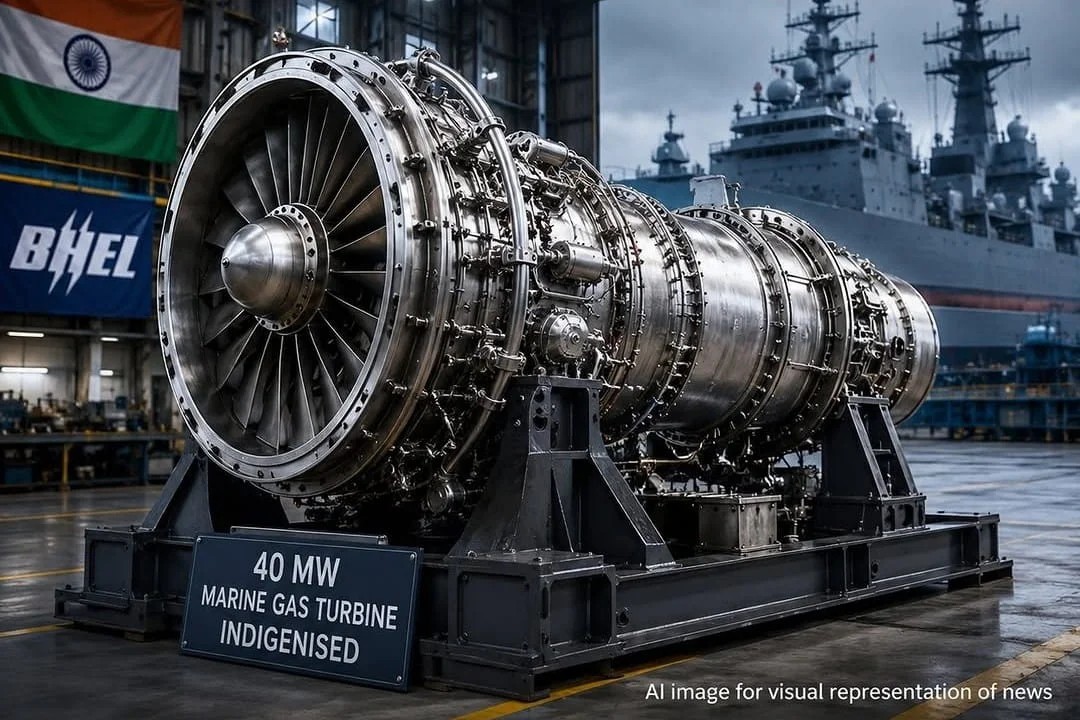
Bharat Heavy Electricals Limited has signed an international contract valued between ₹2,000–₹2,500 crore with Dangote Petroleum Refinery in Nigeria. BHEL will manufacture and supply eight Gas Turbine Generator Packages up to Mumbai Port and supervise their commissioning within a 26-month timeline to power petrochemical operations.
NEW DELHI, India — State-owned engineering and manufacturing enterprise Bharat Heavy Electricals Limited (BHEL) has officially finalized a major international contract agreement with Dangote Petroleum Refinery & Petrochemicals Free Zone Enterprise, Nigeria. The transaction marks a notable expansion for the Indian public sector undertaking within the African continent's industrial energy infrastructure market.
According to statutory corporate regulatory filings submitted on June 3, 2026, the comprehensive engineering order involves the design, manufacturing, and supply of heavy power generation machinery destined for installation in Nigeria. The development is highly important today as global energy markets demand higher refining self-sufficiency, forcing mega-refineries to secure stable, heavy-duty captive power setups to insulate their production lines from regional electrical grid volatility.
Technical Scope of the International Power Equipment Order
The legally binding international contract agreement, which was formally signed by both entities on June 2, 2026, mandates BHEL to deliver high-capacity power generation infrastructure. Specifically, the Indian engineering firm will oversee the complete design, manufacturing, supply up to Mumbai Port, and subsequent supervision of erection and commissioning for eight distinct Gas Turbine Generator Packages.
The critical energy equipment is earmarked for integration into the expansive Petroleum Refinery and Polypropylene Plant operated by the Dangote Group within the Dangote Industries Free Zone in Nigeria. The contract explicitly isolates the core equipment manufacturing, supply, and performance guarantee testing workflows as BHEL's primary responsibilities, while leaving localized civil construction and engineering works outside the specific scope of the Indian manufacturer.
Financial Evaluation and Project Execution Timelines
In its formal disclosure to domestic stock markets, BHEL placed the broad consideration and total economic size of the international tender between ₹2,000 crore and ₹2,500 crore (approximately 20 billion to 25 billion Indian Rupees). Securing this international open tender provides a strong boost to the company's export order book during the opening quarter of the 2026–27 fiscal year.
The structural execution parameters governing the bilateral agreement require BHEL to conclude all manufacturing, port delivery, and commissioning supervisory obligations within a strict time period of 26 months from the official start date or effective date of the contract. Furthermore, corporate compliance officers confirmed that the transaction was secured purely through competitive international bidding channels. The company's promoter group holds no vested interest in the awarding Nigerian entity, and the project does not fall within the legal definitions of a related-party transaction.
Strategic Impact on Global Refineries and Institutional Investors
The financial transaction carries positive implications for long-term institutional investors tracking India's capital goods sector, as well as global downstream petrochemical firms. By executing an engineering project of this scale for the Dangote Petroleum Refinery—widely recognized as one of the world's largest single-train refining facilities—BHEL demonstrates its competitive capacity to manufacture heavy rotating machinery that meets strict international technical standards.
For industrial operators in Nigeria and across West Africa, the continuous deployment of heavy gas turbine packages helps establish dedicated captive power plants. These self-contained power networks are critical to preventing costly operational shutdowns inside continuous-process chemical plants and polypropylene units, where even momentary electrical fluctuations can cause massive material waste and widespread system damage.
Official Sources Section
The operational, financial, and technical parameters detailed in this report are sourced exclusively from the following formal corporate governance submissions:
Official Corporate Regulatory Filing (Ref: CC/MISC/2026-27/09) submitted by Bharat Heavy Electricals Limited to the
BSE Limitedand the
National Stock Exchange of India Limitedon June 3, 2026.
Project Execution Blueprint (Annexure-I) authorized by Corporate Communications at BHEL House, New Delhi.
Quote Section
"According to officials from Bharat Heavy Electricals Limited's corporate communication division, the multi-billion rupee contract represents a completely independent international tender win. Organizers stated that the manufacturing phases will utilize BHEL’s domestic heavy industrial plants before shipping the completed turbine units directly out of the Mumbai Port hub."
Why It Matters
This cross-border industrial agreement demonstrates the growing export capability of India's heavy engineering sector under public administration. By supplying core power generation assets to major oil-producing nations like Nigeria, domestic manufacturers reduce their historic reliance on domestic Indian railways and state power board mandates. Practically, it ensures consistent manufacturing plant utilization inside India while accelerating the development of energy security infrastructures within emerging market economic zones.
Key Facts at a Glance
Contract Target: BHEL will design, manufacture, and supervise the commissioning of 8 Gas Turbine Generator Packages in Nigeria.
Monetary Valuation: The international order is valued between ₹2,000 crore and ₹2,500 crore ($20 billion to $25 billion INR).
Deployment Hub: The machinery will power a major Petroleum Refinery and Polypropylene Plant inside the Dangote Industries Free Zone.
Execution Timeline: The contract mandates complete project execution within 26 months from the official effective date.
Logistics Route: BHEL is responsible for shipping all heavy equipment packages safely up to Mumbai Port for outbound transport.
FAQ Section
Q1: What exactly is BHEL supplying to the Dangote facility in Nigeria?
BHEL is supplying eight comprehensive Gas Turbine Generator Packages. The contract includes the initial design, factory manufacturing, transport logistics up to Mumbai Port, and the on-site supervision of erection, commissioning, and final performance guarantee tests.
Q2: Is BHEL responsible for building the actual power plant structures in Nigeria?
No. The official contract parameters explicitly state that the scope of work excludes localized civil engineering and construction works. BHEL's obligations are strictly focused on equipment engineering, manufacturing, transport delivery, and technical supervision.
Q3: How long does BHEL have to complete this international power contract?
The entire project must be completed within 26 months from the official start or effective date of the signed contract agreement.
Source: BSE Limited, National Stock Exchange of India Limited, and Bharat Heavy Electricals Limited (BHEL) corporate investor relations.