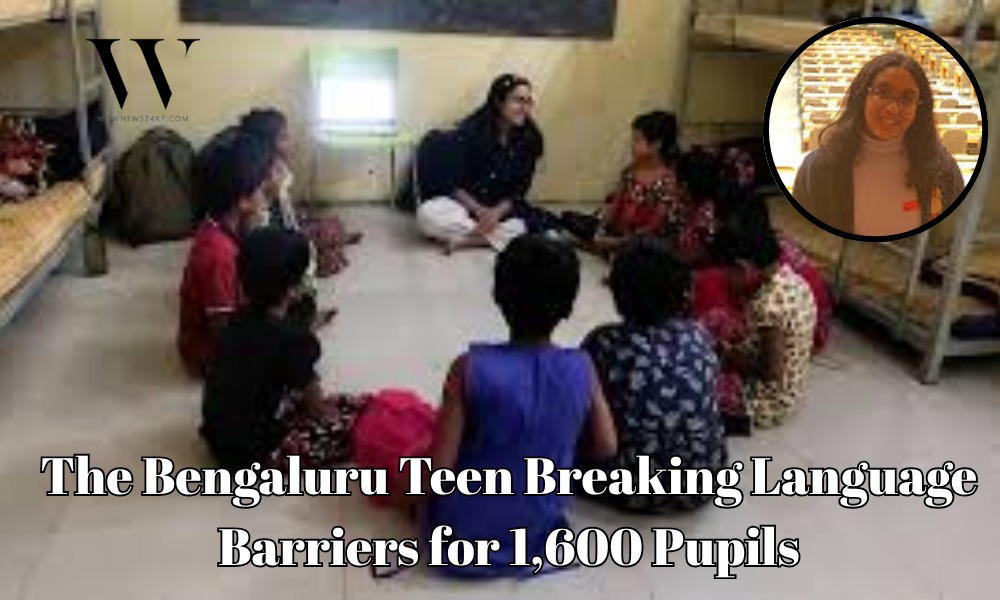
Roshni Gupta, a 17-year-old student from Bengaluru, has launched an impactful educational initiative that is helping over 1,600 underprivileged students overcome the "fear" of speaking English. Her organization, "Project Vidya," which began in 2023, has expanded into a global network operating across five countries, focusing on building communication skills through confidence-based learning rather than traditional instruction. The project addresses a common barrier in many government schools and underserved communities: while many students possess a foundational understanding of English, they often lack the confidence to use the language in verbal conversation. Gupta’s model shifts the focus from grammar drills and rote learning to interactive workshops, storytelling, and collaborative creativity.
Redefining English Language Education
Project Vidya operates on the premise that language proficiency is a social skill, not merely an academic subject. By creating an environment where mistakes are treated as a natural part of the learning process, the initiative aims to remove the hesitation and anxiety often associated with speaking a secondary language.
"It was not that they lacked understanding," Gupta shared regarding her initial observations in classrooms. "They just were not used to speaking without fear."
The workshops, which typically cater to students in Classes 4 through 9, often begin with simple, low-pressure activities such as introductions, storytelling, and even art-based exercises like origami. These creative outlets encourage students to express themselves, naturally integrating English into their creative process. By removing the pressure to be grammatically perfect, the initiative has successfully fostered a more comfortable environment for verbal participation.
A Growing Global Youth-Led Movement
Since its inception in May 2023, Project Vidya has grown from a local effort in Bengaluru’s Srirampura and Rajajinagar neighborhoods into a youth-led organization with approximately 40 active members. These volunteers, ranging in age from 13 to 25, manage various chapters across India, the United Arab Emirates, Rwanda, Kenya, and Lesotho.
The organization’s structure is decentralized, with each regional chapter led by a coordinator who oversees curriculum development, outreach, and volunteer management. This model has allowed the initiative to conduct 48 workshops internationally, directly impacting approximately 1,680 students. Beyond language skills, the group also holds advocacy sessions aligned with the United Nations Sustainable Development Goal 4 (Quality Education), reaching over 400 additional participants.
Quote Section
"We wanted to take away the fear of speaking, not by correcting every mistake, but by making it feel natural and comfortable," stated Roshni Gupta. Organizers stated that the organization continues to be mentored by senior educator Chhavi Kumar, who has guided the program’s pedagogical approach since its introduction in Gupta's school.
Why It Matters
The success of Project Vidya highlights the efficacy of peer-to-peer education in addressing deep-seated learning barriers. By targeting the psychological aspect of language learning—the fear of judgment—this initiative provides a scalable model for improving employability and social mobility for underprivileged youth. For stakeholders in the education sector, it underscores the value of shifting from instructional-heavy curricula to student-centric, interactive environments.
Key Facts at a Glance
Founder: Roshni Gupta, 17, from Bengaluru.
Reach: Over 1,680 students across India, UAE, Rwanda, Kenya, and Lesotho.
Active Volunteers: Approximately 40 youth members (aged 13–25).
Launch Year: 2023.
Pedagogy: Focus on interactive workshops, art, and storytelling to remove the "fear" of verbal communication.
FAQ
How does Project Vidya teach English differently?
The initiative avoids traditional grammar drills and rote memorization, instead using creative activities like storytelling, art, and conversation to make speaking English feel natural and less intimidating.
Who is eligible to participate in these workshops?
The program primarily targets underprivileged students in Classes 4 through 9 across government schools and orphanages.
How is the organization funded and managed?
It is an entirely youth-led volunteer network where active members manage curriculum development and outreach, often operating through community-based chapters.
Can other students join as volunteers?
Yes, the organization is run by youth volunteers between the ages of 13 and 25 who are interested in curriculum development, teaching, or coordination.
Official Sources