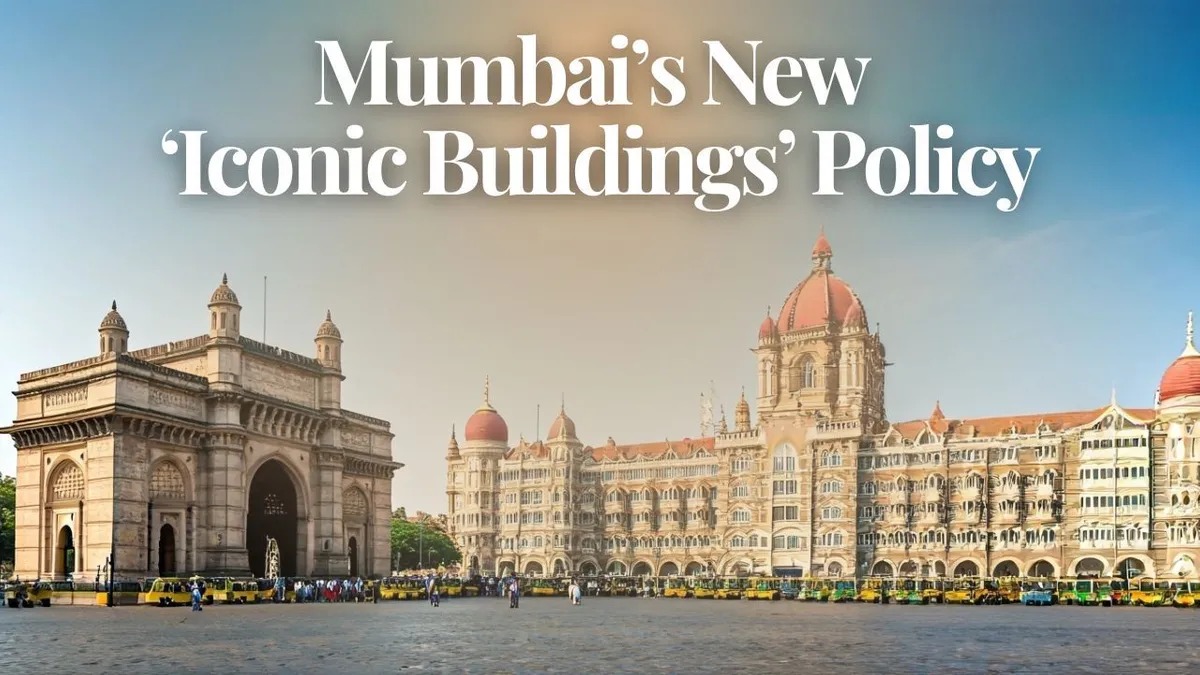
The Brihanmumbai Municipal Corporation will hold public hearings next week on its proposed Iconic Buildings policy, a plan meant to encourage architecturally striking projects that could reshape parts of the city’s skyline. The discussion comes after the civic body received feedback from bo...
The Brihanmumbai Municipal Corporation will hold public hearings next week on its proposed Iconic Buildings policy, a plan meant to encourage architecturally striking projects that could reshape parts of the city’s skyline. The discussion comes after the civic body received feedback from both supporters and critics — including more than 2,200 people signing a letter of objection.
What the Policy Proposes
The policy, part of the Development Control and Promotion Regulations 2034, sets out rules for what qualifies as an “iconic” building and offers certain incentives in return for making at least 40 percent of the space publicly accessible. The BMC says the goal is to attract landmark developments with features such as observation decks, public plazas, or cultural spaces that people can visit.
A six-member committee, including architects, urban planners, and the municipal commissioner, will decide which proposals get the “iconic” tag. Only a limited number will be approved each year.
Why There’s Pushback
Opponents argue that the definition of “iconic” in the draft is too vague and leans heavily toward flashy new high-rises rather than preserving existing heritage. Some worry that the public access rule — especially if it involves ticketed entry — would exclude many of Mumbai’s historic residential or cultural buildings. Others believe the policy could mainly benefit large developers, adding to congestion and stressing infrastructure.
Architects, heritage experts, and environmental groups are also calling for sustainability standards, proper skyline impact studies, and clearer selection criteria. Some have suggested adding heritage specialists to the selection panel and holding open design competitions to make the process fairer.
How We Got Here
The BMC opened the proposal for public comment from June 24 to July 24, collecting over 23 individual suggestions and objections, plus the mass-signed letter. Feedback ranged from broad philosophical concerns to specific recommendations about building materials, environmental safeguards, and cultural relevance.
What Happens Next
Next week’s hearings will give residents and experts a chance to speak directly to the BMC before city officials finalize their recommendations to the state government. After that, the policy could be revised, scrapped, or sent forward as is. If implemented, the first set of “iconic” building approvals would likely be granted in the next development cycle.
The Bigger Picture
Supporters see this as a chance for Mumbai to add contemporary landmarks in line with global cities, boosting tourism and offering new public spaces. Critics counter that unchecked incentives and loose criteria risk creating more glass-and-steel towers with little genuine cultural value.
The hearings will test whether the city can find common ground — a framework that encourages bold new architecture while protecting the heritage and character that make Mumbai recognisable worldwide.
Sources: Mid-Day, Indian Express, Hindustan Times, The Week, BMC public notices