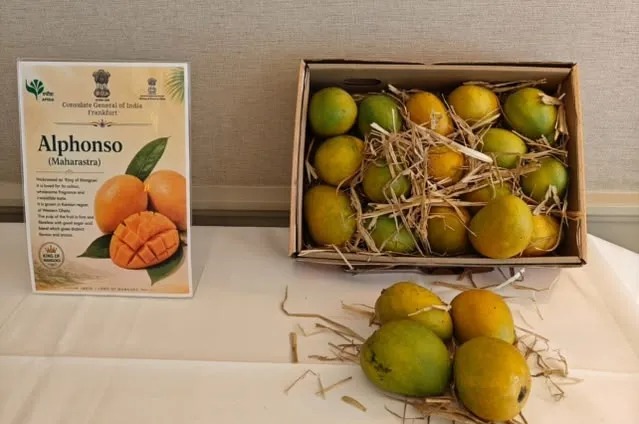
India has launched a targeted mango promotion festival in Frankfurt, organized by APEDA and the Consulate General of India. The trade event introduces premium, GI-tagged varieties like Alphonso and Kesar directly to European distributors, aiming to resolve logistics hurdles and scale up India's agricultural export footprint across Germany.
FRANKFURT — In a major diplomatic and commercial push to expand agricultural footprints into the European Union, India has successfully organized a high-profile mango promotion festival in Frankfurt, Germany. Orchestrated by the Agricultural and Processed Food Products Export Development Authority (APEDA) in close coordination with the Consulate General of India in Frankfurt, the specialized trade and cultural event officially launched this week. The initiative forms part of a multi-nation European campaign designed to establish premium, Geographical Indication (GI) protected Indian mango varieties within continental supermarket networks.
By bypassing traditional supply-chain bottlenecks and directly connecting European food distributors with Indian Farmer Producer Organizations (FPOs), officials aim to scale commercial export volumes past historic levels.
Strategic Market Placement Within the European Union
The timing of the Frankfurt initiative aligns with peak harvest cycles in major agricultural states across India, enabling the immediate shipping of delicate, unblemished seasonal crops under strict phyto-sanitary compliance.
Historically, India produces over 25 million tonnes of mangoes annually—representing approximately 40% of global output—yet exports barely 1% of its entire seasonal yield. Trade analysts attribute this low international footprint to high freight costs, strict EU trace-element limitations, and intense competition from Latin American logistics channels.
By establishing a direct trade pipeline via Frankfurt—Germany's busiest cargo hub—Indian trade ministries are seeking to systematically lower transport overheads and expand distribution across affluent Western European consumer markets.
Showcasing Elite GI-Tagged Horticultural Varieties
The specialized exhibition in Frankfurt featured a curated selection of commercially viable mango varieties, with a strong emphasis on fruit varieties holding verified geographical protection. Importers, master chefs, European retail procurement managers, and hospitality executives sampled unique flavor profiles, including:
Alphonso (Ratnagiri & Devgad): Celebrated for its rich, creamy texture and vibrant golden presentation.
Kesar (Gir): Highly favored by industrial food processors for its intense aroma and deep saffron pulp.
Banganapalli: A historically significant, large-sized variety sourced directly from Andhra Pradesh.
Langra and Dasheri: Premium northern varieties prized for their exceptionally high natural sugar contents and delicate fiber profiles.
Enhancing Agricultural Traceability and FPO Integration
A core focus of APEDA's 2026 export strategy involves cutting out secondary intermediaries by integrating certified local FPOs directly into the international value chain. Through digital tracking systems developed under the Indian Ministry of Commerce and Industry, European buyers in Frankfurt can verify the complete organic certification, pest-treatment history, and farm-gate origin of every individual cargo pallet.
This level of technological transparency ensures that all incoming fruit shipments successfully clear the European Union's rigid pesticide maximum residue limits (MRLs). Consequently, this structural stability protects European retailers from sudden product recalls and builds long-term confidence in the reliability of Indian agricultural supply networks.
Official Sources Section
The underlying trade data, operational logistics, and official statements highlighted in this news report are drawn from regulatory filings issued by APEDA, agricultural export frameworks managed by the Ministry of Commerce and Industry, and community diplomacy logs published by the Consulate General of India, Frankfurt.
Quote Section
"According to officials from the agricultural export authority, establishing permanent retail partnerships across Germany is essential to correcting India's historically low mango export ratios. Organizers stated that demonstrating complete transparency from farm-gate to European supermarkets will provide Indian growers with a high-value market capable of yielding excellent financial returns."
Why It Matters
For European consumers and commercial retail networks, the festival introduces direct access to high-value seasonal produce that was previously difficult to source reliably. For local farming communities across major Indian growing regions, expanding market access into Germany translates to significantly higher profit margins compared to localized domestic trading systems.
On a larger scale, establishing a successful logistics blueprint for highly perishable fruits like mangoes paves the way for India to export other high-demand horticultural items, such as organic bananas, pomegranates, and fresh grapes into European markets.
Key Facts at a Glance
Global Output Context: India cultivates over 25 million tonnes of mangoes annually but currently exports less than 1% of its harvest.
Core Institutional Backing: Jointly coordinated by APEDA and the Consulate General of India to build direct retail ties.
Focus on Standards: All showcased varieties utilize strict digital tracking to confirm full compliance with EU chemical residue regulations.
Economic Objective: Shifts focus toward elite GI-tagged varieties to maximize wholesale profit margins for local growers.
FAQ Section
Why did India select Frankfurt as a primary destination for its mango promotion festival?
Frankfurt serves as the definitive economic and logistical gateway to Germany and Central Europe. Utilizing its massive air-cargo infrastructure allows fresh, highly perishable fruits to transition from Indian orchards to European retail shelves inside minimum time frames.
What does it mean when a mango variety is "GI-tagged"?
A Geographical Indication (GI) tag is an official intellectual property classification that certifies a product possesses specific qualities, reputations, or characteristics directly attributable to its precise geographic place of origin.
How do Indian exporters ensure mangoes meet strict European Union safety rules?
Exporters work under APEDA supervision to utilize modern post-harvest hot water or vapor heat treatments. These methods eliminate pests without chemical intervention, satisfying the EU's stringent consumer health and import guidelines.
Source: APEDA Trade Statistics Portal, Ministry of Commerce Agricultural Export Circulars, Consulate General of India Frankfurt Media Desk 2026.