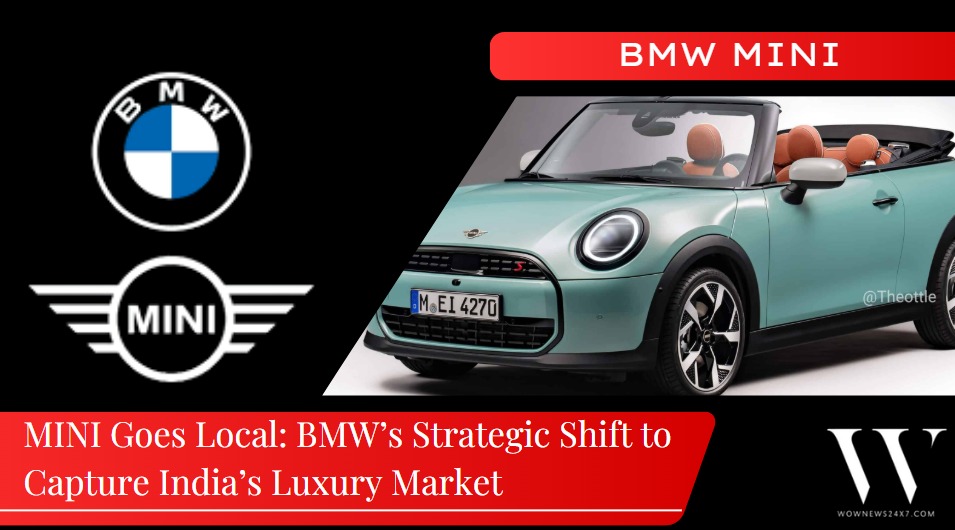
BMW Group India is aiming to double its MINI brand sales in 2026 by shifting to domestic assembly for models like the Countryman and expanding its retail network into 10 new Tier-2 cities. This strategy leverages local manufacturing to improve pricing, offset currency volatility, and tap into growing regional demand.
BMW Group India has embarked on an aggressive strategy to double its sales volumes for the MINI brand in India by the end of 2026. The plan centers on a three-pronged approach: transitioning to domestic vehicle assembly, broadening the product portfolio, and expanding the retail footprint into emerging Tier-2 markets.
The initiative follows a strong start to the current fiscal year, with MINI recording 213 unit sales in the first quarter of 2026—a 42% increase compared to the same period in 2025. After selling 730 units last year, the company is leveraging its Chennai manufacturing plant to lower import dependency and improve price accessibility for a wider base of younger, affluent buyers.
Localisation and Production Strategy
A pivotal component of this volume expansion is the upcoming launch of the internal combustion engine (ICE) variant of the MINI Countryman. By producing the model locally in Chennai, BMW Group India aims to achieve a localisation rate of up to 50%. This shift marks a strategic transition from a limited-portfolio strategy—which previously relied heavily on imports—to a broader market presence that includes 11 locally produced models across the BMW Group’s Indian portfolio.
"Localisation is a structural hedge against macroeconomic headwinds," said Hardeep Singh Brar, President and CEO of BMW Group India. By mitigating the impact of foreign-exchange volatility and high import tariffs, the group expects the locally produced Countryman to offer more attractive pricing, thereby facilitating the brand’s ambition for its "best-ever" sales year.
Retail Expansion into Tier-2 Markets
To support the projected growth, BMW Group India is rapidly scaling its physical retail network. MINI currently operates through 12 sales touchpoints across nine cities, but plans to expand into 10 additional cities by the end of 2026. The new focus includes emerging markets such as Jaipur, Jodhpur, Lucknow, Ranchi, Guwahati, Surat, and Vijayawada.
Unlike standalone luxury outlets, MINI’s expansion into these Tier-2 cities will be integrated directly into existing BMW dealership infrastructure. This synergy not only optimizes operational costs but also provides a "cross-selling" opportunity, as roughly 40% of MINI customers in India are existing BMW owners. After-sales support is similarly integrated, with maintenance services now accessible across 51 touchpoints in 36 cities.
Portfolio Growth and Product Mix
In addition to the new locally produced Countryman, the company has planned a total of 10 product launches for 2026. These include nine exclusive and limited-edition models themed around lifestyle, creativity, and motorsport.
While the new ICE-powered Countryman is expected to drive mass-market volume, BMW remains committed to its electric vehicle (EV) strategy. The company anticipates that EVs will continue to contribute 20% to 30% of total MINI sales in India, maintaining a "profitable and sustainable" mix alongside its growing petrol-powered offerings.
Official Sources Section
The strategic shift was confirmed by BMW Group India leadership during recent corporate briefings and regulatory updates. Details regarding the retail network expansion, production localisation rates, and quarterly sales growth were verified through official disclosures provided to exchange platforms and the company's press communications.
Why It Matters
For the Indian luxury automotive sector, this shift signifies a move toward higher localisation as a means of insulating premium brands from currency fluctuations and logistical costs. For consumers, the increased footprint in Tier-2 cities and the local assembly of key models suggest improved access to premium vehicles, potentially accelerating the adoption of luxury compact SUVs in smaller urban centers.
Key Facts at a Glance
Sales Target: Doubling of MINI sales volumes in India by the end of 2026.
Production Strategy: Local assembly of the MINI Countryman at the Chennai plant (up to 50% localisation).
Retail Growth: Expansion from 12 touchpoints in nine cities to 22 touchpoints across 19+ cities.
Performance: 42% year-on-year sales growth recorded in Q1 2026.
Product Launches: 10 total launches planned for 2026, including limited editions.
FAQ Section
1. Why is BMW shifting to local assembly for MINI?
Local assembly reduces import tariffs and acts as a hedge against rupee depreciation, allowing the company to offer more competitive pricing to the Indian market.
2. Where will the new MINI dealerships be located?
Expansion is focused on Tier-2 cities including Jaipur, Jodhpur, Lucknow, Ranchi, Guwahati, Surat, and Vijayawada, integrated within existing BMW dealerships.
3. Does this move affect MINI's electric vehicle focus?
No, BMW Group India maintains that EVs will continue to be a significant part of the portfolio, contributing 20-30% of sales despite the push for petrol-powered models.
4. How will the price hike in July 2026 impact MINI buyers?
BMW has announced a price increase of up to 2% effective July 1, 2026, to counter escalating logistics and import costs; customers are encouraged to complete bookings before the change takes effect.
Source: BMW Group India PressClub, Business Standard, Fortune India, Cars24