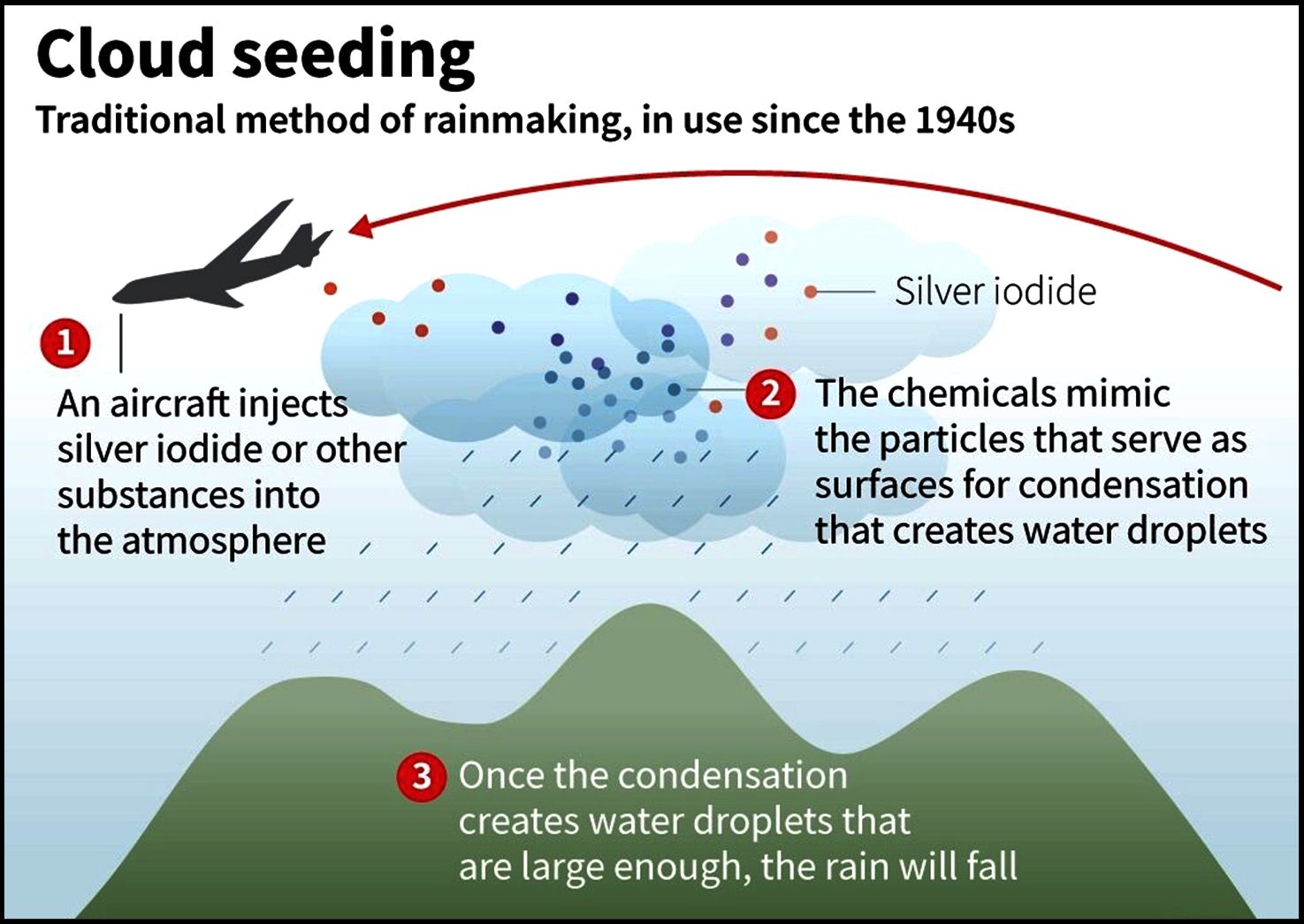
Meteorological studies highlight that cloud seeding—the process of introducing ice nuclei like silver iodide into clouds to enhance precipitation—faces unique complexities in tropical regions like Puerto Rico. Complex wind patterns, high ambient temperatures, and unpredictable marine airflows make isolating human-induced rainfall changes extremely difficult for researchers.
Backed by atmospheric research and historical meteorological disclosures, experts examine why weather modification remains uniquely challenging across tropical environments like Puerto Rico.
As water resource managers search for advanced ways to combat regional dry spells, interest in weather modification techniques has resurfaced globally. At its core, cloud seeding involves introducing tiny particles—such as silver iodide—into suitable clouds to stimulate ice crystal formation and encourage precipitation. However, applying this technology in tropical and island settings like Puerto Rico introduces profound scientific complexities. Historical initiatives, including Project STORMFURY experiments deployed out of Puerto Rico in 1969, demonstrated that the shifting dynamics of tropical air masses create immense hurdles for predicting and verifying modification outcomes.
Evaluating Atmospheric Variables, Tropical Cloud Structures, and Verification Hurdles
Analyzing the mechanics of weather modification reveals why regional geography and thermodynamics dictate success or failure. According to atmospheric research and scientific literature published in September 2026, core challenges include:
Thermodynamic Differences: Unlike mid-latitude clouds that feature abundant supercooled water ideal for glaciogenic seeding, tropical cloud systems operate under significantly warmer temperature profiles, requiring entirely different hygroscopic intervention strategies.
Complex Marine Airflows: Puerto Rico's insular geography exposes developing clouds to shifting ocean breezes and rugged topography, causing rapid cloud evolution that makes consistent target tracking nearly impossible.
Natural Variability Versus Intervention: Distinguishing between an increase in rainfall caused by artificial seeding versus natural eyewall replacement cycles or tropical convection loops remains a primary hurdle for researchers.
Historical Precedents: Past federal weather modification trials based out of Puerto Rico showed initial drops in storm wind speeds, though subsequent analyses revealed that natural meteorological phenomena could account for the changes just as easily as silver iodide dispersion.
Why It Matters
The practical implications of understanding cloud seeding limitations directly affect how regional governments allocate resources for drought mitigation and water security. For environmental planners and policy makers, recognizing that human intervention cannot simply conjure clouds out of clear skies prevents misplaced reliance on weather modification during severe dry periods. For the scientific community, ongoing research highlights the necessity of advanced atmospheric modeling over simplistic intervention models.
Key Facts at a Glance
Definition: Cloud seeding is a weather modification technique designed to enhance precipitation by introducing ice nuclei into specific cloud formations.
Primary Material: Silver iodide is commonly utilized for its crystal structure, which mimics natural ice nuclei.
Tropical Challenge: Higher baseline temperatures and rapid cloud turnover complicate standard seeding methodologies in regions like Puerto Rico.
Verification Difficulty: Natural meteorological cycles frequently mimic the intended effects of seeding, making statistical proof difficult to isolate.
FAQ Section
What is cloud seeding and how does it work?
Cloud seeding is a weather modification technique that introduces tiny particles, such as silver iodide, into suitable supercooled or moisture-laden clouds to stimulate ice formation and enhance rainfall.
Why is cloud seeding particularly complex in Puerto Rico?
Tropical environments feature warmer cloud profiles, rapid convective turnover, and complex island wind patterns, making it difficult to target clouds and isolate artificial precipitation from natural rainfall.
Can cloud seeding create clouds during a severe drought?
No, cloud seeding cannot create clouds or generate rain out of clear skies; it requires the pre-existence of moisture-filled, suitable clouds to function.
What historical weather modification projects took place near Puerto Rico?
In 1969, federal agencies launched Project STORMFURY from Puerto Rico, deploying aircraft to seed hurricanes with silver iodide to study whether wind speeds could be artificially reduced.
Where can readers find verified studies on weather modification?
Detailed scientific evaluations and historical records are maintained through the World Meteorological Organization (WMO) and academic archives.
Source: World Meteorological Organization Bulletin, National Oceanic and Atmospheric Administration (NOAA) Archives, Desert Research Institute (DRI) Program Guidelines