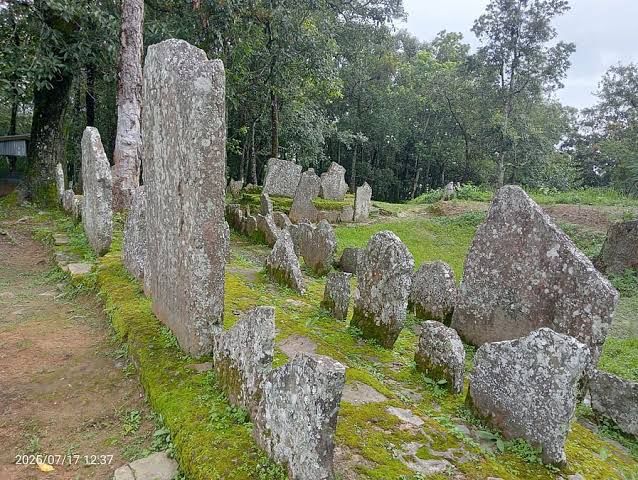
Mizoram maintains a growing inventory of state-protected historical sites alongside rare national recognitions. According to official cultural department updates, the state features dozens of locally preserved monuments, complemented by two key megalithic complexes—Kawtchhuah Ropui and the newly designated Lianpui menhirs—under the national protection of the Archaeological Survey of India.
Backed by official cultural department releases, Mizoram preserves its rich ancestral history through an expansive state-protected network alongside select monuments of national importance.
Expanding Archaeological Recognition in Northeast India
The preservation of ancestral heritage and historical artifacts in Northeast India continues to evolve through structured institutional frameworks. According to official data from the Department of Art and Culture, Government of Mizoram, and reports from the Archaeological Survey of India (ASI), the state maintains a dedicated inventory of locally protected historical landmarks alongside select sites receiving central oversight.
While regional authorities manage numerous sites under state jurisdiction, central protection has expanded to include rare megalithic structures that document early Mizo social practices, art forms, and migration patterns prior to the modern era. This dual-layer conservation framework ensures that both community-venerated spots and major archaeological discoveries receive appropriate academic study and physical preservation.
Landmark Megaliths and National Classifications
The transition of regional heritage sites into federally protected entities involves extensive scientific inspection under the Ancient Monuments and Archaeological Sites and Remains Act. According to official announcements tracked by The Hindu and GK Today, key milestones in the state's preservation history include:
Kawtchhuah Ropui: Located in Vangchhia village, this premier site hosts over 170 engraved menhirs and served as Mizoram's first federally recognized monument of national importance.
Lianpui Menhirs (Lungphun Ropui): Situated near the Myanmar border in the Champhai district, this site features 114 intricately carved memorial stones, petroglyphs, and ancient pathways officially gazetted for central protection.
State-Protected Network: Dozens of additional historical locations—including ancient caves, chief residences, traditional monoliths, and colonial-era bungalows—are safeguarded directly under state legislative frameworks.
Cultural Motif Documentation: The protected stones bear detailed carvings of human figures, fauna, gongs, and mithun heads, offering vital insights into pre-Christian Mizo traditions.
Why It Matters
The practical implications of maintaining a dual-tier monument protection system extend to cultural tourism, academic research, and regional identity. By securing central ASI backing alongside active state preservation, Mizoram protects fragile petroglyphs and megaliths from environmental degradation while inviting controlled cultural heritage tourism to its remote eastern districts.
Key Facts at a Glance
National Monuments: Two prominent megalithic complexes (Kawtchhuah Ropui and Lianpui Menhirs) hold central ASI protection.
State Protection: Numerous local historical sites, caves, and memorial stones are maintained under the Mizoram Department of Art and Culture.
Key Location: Champhai district serves as the primary hub for these ancient carved stone alignments.
Governing Legislation: Protected under the Ancient Monuments and Archaeological Sites and Remains Act, 1958.
FAQ Section
How many monuments in Mizoram possess national protection under the ASI?
Two major archaeological sites—Kawtchhuah Ropui in Vangchhia and the Lianpui menhirs in the Champhai district—have been officially designated as monuments of national importance.
What types of artifacts are found at Mizoram's protected megalith sites?
The sites feature centuries-old upright stone menhirs intricately carved with human figures, animals, mithun heads, gongs, petroglyphs, and ancient ritual pathways.
Who oversees Mizoram's numerous regional historical sites?
Local historical markers, traditional caves, and heritage structures are cataloged and protected directly by the Department of Art and Culture, Government of Mizoram.
Where can researchers review official documentation on these protected heritage sites?
Detailed listings and statutory notifications are accessible via the Department of Art and Culture, Government of Mizoram Portal and the Archaeological Survey of India Records.
Source: Department of Art and Culture, Government of Mizoram, The Hindu, GK Today