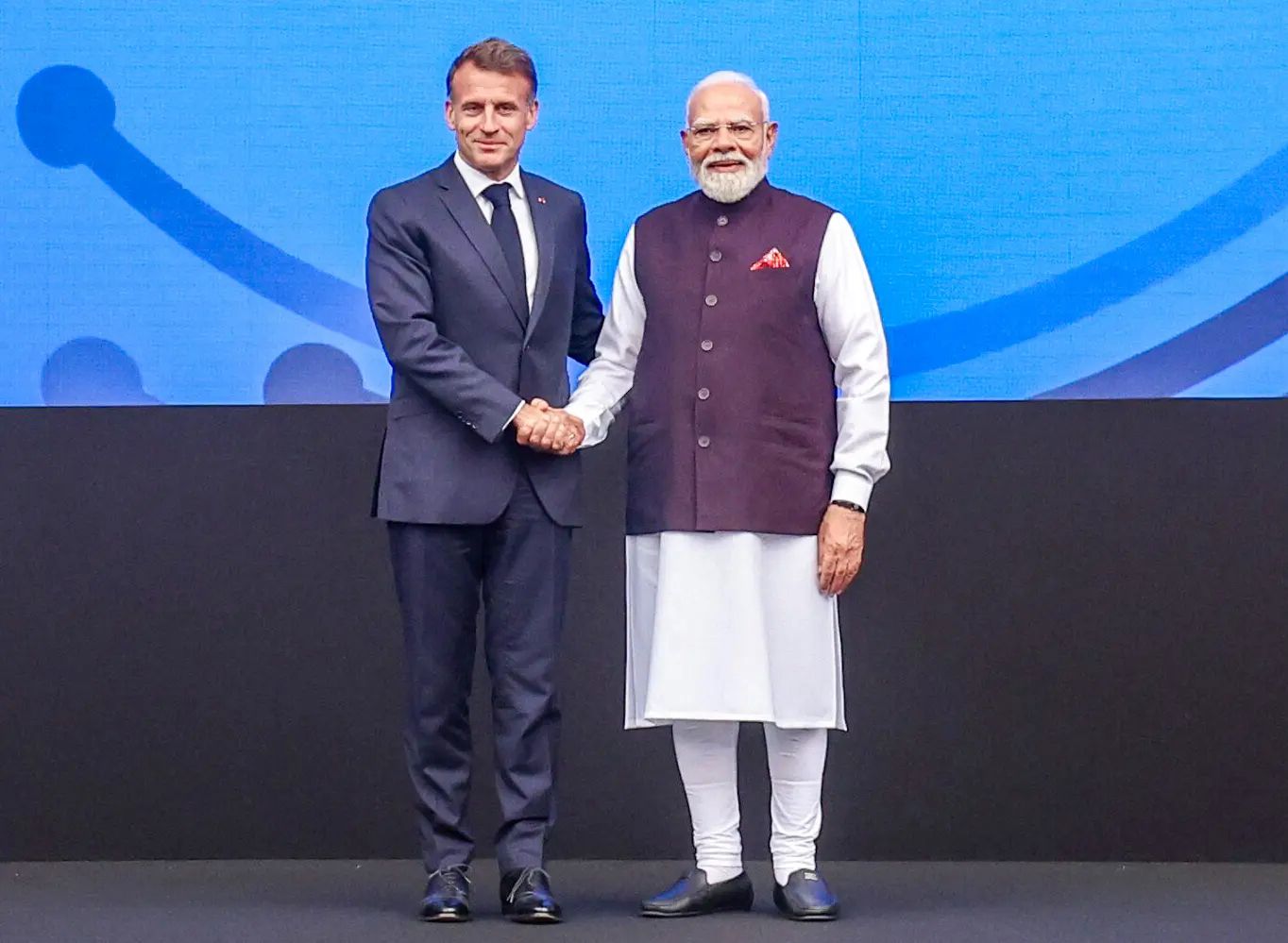
The Bharat Innovates 2026 summit concluded in Nice, France, securing $254.5 million in funding commitments and establishing over 30 strategic partnerships. Jointly launched by global leaders to mark the India-France Year of Innovation, the event successfully integrated 120 Indian deep-tech startups into European commercial and academic ecosystems.
NICE, France — Marking a major milestone in India-France ties, the high-profile international conclave Bharat Innovates 2026 successfully concluded its three-day run on Tuesday, June 16, 2026. The summit, organized by the Ministry of Education under the aegis of the India-France Year of Innovation, was jointly inaugurated by Prime Minister Narendra Modi and French President Emmanuel Macron at the Palais des Expositions in Nice. Highlighting the rapid expansion of India's startup ecosystem, Union Education Minister Dharmendra Pradhan hailed the event as a defining bridge that transitions India from a consumer of global knowledge into a premiere creator of frontier human-centric technologies.
Massive Capital Infusion and Inter-Institutional Agreements
The bilateral summit generated substantial investment momentum and formalized cross-border institutional cooperation. According to official data compiled by the Press Information Bureau (PIB), the conclave facilitated more than 1,350 business-to-business (B2B) meetings and secured cumulative funding commitments totaling $254.5 million.
The event served as an active marketplace for 120 curated Indian deep-tech startups and over 15 Institutes of Excellence, including several Indian Institutes of Technology (IITs) and the Indian Institute of Science (IISc). The selected startup cohort brought immense intellectual property weight to Nice, collectively holding more than 1,500 patents and representing critical commercial entities such as Ather Energy and ideaForge.
Strategic MoUs and the Cross-Border Innovation Corridor
Beyond financial investment, day one of the conclave witnessed the signing of over 30 pioneering agreements intended to bridge the European and Indian tech landscapes. This infrastructure expansion targets 13 specialized science, technology, engineering, and mathematics (STEM) pillars, ranging from quantum computing and semiconductors to clean energy and disaster resilience.
In a major structural development, IIT Madras and its international arm, IITM Global, exchanged nine milestone commercial MoUs projected to unlock nearly $100 million in value creation. These commercial pacts include strategic collaborations between aerospace pioneer Agnikul Cosmos and European firms Safran and ICEYE, alongside green transit ventures involving TuTr Hyperloop and industrial giant thyssenkrupp.
Aligning Academic Frameworks with National Growth Visions
The deployment of Indian deep-tech on European soil represents the practical application of domestic policy shifts within India's higher education infrastructure. Regulatory releases from the Ministry of Education emphasize that the initiative serves as an international extension of the National Education Policy (NEP) 2020.
The Structural Policy Shift: By linking institutional research parks, local incubation laboratories, and the newly active Anusandhan National Research Foundation (ANRF), the Indian government is methodically shifting its universities from purely academic spaces into primary engines of economic enterprise.
To ensure early exposure to international standards, the Atal Innovation Mission (under NITI Aayog) launched the first-ever School Innovation Lab in France. This infrastructure footprint extends India's high school "Atal Tinkering Lab" framework abroad, fostering cooperative problem-solving among young students from both nations.
Official Sources Section
The financial matrices, structural agreements, and strategic policy targets detailed in this coverage are drawn directly from public releases by the Press Information Bureau (PIB), organizational policy briefings from the Indian Ministry of Education, and official international partnership logs released by the Embassy of India.
Quote Section
"The inauguration of Bharat Innovates 2026 in Nice, France, by Prime Minister Narendra Modi and President Emmanuel Macron marks a defining milestone in the India-France partnership," stated Union Education Minister Dharmendra Pradhan.
"According to officials, the initiative reflects a shared conviction that innovation must serve humanity. 'From AI for All to Technology for Humanity, India is emerging not just as a technology powerhouse but as a provider of solutions for the world,' Pradhan added, noting that the platform will serve as a global accelerator for the Indian educational ecosystem."
Why It Matters
The Bharat Innovates 2026 summit changes the economic narrative for Indian research, proving that Indian academic laboratories can generate high-value, global commercial assets. By embedding homegrown startups into the European manufacturing, space, and defense supply chains, the initiative expands market access for deep-tech founders. For international investors, it offers transparent access to patented, cost-efficient, and highly scalable technologies designed to address pressing global issues like climate change and advanced industrial automation.
Key Facts at a Glance
Bilateral Milestone: Prime Minister Narendra Modi and President Emmanuel Macron jointly launched Bharat Innovates 2026 in Nice, France.
Capital Generation: The three-day event secured over $254.5 million in capital commitments and enabled 1,350 B2B meetings.
Commercialization Pipeline: Indian academic institutions, led by IIT Madras, signed agreements worth nearly $100 million with global corporations.
Global Tech Bridge: 13 French universities established formal student exchange and joint research partnerships with 11 IITs and the IISc.
FAQ Section
1. What was the primary objective of Bharat Innovates 2026?
Organized under the India-France Year of Innovation, the summit aimed to connect Indian deep-tech startups, premium research labs, and academic institutions with European venture capitalists, global CEOs, and international technology markets.
2. Which key technology sectors were highlighted at the Nice conclave?
The platform showcased innovations across 13 critical STEM areas, focusing heavily on semiconductors, space and defense technology, quantum computing, artificial intelligence, biotechnology, and clean energy.
3. How does this summit tie into India's National Education Policy (NEP) 2020?
The initiative reflects the NEP 2020 vision of upgrading Indian higher education institutions from knowledge consumers into active hubs for intellectual property creation, incubation, and global enterprise.
Source: Official Summit Communiqués via the Press Information Bureau (PIB) and Strategic Portfolio Frameworks from the Ministry of Education.