The National Capital Region Planning Board has greenlit a ₹5,000 crore initiative to build four greenfield Namo cities across Delhi, Haryana, Uttar Pradesh, and Rajasthan. Designed to manage regional population growth, a dedicated panel will finalize the exact transit-connected locations for these smart cities by August 15, 2026.
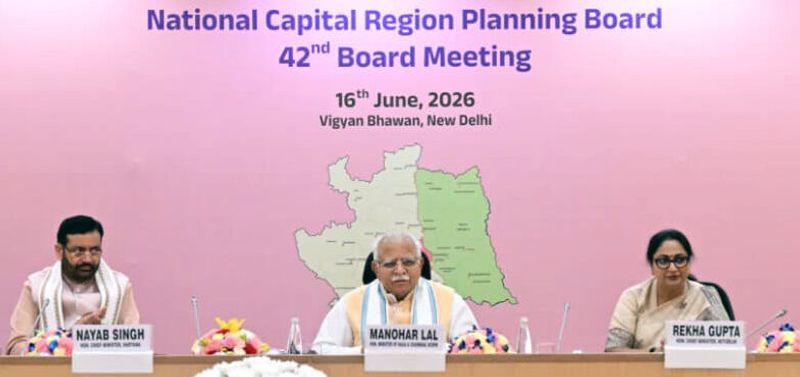
NEW DELHI, India — In a major structural move to counter heavy demographic pressure across the National Capital Region (NCR), the central government has authorized the creation of four new greenfield smart urban nodes, designated as Namo cities. The decision was formalized during the 42nd meeting of the National Capital Region Planning Board (NCRPB) in New Delhi. A dedicated high-level panel has been established to review state-level proposals and finalize the exact spatial locations for the Namo cities by August 15, 2026, marking a significant milestone in India’s long-term regional development framework.
Challenge-Based Selection: States Race to Submit Real Estate Proposals
The mega-project will distribute the four decentralized urban centers across the primary participating territories of the capital zone: Delhi, Haryana, Uttar Pradesh, and Rajasthan. According to official guidelines released after the board meeting, the specific allocation of the Namo cities will be determined through a competitive, challenge-based selection process.
The central administration has already requested formal location blueprints and financial viability reports from the urban development departments of each respective state government. The special sub-committee, composed of central planners and state administrative representatives, is tasked with processing these submissions over the next two months to meet the mid-August reporting deadline.
Regional Plan 2041: Managing an 11-Crore Population Surge
The construction of the Namo cities is the foundational pillar of the long-pending Regional Plan 2041 framework, which addresses unprecedented urbanization across northern India. Demographers at the Ministry of Housing and Urban Affairs estimate that the total population of the NCR will surge to approximately 11 crore people by 2041, nearly doubling the 5.8 crore citizens recorded during the last census cycle.
By establishing unbuilt, self-sustaining greenfield townships, regional planners aim to systematically funnel this immense migration into structurally sound environments rather than allowing unchecked, unplanned urban sprawl to degrade infrastructure in oversaturated hubs like Gurgaon, Noida, and regular Delhi sectors.
Superfast Transit: Driving the '30-Minute NCR' Commitment
A defining feature of the new urban expansion layout is its complete synchronization with high-speed mass transit. The four Namo cities are planned to sit directly adjacent to emerging Rapid Rail Transit System (RRTS) lines, known nationally as Namo Bharat.
The Mobility Mandate: Under the guidelines of Regional Plan 2041, the board is executing a strict "30-minute NCR" commitment. This transit benchmark requires that every single major economic or residential node within the regional jurisdiction must be reachable from the core territory of Delhi within a maximum of 30 minutes via superfast rail, specialized heli-taxi links, or dedicated express corridors.
During the ministerial session, officials also approved immediate progress updates on the expanding rapid rail transit network moving toward Karnal and Manesar, ensuring that the foundational transport links are moving concurrently with residential housing development.
Official Sources Section
The infrastructure investments, demographic forecasts, and statutory boundaries detailed in this report are sourced from official administrative resolutions passed during the 42nd NCRPB assembly, alongside policy declarations released by Union Minister Manohar Lal Khattar and the Press Information Bureau.
Quote Section
"In the meeting, it was decided that four greenfield cities will be developed. These cities will be called 'Namo Cities.' A total of ₹5,000 crore will be allocated for this initial phase over the next five years," stated Union Housing and Urban Affairs Minister Manohar Lal Khattar during his post-panel media presentation.
"According to officials present at the assembly, the board concurrently rejected a localized proposal to shrink the geographical boundaries of the zone. Haryana Chief Minister Nayab Singh Saini confirmed that all 14 state districts, including Karnal and Bhiwani, will remain within the protected economic territory, which will now be divided into three operational zones to balance environmental and commercial interests."
Why It Matters
The launch of the Namo cities initiative marks a paradigm shift in how India handles large-scale metropolitan growth. By dedicating ₹5,000 crore to construct fully unbuilt "greenfield" areas instead of trying to patch up old, failing systems, the project offers a clean slate for implementing eco-friendly waste systems, smart power grids, and pedestrian-first layouts. For local citizens and incoming workers, this means access to affordable housing tied directly to high-speed transit, effectively breaking the traditional link between working in the capital and enduring its heavy traffic, high cost of living, and seasonal air pollution crises.
Key Facts at a Glance
Mega-Budget Infrastructure: The central government has locked in an initial funding pool of ₹5,000 crore to build four distinct greenfield townships over the next five years.
Firm Panel Timeline: A joint sub-committee will analyze proposals from four participating states and declare the exact geographical sites by August 15, 2026.
Smart Grid Layouts: Each of the planned Namo cities will feature eco-friendly designs modeled directly after the modern industrial corridors of the Delhi-Mumbai transit channel.
Massive Population Shield: The expansion aims to house a portion of the 3 crore additional residents expected to enter the capital territory over the next 15 years.
Static Border Map: The board confirmed that Haryana's regional footprint will remain entirely unchanged, preserving its 14 designated industrial districts.
FAQ Section
1. What does the term 'greenfield city' mean in this regional project?
A greenfield city refers to an urban development project built entirely from scratch on previously undeveloped or agricultural land. This allows engineers to design advanced water, power, and road networks without dealing with the limits of pre-existing urban structures.
2. How will the 'Namo cities' help reduce air pollution in the Delhi-NCR area?
The townships are designed around transit-oriented development (TOD), placing residential areas right next to clean-energy rapid rail links. Additionally, the board passed a strict conversion scheme during the meeting to phase out vehicles below BS-6 emission standards within these specific development zones.
3. Which specific states are eligible to compete for a new urban center?
The challenge-based submission process is open exclusively to the four administrative members of the board: the Union Territory of Delhi, Haryana, Uttar Pradesh, and Rajasthan. Each territory will receive one master-planned city node.
Source: Official press briefing by the Ministry of Housing and Urban Affairs, structural resolutions of the National Capital Region Planning Board, and regional alignment briefings from ANI News.