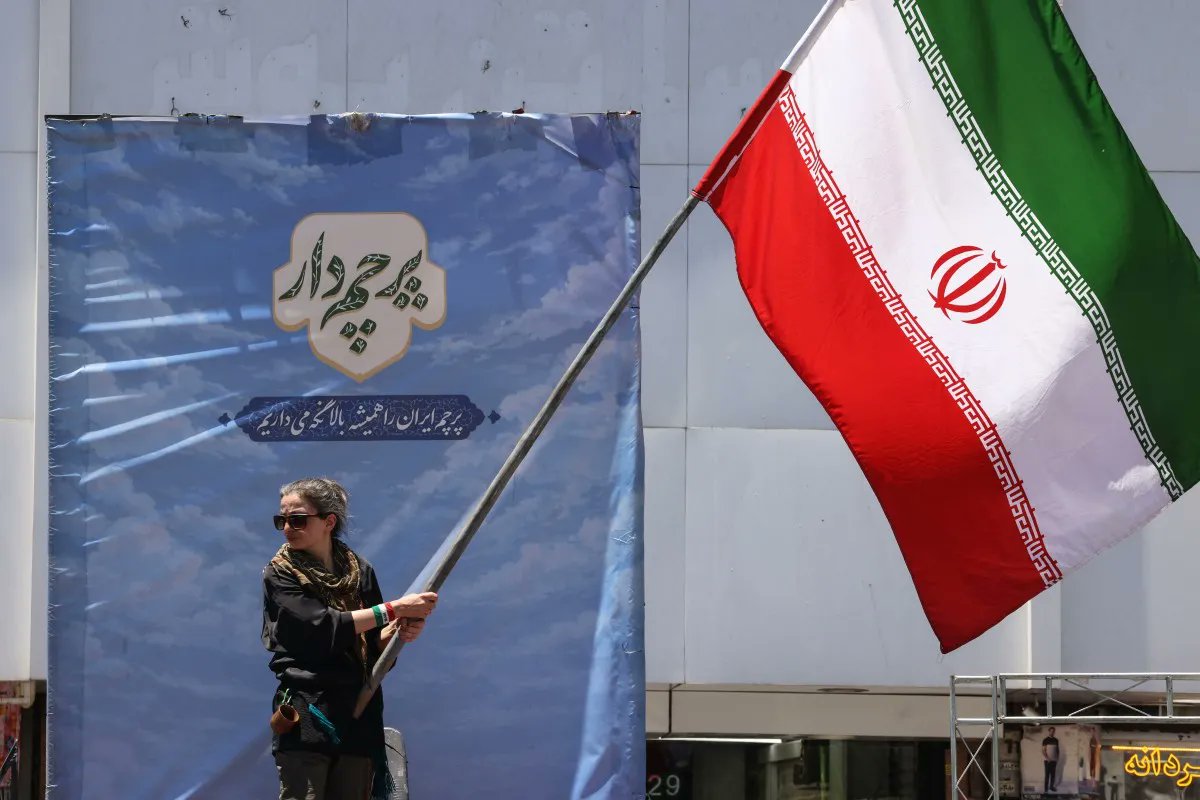
The United States and Iran have signed an interim framework agreement in Switzerland, launching a US-Iran 60-day challenge. The deal immediately reopens the Strait of Hormuz and lifts the U.S. naval blockade, choosing to prioritize critical maritime economic relief while deferring complex nuclear disarmament negotiations to a compressed two-month timeline.
BÜRGENSTOCK, Switzerland — The United States and Iran have officially signed a historic memorandum of understanding (MoU) at Switzerland's mountainside Bürgenstock resort, establishing an immediate maritime ceasefire and initiating a high-stakes US-Iran 60-day challenge to negotiate a permanent end to their 100-day war. Under the framework brokered by Pakistani and Qatari mediators, the U.S. Navy will lift its severe naval blockade of Iranian ports within 30 days, while Tehran will immediately restore unrestricted, toll-free commercial access to the crucial Strait of Hormuz shipping lane. However, because the pact defers the highly controversial nuclear question to future working sessions, international analysts caution that the compressed 60-day timeline represents an ambitious diplomatic hurdle that prioritizes immediate political optics over comprehensive regional stability.
Deferring the Nuclear Question to the 60-Day Clock
The fundamental strategy of the Bürgenstock MoU centers on securing a visual and economic reprieve first, leaving the most technically complex geopolitical disputes for the newly established 60-day negotiation window. Chief among these unresolved issues is the status of Iran's highly enriched uranium stockpile.
According to recent monitoring data from the International Atomic Energy Agency (IAEA), Iran currently possesses approximately 440.9 kilograms (972 pounds) of uranium enriched to 60% purity—a level that independent nuclear physicists state is only a short technical step from weapons-grade material. While the interim agreement dictates a strict freeze on further enrichment activities during the transition, it does not mandate the immediate dismantling or relocation of this material.
U.S. Treasury Secretary Scott Bessent clarified the administration's position to economic reporters, stating that while temporary oil export waivers will take effect to lower global energy prices, any permanent, long-term sanctions relief remains explicitly conditional upon Iran's willingness to permanently dilute, remove, or dismantle its highly enriched stockpiles. This approach has drawn immediate skepticism from veteran diplomats. Speaking on domestic television broadcasts, former U.S. Deputy Secretary of State Wendy Sherman—a key architect of the 2015 Joint Comprehensive Plan of Action (JCPOA)—expressed severe doubts that a comprehensive nuclear treaty could realistically be finalized within a two-month timeframe, predicting instead that negotiators will be forced to request successive procedural extensions.
Opening the Strait of Hormuz and Economic Ripple Effects
Despite deep structural uncertainties, the immediate tangible outcome of the treaty has injected significant optimism into global commodities and financial markets. Following U.S. President Donald Trump's official declaration via social media authorizing the "toll-free opening of the Strait of Hormuz," global oil benchmarks reacted sharply.
In active trading on international exchanges, the price of Brent crude fell by more than 3%, dropping to approximately $80 per barrel for the first time since early March. The reopening of the strait directly addresses a critical choke point through which roughly 20% of the world's total petroleum and liquefied natural gas (LNG) supplies flow daily.
Furthermore, the framework includes a tentative provision for a massive $300 billion international reconstruction and development fund designed to assist in rebuilding damaged infrastructure across the region, provided that Tehran satisfies verification protocols audited by neutral international monitors.
Impact on Citizens, Global Investors, and Commerce
The shift toward a diplomatic track introduces direct practical changes for international markets and corporate entities:
Global Maritime Carriers: International shipping lines can resume transit through the Persian Gulf without paying arbitrary transit fees or facing the threat of kinetic strikes, substantially lowering commercial maritime insurance premiums.
Energy Consumers: Corporate and retail consumers across Europe and Asia are expected to benefit from reduced supply chain pressures and stabilized fuel costs as regular maritime oil flows resume.
Foreign Exchange Markets: The Iranian Rial saw immediate volatility following the announcement, fluctuating near 1,375,000 IRR per USD as local merchant networks calibrated prices to the prospect of unfreezen assets.
Regional Military Logistics: U.S. and allied defense forces are expected to execute strategic repositioning maneuvers away from the immediate coastal perimeters surrounding Iran as part of the reciprocal de-escalation terms.
Official Sources Section
The components of this report are compiled from official announcements and diplomatic briefs provided by the following institutions:
Quote Section
"According to officials familiar with the unpublished memorandum, the true test of crisis termination resides not in the initial ceasefire signatures, but in whether both capitals can survive the immense political friction of the 60-day litmus test without hardline domestic factions derailing the process."
Why It Matters
The US-Iran 60-day challenge acts as an essential circuit-breaker for an escalating conflict that threatened to permanently damage the global economy. By choosing to secure a visible maritime truce and immediately freeing up international energy lifelines, the negotiating parties have successfully decoupled the immediate threat of wider regional war from the complex, slow-moving apparatus of non-proliferation diplomacy. If successful, this framework could establish a template for resolving similarly entrenched modern border and security crises.
Key Facts at a Glance
Agreement Venue: Signed at the Bürgenstock resort near Lucerne, Switzerland, following mediation by Pakistan and Qatar.
Waterway Protocol: Immediate toll-free reopening of the Strait of Hormuz; U.S. naval blockade to be disassembled within 30 days.
Frozen Assets: The agreement outlines the conditional release of $24 billion in frozen Iranian assets linked to verified non-enrichment compliance.
Nuclear Status Quo: Further uranium enrichment is frozen, but the ultimate fate of Iran's existing 440.9 kg stockpile of 60% enriched uranium remains unresolved.
FAQ Section
Q1: What exactly is the US-Iran 60-day challenge?
A: It refers to the strict 60-day timeline established by the Bürgenstock MoU during which the U.S. and Iran must negotiate permanent terms regarding nuclear enrichment, long-term sanctions relief, and verified monitoring mechanisms.
Q2: Will oil prices remain stable during this period?
A: Market analysts indicate that while the initial reopening of the Strait of Hormuz drove Brent crude down to $80 per barrel, long-term stability depends on whether both nations maintain the ceasefire across the full 60 days.
Q3: Does this agreement mean Iran has given up its nuclear program?
A: No. The agreement temporarily freezes further enrichment at current levels, but defers the highly controversial decisions regarding the disposal or dilution of existing enriched stockpiles to the upcoming technical sessions.
Source: Swiss Federal Department of Foreign Affairs, U.S. Department of the Treasury.