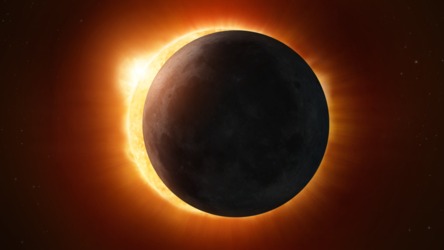
With four days remaining until the August 12, 2026 total solar eclipse, scientists, aviation authorities, and travelers are making final preparations. The rare event will plunge parts of Spain, Iceland, and Russia into total darkness, while millions across Europe and North America witness a dramatic partial eclipse.
Countdown Begins for Rare Celestial Alignment
WASHINGTON / LONDON — International space agencies, scientific researchers, and millions of astronomy enthusiasts entered a final four-day countdown on Sunday for the August 12, 2026 total solar eclipse. The celestial event will send the Moon’s shadow racing across a narrow path encompassing parts of Greenland, Iceland, northern Russia, the Atlantic Ocean, and northern Spain.
As the first total solar eclipse visible in Europe since 1999, the event has triggered widespread travel mobilization. Hotels across prime viewing corridors in Iceland and northern Spain are operating near maximum capacity, while scientific institutions ready specialized observational instruments to study the solar corona.
Path of Totality and Global Visibility Zones
According to official briefings released by the National Aeronautics and Space Administration (NASA) and the European Space Agency (ESA), the absolute path of totality will begin in remote northern Russia before sweeping across the Arctic, western Iceland, and the Iberian Peninsula. Viewers situated directly within the central corridor will experience complete blockage of the Sun, with totality lasting upwards of two minutes in select regions.
Outside the primary path, a broad partial solar eclipse will be visible across much of the Northern Hemisphere. Observers across parts of Canada, the northern United States—ranging from Alaska to North Carolina—the United Kingdom, and northwestern Africa will witness a partial obscuration. Meteorological agencies across Europe and North America are monitoring localized weather patterns to guide last-minute travel adjustments for skywatchers seeking clear horizons.
Scientific Campaigns and Safety Protocols
According to research organizers, scientific teams are deploying airborne laboratories and high-altitude weather balloons to capture data on the solar corona and measure sudden atmospheric changes caused by the temporary loss of solar radiation. Concurrently, public health authorities and safety regulators have intensified warnings regarding eye safety.
Because vast populations outside the path of totality will experience only a partial eclipse, officials stressed that certified ISO 12312-2 solar viewing glasses remain mandatory during all phases outside of absolute totality. Unfiltered cameras, binoculars, and telescopes are strictly prohibited without specialized front-mounted solar filters.
Impact on Travelers, Tourism, and Local Economies
Travelers and Tourists: International visitors flocking to coastal towns in Spain and remote regions of Iceland face heavy congestion, prompting local transportation ministries to issue travel advisories.
Local Businesses: Hospitality, retail, and tourism operators in the path of totality anticipate record-breaking commercial revenues during what is traditionally the peak summer holiday season.
Aviation and Logistics: Commercial airlines have scheduled specialized flight paths and adjusted schedules to offer passengers mid-air views of the cosmic shadow moving across the Atlantic.
Quote Section
"On August 12, 2026, a total solar eclipse will sweep across Greenland, Iceland, northern Russia, the Atlantic Ocean, Spain, and a small corner of Portugal, offering millions a rare glimpse of the Sun's corona while presenting an unprecedented scientific opportunity," stated NASA science communication representatives.
Why It Matters
Total solar eclipses provide rare empirical windows for researchers to analyze the Sun's outer atmosphere, which is normally obscured by blinding solar glare. For the general public, the event serves as an engaging cultural and educational milestone, uniting global observers while driving substantial regional economic activity across host tourism destinations.
Key Facts at a Glance
Milestone Event: This represents Europe’s first total solar eclipse since 1999.
Path of Totality: The Moon's shadow traverses Greenland, Iceland, northern Russia, and northern Spain on August 12, 2026.
Partial Visibility: Millions across North America, the UK, and Europe will experience a partial eclipse.
Safety Mandate: Certified ISO 12312-2 eclipse glasses are required for safe viewing during all partial phases.
Frequently Asked Questions (FAQ)
Q1: When will the total solar eclipse occur?
A: The total solar eclipse will take place on Wednesday, August 12, 2026, with exact times varying by geographic location across North America, Europe, and the Arctic.
Q2: Where is the best place to view total darkness (totality)?
A: The path of totality crosses select regions including northern Spain, western Iceland, Greenland, and northern Russia.
Q3: Will the total solar eclipse be visible from the United States?
A: No, the U.S. will not experience totality; however, parts of the northern U.S. (from Alaska to North Carolina) will see a partial solar eclipse.
Q4: How can I safely watch the eclipse?
A: Viewers outside the path of totality must wear certified ISO 12312-2 solar viewing glasses at all times. Standard sunglasses do not offer adequate protection.
Source: National Aeronautics and Space Administration (NASA), European Space Agency (ESA), Space.com Live Tracking Desk