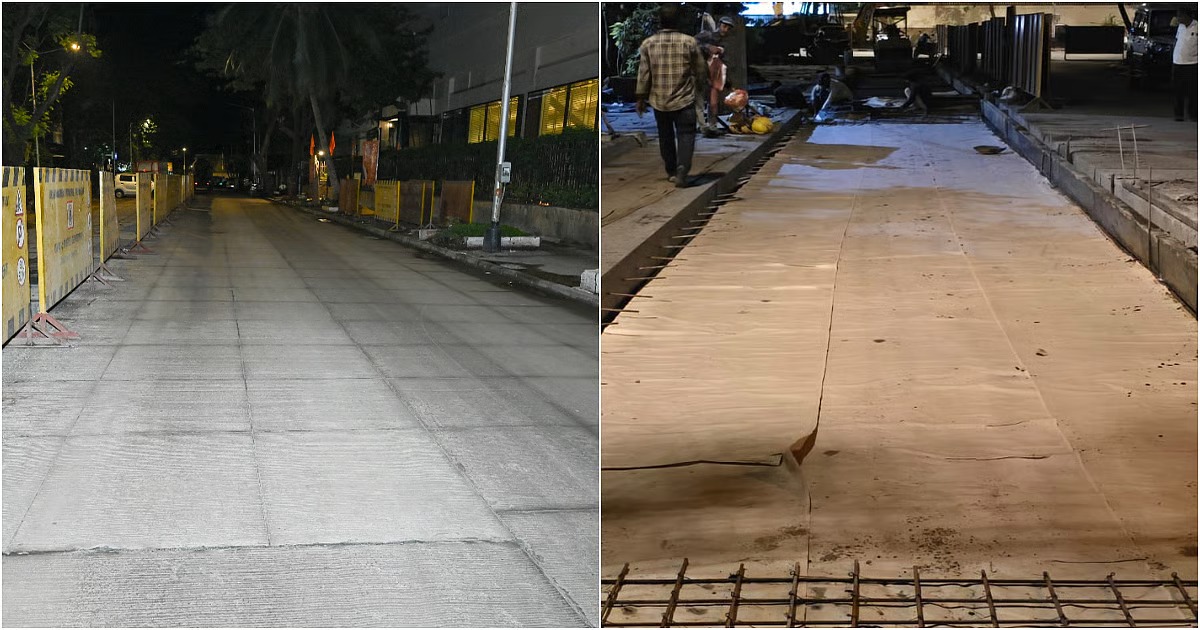
The Brihanmumbai Municipal Corporation announced that over 92% of Mumbai's 2,000 km road network is now concretised. Led by Municipal Commissioner Ashwini Bhide, the massive infrastructure upgrade aims to eliminate monsoon potholes, streamline utility management, and ensure long-term transit durability for residents and businesses.
Mumbai Achieves Major Milestone in Road Infrastructure Upgrade
MUMBAI — Municipal Commissioner Ashwini Bhide announced that the Brihanmumbai Municipal Corporation (BMC) has successfully concretised over 92 percent of Mumbai’s total 2,000-kilometer road network. Speaking on recent urban infrastructure updates in Mumbai, Bhide noted that out of the city's extensive transportation network, roughly 1,850 kilometers have transitioned into durable cement concrete (CC) surfaces.
The transition represents a decisive strategic shift by the country’s richest municipal body to permanently resolve long-standing issues concerning recurring potholes, heavy maintenance costs, and severe traffic bottlenecks during monsoon seasons. With Mumbai's geography restricting horizontal land expansion compared to other metropolitan centers like Delhi, optimizing the existing road matrix has become critical for urban transit efficiency.
Tackling Sub-Surface Utilities and Preventing Potholes
According to official statements from the Brihanmumbai Municipal Corporation (BMC), the systematic shift from traditional bituminous (asphalt) surfaces to cement concrete is designed to withstand heavy rainfall and constant utility trenching. Bhide explained that bituminous layers frequently fail when water seeps into compromised sections during downpours, generating recurring potholes across city zones.
To address frequent inter-departmental digging, the civic administration is integrating utility ducts beneath newly laid concrete roads. A new municipal trenching policy provides financial incentives for public and private utility providers—such as water, electricity, gas, and telecommunications—to route their lines through these underground ducts, protecting structural road integrity.
Impact on Citizens, Commuters, and Businesses
Citizens and Commuters: Motorists and daily commuters will experience smoother transit, reduced vehicle wear and tear, and significantly shorter travel times across major and secondary corridors.
Local Businesses and Freight: Commercial transport operators and local businesses benefit from reliable supply chains and uninterrupted logistics that are otherwise hampered by seasonal road degradation and waterlogging.
Municipal Governance: The transition lowers long-term repair expenditures, allowing the civic administration to redirect capital into broader urban renewal projects and green municipal bonds.
Official Sources
According to official statements and interviews released by the Brihanmumbai Municipal Corporation (BMC).
Briefings and disclosures provided by Municipal Commissioner Ashwini Bhide.
Municipal infrastructure tracking data published via urban development reports.
Quote Section
"Besides, the entire road network in the city is getting converted into cement concrete roads. Of the 2,000 kms in the city, 1,850 kms have already been concretised," stated Ashwini Bhide, Municipal Commissioner of the Brihanmumbai Municipal Corporation.
Why It Matters
Concretising over 92 percent of Mumbai's road network addresses a decades-old urban grievance regarding poor road quality and dangerous potholes during monsoons. By replacing vulnerable asphalt with heavy-duty concrete and installing underground utility ducts, the BMC is minimizing repeated excavation cycles, saving public funds, and safeguarding commuter safety across India's financial capital.
Key Facts at a Glance
Extensive Concretisation: Over 92%—or 1,850 kilometers—of Mumbai's 2,000 km road network has been successfully converted to cement concrete.
Combating Potholes: The shift minimizes water seepage vulnerabilities inherent in traditional bituminous asphalt.
Utility Integration: New road projects feature dedicated underground utility ducts to prevent frequent post-construction road digging.
Fiscal Efficiency: Long-term municipal repair costs are projected to decline as durable concrete surfaces reduce annual patchwork expenditures.
Frequently Asked Questions (FAQ)
Q1: How much of Mumbai's road network has been concretised so far?
A: According to BMC Commissioner Ashwini Bhide, over 92 percent of Mumbai's 2,000-kilometer road network—equating to roughly 1,850 kilometers—has been converted to cement concrete.
Q2: Why is the BMC replacing asphalt roads with concrete?
A: Cement concrete roads offer vastly superior durability against heavy monsoon rains and intense traffic, drastically reducing the formation of potholes compared to traditional bituminous surfaces.
Q3: How is the civic body preventing newly paved roads from being dug up?
A: The BMC is building integrated utility ducts beneath new roads and enforcing a strict trenching policy that incentivizes utility companies to house their cables and pipes safely inside these channels.
Q4: When is the remaining road network expected to be fully upgraded?
A: The ongoing phases of the city-wide road concretisation initiative are slated for full execution under strict municipal monitoring deadlines to ensure minimal disruption to citizens.
Source: Brihanmumbai Municipal Corporation (BMC), Fortune India Urban Reports