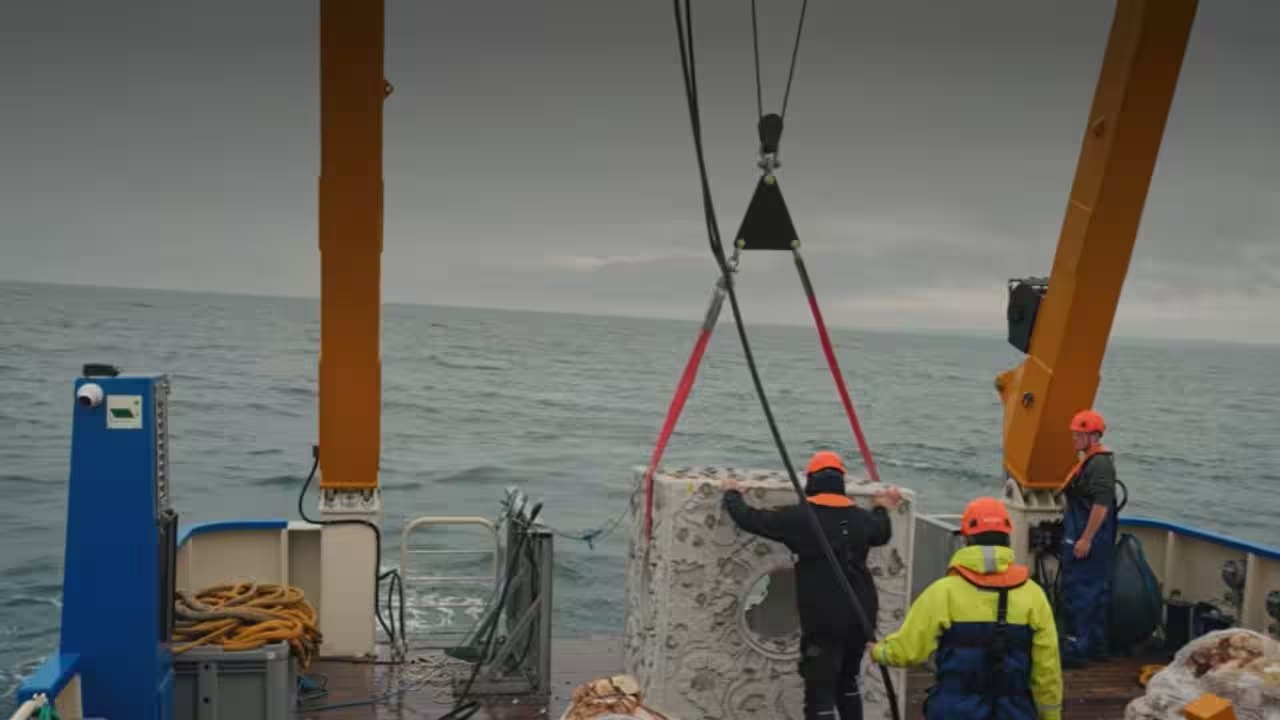
Britain has deployed 20 heavy concrete reef cubes and 44 tons of recycled scallop shells into the North Sea to restore native oyster populations depleted by over 95% since the 1800s. The engineered conservation project aims to rebuild collapsed marine ecosystems and improve coastal water biodiversity.
Conservationists and marine researchers have deployed 20 heavy concrete reef cubes and 44 tons of recycled scallop shells into the North Sea to revive native oyster populations.
Engineering Marine Recovery Along England’s Coast
LONDON — In an ambitious effort to reverse a centuries-long ecological collapse, environmental project teams have lowered 20 specialized concrete reef cubes and roughly 44 US tons of repurposed scallop shells into the North Sea off the northeast coast of England. The initiative directly targets the restoration of the European native oyster (Ostrea edulis), whose populations have plummeted by more than 95 percent since the 1800s due to historic overharvesting, disease, and coastal pollution.
The deployment combines heavy marine engineering with community-led conservation. Roughly 200 volunteers participated in cleaning mature oysters and affixing them with specialized reef adhesive to the structures before a marine survey vessel transported the components to a site approximately 1.1 miles offshore. The operation aims to establish a stable, three-dimensional seabed foundation capable of withstanding rough North Sea currents while offering a secure habitat for juvenile shellfish to settle and grow.
Technical Design and Climate-Resilient Reef Structures
According to project specifications released by marine conservation organizations and engineering developers, each of the 20 reef cubes weighs approximately 6.6 US tons, bringing the total weight of the submerged structures to roughly 132 tons. Fabricated from Marine Crete—a seawater-resistant, carbon-neutral alternative to standard Portland cement—the cubes feature textured surfaces, central chambers, and multiple passageways designed to mimic natural rocky reefs.
The deployment follows crucial lessons learned from an earlier 2023 pilot project off Whitburn, where severe weather conditions like Storm Babet shifted loose stone and shell material. By utilizing heavy, interlocking concrete blocks as structural anchors alongside 44 tons of recycled scallop shells (known as "clutch"), the updated framework provides the heavy-duty stability required to endure high-energy open-water environments.
Impact on Marine Biodiversity, Coastal Waters, and Fisheries
Marine Ecosystems and Biodiversity: Restoring native oyster beds establishes complex three-dimensional habitats that supply crucial food and shelter for fish, crabs, lobsters, and various invertebrates.
Water Quality: As natural filter feeders, individual native oysters can filter substantial volumes of seawater daily, aiding in natural water clarity improvement and localized nutrient cycling.
Commercial Fisheries and Coastal Communities: Rebuilding depleted shellfish populations supports the long-term ecological balance of regional coastal waters, offering a replicable model for marine recovery across European shelves.
Official Sources
According to marine conservation project announcements and ecological assessments published by environmental monitoring groups.
Technical briefings and material disclosures from marine concrete engineering reports.
Regional conservation data compiled by academic and institutional research partners along the North Sea coast.
Quote Section
"The project is studying whether sturdy engineering can give a lost ecosystem the foothold it needs to rebuild, transforming a flat or shifting seabed into a thriving three-dimensional underwater neighborhood," stated project organizers and marine conservation researchers.
Why It Matters
Native oyster reefs once spanned millions of acres across European waters, functioning as vital biological filters and nurseries for marine life before vanishing from large parts of their historic range. By testing heavy-duty, carbon-neutral engineering solutions combined with repurposed seafood waste, this initiative provides a scalable blueprint for restoring collapsed marine habitats in exposed, high-current coastal zones.
Key Facts at a Glance
Massive Decline: UK native oyster populations have dropped by more than 95% since the 19th century.
Heavy Subsea Deployment: The operation placed 20 carbon-neutral concrete reef cubes—each weighing 6.6 tons—onto the North Sea bed.
Recycled Marine Foundation: Roughly 44 US tons of repurposed scallop shells were added to provide a natural settlement clutch for juvenile oysters.
Community Involvement: Nearly 200 volunteers assisted in cleaning, preparing, and attaching thousands of adult and juvenile oysters prior to deployment.
Frequently Asked Questions (FAQ)
Q1: Why are concrete cubes being dropped into the North Sea?
A: The concrete cubes serve as heavy, stable anchor structures designed to help restore native European oyster populations that have declined by over 95% since the 1800s.
Q2: What role do the scallop shells play in the project?
A: Approximately 44 tons of recycled scallop shells act as a natural "clutch" foundation on the seabed, providing the hard surface texture that juvenile oysters need to securely attach and grow.
Q3: How do oyster reefs benefit the wider marine environment?
A: Oyster reefs improve water clarity through natural filtration, cycle nutrients, and create complex physical habitats that offer food and shelter for fish, crabs, lobsters, and other marine species.
Q4: Why was heavy engineering required for this restoration attempt?
A: Lessons from previous trials showed that severe weather and strong North Sea currents can easily scatter loose restoration material, making heavy, interlocking concrete cubes necessary to secure the site.
Source: Impactful Ninja Marine Reports, The Times of India Science Desk, ARC Marine Technical Briefings