Global semiconductor equipment spending is forecast to reach a record $165.9 billion in 2026, driven by AI infrastructure demand. Simultaneously, India is accelerating its own silicon ambitions through the ₹1,27,500 crore "Semicon 2.0" mission, focusing on indigenous chip design, advanced fabrication, and localizing the critical manufacturing supply chain.
As global semiconductor manufacturing equipment sales are projected to hit a record $165.9 billion in 2026, India is accelerating its own domestic chip ecosystem through the newly approved Semicon 2.0 mission.
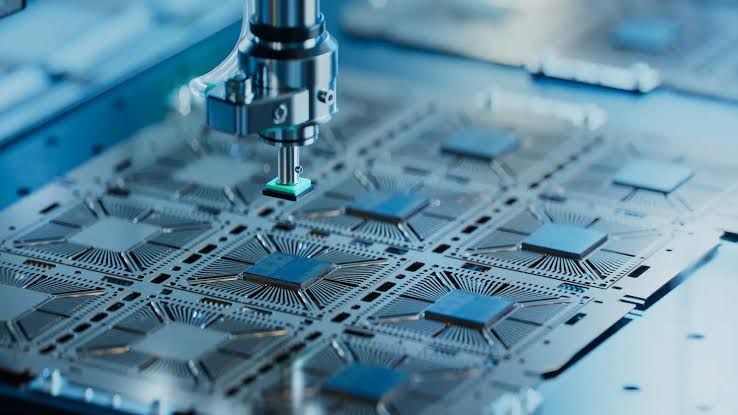
NEW DELHI — The global semiconductor industry is bracing for a historic year of growth, with sales of manufacturing equipment expected to jump 23.2% year-on-year to $165.9 billion in 2026, according to the latest forecast from SEMI, the industry’s global association. This growth trajectory—the fifth consecutive year of expansion—is driven by an insatiable global demand for artificial intelligence (AI) infrastructure, high-bandwidth memory (HBM), and leading-edge logic chip architectures.
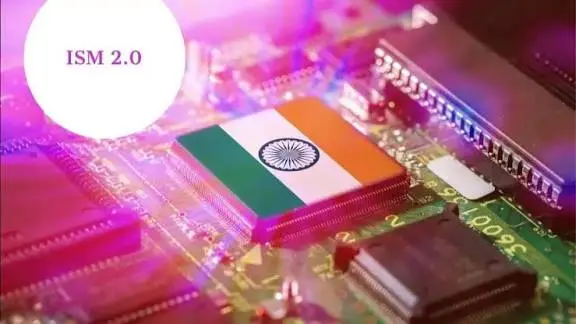
Against this backdrop of rapid global technological migration, India is aggressively positioning itself as a vital node in the supply chain. The Union Cabinet, led by Prime Minister Narendra Modi, recently approved "Semicon 2.0" with a substantial outlay of ₹1,27,500 crore, signaling a long-term commitment to building a resilient, end-to-end semiconductor ecosystem.
Global Spending Driven by the AI Era
SEMI’s mid-year forecast highlights that investment is no longer limited to basic fabrication. With the Wafer Fab Equipment (WFE) segment projected to reach $143.9 billion, chipmakers are pouring capital into the sophisticated tools required for 2nm gate-all-around nodes and complex 3D NAND architectures.
"AI is accelerating demand for more powerful and efficient chips, driving increased investment across the semiconductor capital equipment market," said Ajit Manocha, SEMI president and CEO. While China, Taiwan, and Korea remain the top destinations for this spending, the surge in global demand provides a unique opening for emerging manufacturing hubs like India to integrate themselves into the broader value chain.
India’s Strategic Pivot: Semicon 2.0
India’s updated roadmap focuses on moving beyond assembly to high-value manufacturing and design. The Semicon 2.0 mission, announced following the momentum of the initial phase, rests on six key pillars:
Design Depth: Building on 105 existing startups, the government aims to position India as a global hub for semiconductor design and intellectual property (IP).
Machines and Materials: Incentivizing the manufacturing of chemicals, gases, and precision machinery essential for chip production.
Fab Expansion: With the first major domestic fab scheduled for commissioning in 2028, efforts are underway to attract more global manufacturers to set up facilities within the country.
As of July 2026, India has approved 12 semiconductor projects with cumulative investments of approximately ₹1.64 lakh crore. Recent milestones include the inauguration of the CG Semi OSAT facility in Sanand, Gujarat, by Prime Minister Modi on July 4, 2026, and the commencement of commercial production at other facilities in the region.
Impact and Outlook
For investors and businesses, the alignment between global capital spending and India's policy support offers a "window of opportunity" to build local manufacturing capacity. While India currently imports a significant portion of its electronic components, the government’s push to localize the supply chain aims to reduce this dependency while creating a skilled workforce ready for the AI-driven era.
"By designing chips here, by packaging chips here, and by assembling the entire system itself here, we can reduce imports and create high-quality jobs," industry experts noted, echoing the national vision for technological sovereignty.
Key Facts at a Glance
Record Sales: Global semiconductor manufacturing equipment sales are forecast at $165.9 billion for 2026 (+23.2% YoY).
India’s Outlay: The government has approved ₹1,27,500 crore for the Semicon 2.0 mission.
Project Pipeline: India has 12 approved semiconductor projects, with two already shipping products commercially.
Key Focus: India is emphasizing precision manufacturing, chip design IP, and material self-reliance.
Frequently Asked Questions
Q: Why is global semiconductor equipment spending rising in 2026?
A: The surge is primarily driven by the boom in artificial intelligence (AI), which requires massive investments in advanced logic chips, high-bandwidth memory (HBM), and complex packaging technologies.
Q: What does Semicon 2.0 change for India?
A: Semicon 2.0 deepens the focus from basic assembly and testing (OSAT) toward advanced fab manufacturing, semiconductor materials, and indigenous chip design IP, backed by a significant budget of ₹1,27,500 crore.
Q: When will India see its first major semiconductor fab?
A: The first major semiconductor fab in India is currently scheduled to be commissioned in 2028.
Source: SEMI – Mid-Year Total Semiconductor Equipment Forecast, PIB – Cabinet Approval of Semicon 2.0, PM India – Semiconductor Updates