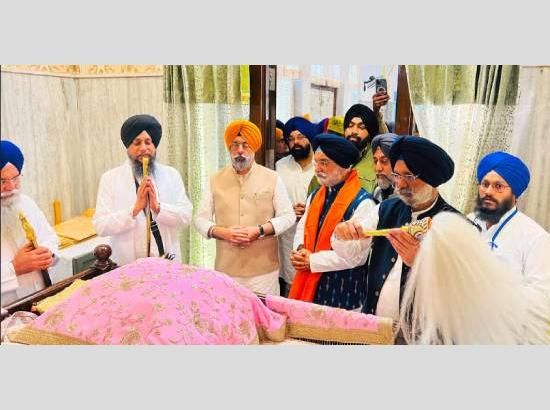
On July 17, 2026, Delhi Lieutenant Governor Taranjit Singh Sandhu led tributes at Gurdwara Rakab Ganj Sahib to mark the 100th martyrdom anniversary of his grandfather, Sardar Teja Singh Samundri. A visionary Akali leader and SGPC founder, Samundri is remembered for his non-violent struggle against colonial rule and caste discrimination.
Sikh community leaders and dignitaries gathered at Gurdwara Rakab Ganj Sahib in New Delhi on Friday to observe the 100th martyrdom anniversary of the legendary Akali movement leader, Sardar Teja Singh Samundri.
NEW DELHI — One hundred years after his passing in Lahore Jail, the legacy of Sardar Teja Singh Samundri remains a cornerstone of the Sikh reform movement. On July 17, 2026, a commemorative event at Gurdwara Rakab Ganj Sahib drew prominent figures, including Delhi Lieutenant Governor Taranjit Singh Sandhu, who paid heartfelt tributes to his grandfather and one of the principal architects of modern Sikh public life.
A Legacy of Institutional Integrity
Born in 1882, Samundri emerged from rural Punjab to become a colossus of the early twentieth-century Gurdwara Reform Movement. As a founding member of the Shiromani Gurdwara Parbandhak Committee (SGPC), he was instrumental in reclaiming Sikh shrines from colonial-backed mahants.
His leadership style was defined by what many historians call "Institutional Humility"—the belief that the mission of the organization must always take precedence over individual ego. This commitment was best exemplified when he spearheaded non-violent movements such as the Guru Ka Bagh Morcha, which became a blueprint for peaceful resistance in the Indian freedom struggle.
A Commemorative Gathering
The event at Gurdwara Rakab Ganj Sahib was marked by deep spiritual reverence. Alongside Lieutenant Governor Taranjit Singh Sandhu, the gathering saw participation from several dignitaries, including former President Ram Nath Kovind, Chief Justice of India Surya Kant, and Delhi Chief Minister Rekha Gupta.
The ceremony included soul-stirring recitations of Shabad Kirtan by Harjinder Singh, followed by Guru ka Langar, maintaining the Sikh tradition of community service that Samundri championed throughout his life.
Why It Matters
Samundri’s influence transcended religious reform; he was a steadfast advocate for Dalit emancipation, famously inviting members of the Dalit community to draw water from common wells—a radical act of social revolution in the early 1900s. His commitment to education and the founding of the Akali newspaper helped build the intellectual infrastructure required for the Sikh community's political agency during the colonial era.
Today, the Teja Singh Samundri Hall, which serves as the SGPC headquarters within the Golden Temple complex, stands as a lasting monument to his integrity and sacrifice.
Key Facts at a Glance
Martyrdom Date: Teja Singh Samundri died in Lahore Jail on July 17, 1926, at the age of 44.
Reformist Leader: He was a founding member and vice-president of the Shiromani Gurdwara Parbandhak Committee (SGPC).
Social Reformer: Beyond politics, he actively campaigned against caste discrimination and promoted vernacular education.
Legacy: He is the only individual in SGPC history to have a major institutional building named after him.
Frequently Asked Questions
Q: Why is Teja Singh Samundri considered a "complete Sikh"?
A: Leaders like Master Tara Singh referred to him as a "Sampuran Sikh" (complete Sikh) because his life embodied selfless service, moral courage, and an unflinching commitment to his principles without seeking personal power.
Q: What was his contribution to India's freedom struggle?
A: He aligned the Akali movement with the Indian National Congress’s Non-Cooperation Movement, broadening Sikh participation in the anti-colonial struggle and facing multiple imprisonments for his activism.
Q: What is the significance of Gurdwara Rakab Ganj Sahib in his memory?
A: Samundri was deeply involved in the Rakab Ganj Sahib agitation, which sought to restore a boundary wall demolished by colonial authorities, making it a fitting site for his centenary commemoration.
Source: United News of India (UNI), The Statesman, Hindustan Times