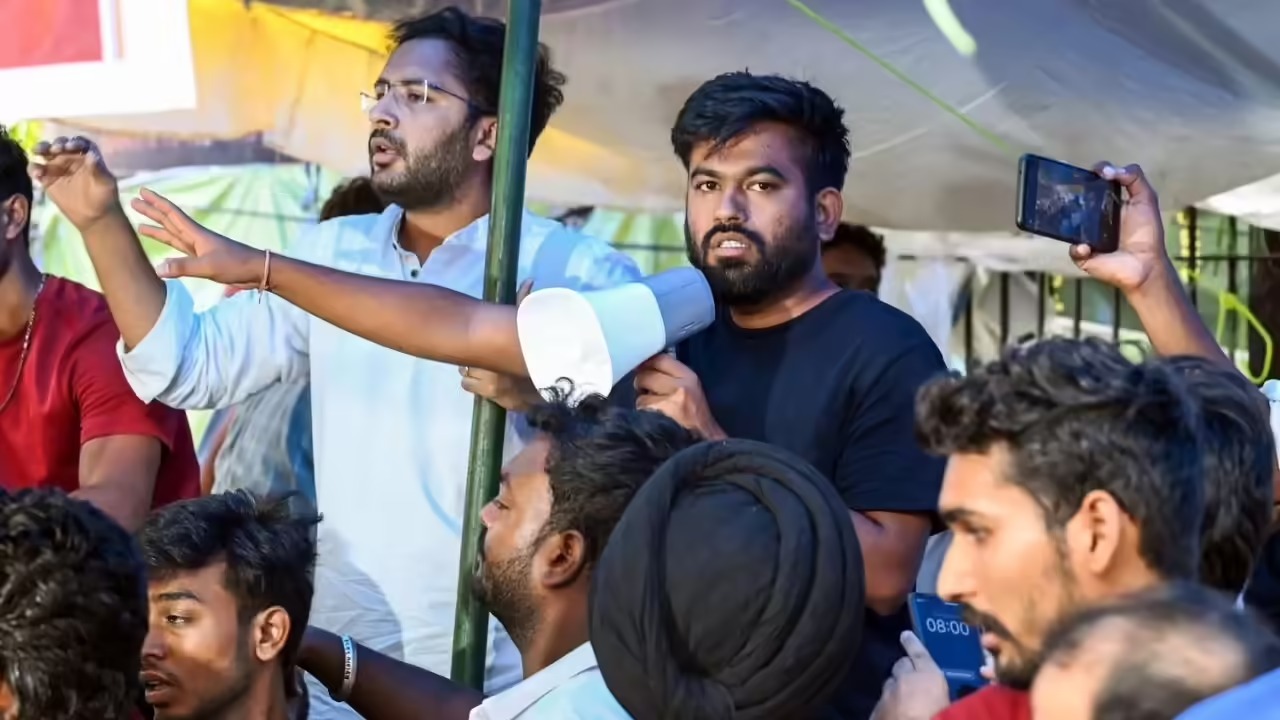
Thousands of supporters of the "Cockroach" movement clashed with police in New Delhi on July 20, 2026, during an unauthorized march toward Parliament. Protesters, demanding the Education Minister's resignation over exam leaks, were met with tear gas and batons as security forces prevented them from breaching high-security zones near the legislative building.
Security forces deployed tear gas and batons to disperse thousands of youth activists demanding education reform on the opening day of Parliament’s Monsoon Session.
NEW DELHI – Tensions escalated in India’s capital on Monday, July 20, 2026, as thousands of supporters from the youth-led "Cockroach" movement attempted a march toward the Parliament building. Security personnel utilized tear gas shells and baton charges near the Press Club of India and Parliament Street to break up the "Chalo Sansad" (March to Parliament) rally after protesters breached barricades in the high-security zone.
The demonstrators, organized under the banner of the Cockroach Janta Party (CJP), had gathered to demand the resignation of Union Education Minister Dharmendra Pradhan. The movement, which originated as a satirical online campaign following a Supreme Court judge's controversial remarks comparing unemployed youth to "cockroaches," has evolved into a nationwide agitation fueled by widespread anger over systemic failures in India’s examination process, particularly leaks in high-stakes medical entrance tests.
Escalating Confrontation in the Capital
The protest march began despite a lack of formal police permission and the enforcement of prohibitory orders under Section 163 of the Bharatiya Nagarik Suraksha Sanhita (BNSS) in the New Delhi district. Delhi Police had heavily barricaded the area surrounding Jantar Mantar, the city's designated protest site, leading to a tense standoff.
As the morning progressed, thousands of students, professionals, and families converged on the streets, chanting slogans against the education minister and Prime Minister Narendra Modi. According to eyewitnesses, scuffles broke out when protesters attempted to push through multiple layers of police barricades. Security forces responded with force to prevent the massive crowd from reaching the legislative complex.
Movement Background and Demands
The Cockroach Janta Party, founded by student activist Abhijeet Dipke, has gained significant political traction over the past month. The movement was further galvanized after activist Sonam Wangchuk, who had been on an indefinite hunger strike at Jantar Mantar, was forcibly moved to Safdarjung Hospital by authorities over the weekend.
While supporters demand the resignation of Education Minister Dharmendra Pradhan, CJP spokespersons have also engaged in preliminary talks with the government regarding their grievances. On Monday, representatives were en route to meet with Union Health Minister J.P. Nadda to discuss potential concessions as the political pressure on the government mounted.
Official Response and Security Measures
The Delhi Police confirmed that the protest march lacked the necessary authorization and warned that assemblies of five or more people were strictly prohibited outside Jantar Mantar. The Delhi Metro Rail Corporation (DMRC) also temporarily closed five major metro stations, including Central Secretariat and Rajiv Chowk, due to security concerns, causing significant disruptions for city commuters.
"Organizers stated that the march aims to remain peaceful while putting pressure on the government," according to CJP representatives. Meanwhile, government officials reached out to the CJP team on Monday morning for discussions, though initial offers of talks with lower-level officials were reportedly rejected by protesters seeking a dialogue with cabinet-level leadership.
Why It Matters
The unrest marks a significant challenge to the current administration as the Monsoon Session of Parliament begins. The Cockroach movement has successfully bridged the gap between online activism and grassroots mobilization, drawing support from various student unions and opposition figures. For the government, the protests represent a growing public demand for accountability in the education sector, where frequent exam irregularities have impacted millions of students.
Key Facts at a Glance
Protest Date: Monday, July 20, 2026, coinciding with the start of the Monsoon Session of Parliament.
Core Demand: Resignation of Union Education Minister Dharmendra Pradhan over examination irregularities and NEET paper leaks.
Police Action: Authorities utilized tear gas, batons, and barricades to disperse crowds attempting to breach the high-security zone.
Movement Origins: The Cockroach movement began as a satirical response to a Supreme Court remark and has since grown into a nationwide campaign for educational reform.
FAQ
Why are the protesters called the 'Cockroach' movement?
The name originated from a satirical response to a Supreme Court judge who compared unemployed young people to "cockroaches." Supporters reclaimed the term to symbolize their resilience.
What is the main reason for the July 20 protest?
Protesters are demanding accountability and the resignation of the Education Minister following repeated leaks in entrance examinations for medical and professional courses.
What happened to Sonam Wangchuk?
The activist, who was on an indefinite hunger strike, was forcibly moved by police to Safdarjung Hospital on July 18, 2026, which intensified public participation in the movement.
Is the situation still volatile?
Yes, heavy security remains deployed across central Delhi, and police are strictly enforcing prohibitory orders to prevent further marches toward Parliament.
Source: The Hindu, Associated Press, U.S. Embassy New Delhi