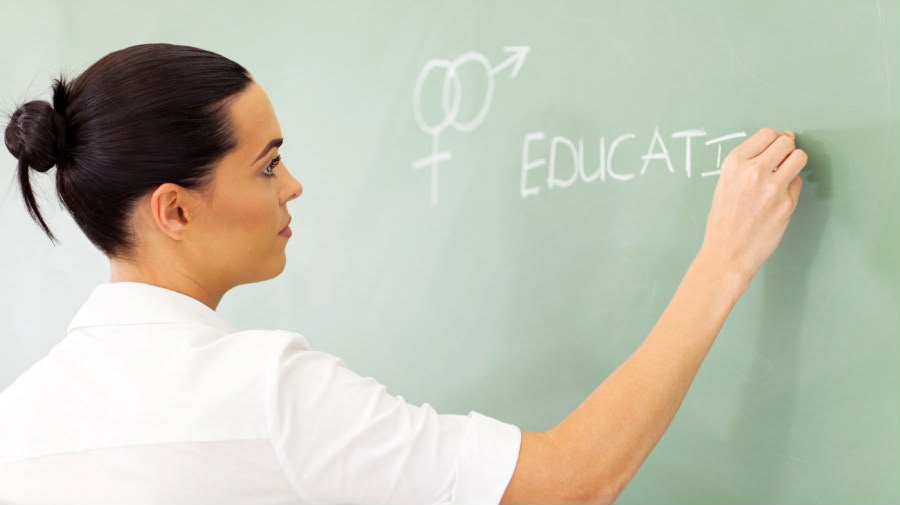
The Indian government has agreed to implement comprehensive sex education in schools and colleges, pending Supreme Court approval. A 26-member committee recommended this curriculum to promote adolescent health, safety, and consent, moving away from past stigmas and ensuring children are equipped with life skills for their physical and emotional well-being.
In a landmark policy shift, the Indian government has informed the Supreme Court of its plan to introduce comprehensive sex education across schools and colleges nationwide.
NEW DELHI — The Indian government has officially signaled its readiness to integrate "comprehensive sex education" into the national school and college curriculum, a move aimed at fostering adolescent health, safety, and informed decision-making. The announcement was made on Monday, July 13, 2026, before a Supreme Court bench comprising Justices B.V. Nagarathna and R. Mahadevan.
The initiative follows the recommendations of a 26-member national expert committee appointed to examine adolescent rights and the intersection of privacy with the Protection of Children from Sexual Offences (POCSO) Act. Additional Solicitor General Aishwarya Bhati, representing the Centre, confirmed that the government has accepted the panel’s report and is prepared to roll out the framework pending final approval from the apex court.
A New Curriculum for Holistic Development
The proposed program is designed to move beyond traditional reproductive health topics, focusing instead on age-appropriate education regarding relationships, personal safety, consent, and bodily autonomy. According to the expert panel, the curriculum will be aligned with the National Education Policy (NEP) 2020 and will be introduced incrementally from the primary school level.
Key components of the suggested framework include:
Structured Sessions: Implementation of mandatory 15-to-20-minute classes twice a week, led by specially trained teachers.
Foundational Safety: Integration of basic concepts such as personal boundaries, the difference between "safe" and "unsafe" touch, and hygiene from the early primary stages.
Parental Engagement: Regular workshops and meetings for parents and guardians to sensitize them to developmental milestones and the importance of scientific sexual health education.
Broadened Scope: Coverage of digital safety, healthy relationships, gender respect, and the emotional aspects of puberty.
Addressing Misconceptions
During the hearing, the Supreme Court bench observed that sex education should not be misconstrued as a "Western concept" incompatible with Indian societal values. The judges noted that long-standing misconceptions—specifically the belief that such education promotes promiscuity—have historically led some states to ban or neglect these programs, leaving adolescents to rely on potentially misleading information from the internet.
The court emphasized that the lack of structured guidance has contributed to cases where consensual adolescent relationships are disproportionately criminalized under the POCSO Act. By fostering a culture of openness and scientific understanding, the government and the court aim to prevent sexual abuse, reduce bullying, and equip youth with the skills to navigate complex social interactions.
Official Sources
Supreme Court of India: Observations on adolescent rights and the necessity of scientific sex education.
Union Government of India: Submission made by Additional Solicitor General Aishwarya Bhati confirming the acceptance of the 26-member national expert committee report.
National Expert Committee: Comprising experts from TISS, clinical psychologists, and representatives from the Ministry of Women and Child Development, which formulated the curriculum recommendations.
Why It Matters
For millions of students, this policy shift represents a vital transition from silence and stigma to an environment of safety and informed learning. Beyond public health benefits—such as the reduction of unintended pregnancies and STIs—the program aims to build emotional intelligence and protect children from abuse by enabling them to recognize inappropriate behavior early.
Key Facts at a Glance
Program Status: Government has accepted expert recommendations; awaiting final Supreme Court approval.
Target Audience: Students in schools and colleges across India.
Implementation: Twice-weekly, 15-20 minute sessions conducted by trained educators.
Core Focus: Consent, personal safety, puberty, and emotional/reproductive health.
FAQ
Is this curriculum mandatory for all schools?
The government plans to implement the program nationwide, aligning it with the NEP 2020, to ensure structured delivery across schools and colleges.
Does sex education encourage sexual activity?
No; the Supreme Court and health experts have noted that research consistently shows comprehensive sex education actually delays the onset of sexual activity and encourages safer, more responsible decision-making.
How will teachers be prepared?
The recommendation includes the deployment of specially trained teachers to ensure the content is delivered in an age-appropriate, scientific, and sensitive manner.
Source: Times of India, Hindustan Times, HealthandMe