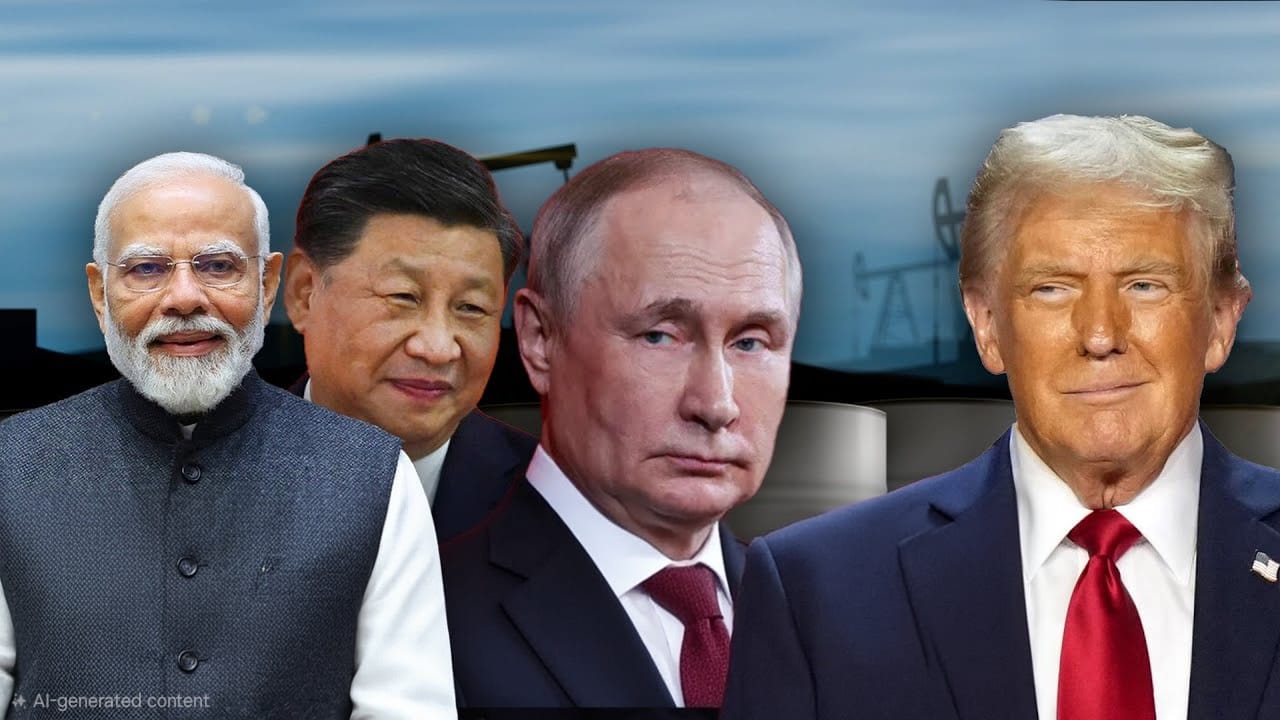
U.S. President Donald Trump clarified that secondary sanctions against India and China over Russian energy imports have not been discussed. The statement provides significant economic relief to international markets, stabilizing supply chains for major Asian export sectors that faced risks from proposed congressional tariff legislation.
WASHINGTON, D.C. — U.S. President Donald Trump clarified his administration's position on global trade penalties today, Tuesday, July 14, 2026, stating that the imposition of sweeping secondary sanctions against India and China has not been under discussion. The executive clarification comes as a vital relief to international markets, which had faced months of escalating tension over potential U.S. economic retaliation against nations maintaining trade relations with the Russian Federation's energy sector.
Speaking to reporters regarding current trade negotiations and foreign policy alignments, the President directly addressed market rumors that had triggered widespread concerns among global supply chain managers, central banks, and emerging market investors.
Easing Threats of Secondary Sanctions on Energy Importers
White House Stance on Trade Penalties
The potential deployment of secondary sanctions has been a major point of discussion in international relations, following legislative efforts within the U.S. Senate to punish large-scale buyers of Russian crude oil. The bipartisan Sanctioning Russia Act, originally co-authored by the late Senator Lindsey Graham, sought to give the executive branch broad authority to levy up to 500% tariffs on third-country imports if those nations continued doing business with Moscow’s energy ecosystems.
However, President Trump’s statement indicates that formal administrative steps toward imposing secondary sanctions against New Delhi or Beijing are not on the immediate White House agenda. Economic analysts note that the administration is prioritizing direct bilateral agreements over unilateral punitive measures to achieve its "America First" goals.
Contextualizing India and China's Energy Logistics
The clarification arrives at a delicate time for global energy logistics. India and China combined have absorbed roughly 70% of Russian crude oil, gas, and refined petroleum products over the past year, acting as primary buyers following European Union import bans.
While a temporary U.S. Treasury waiver that shielded Indian state refiners from certain restrictions lapsed on June 17, 2026, the volume of crude imported by Indian entities had already dropped from 1.84 million barrels per day in late 2025 to approximately 1.04 million barrels per day by early 2026 due to ongoing trade talks with Washington.
Market Implications for Global Commerce and Investors
The explicit statement that secondary sanctions have not been discussed provides immediate stability to cross-border financial markets. A strict implementation of 500% tariffs on third-country imports could have shaved an estimated 0.5% off India's Gross Domestic Product (GDP), heavily disrupting major export-earning sectors such as:
Pharmaceuticals: Lowering supply margins for critical active ingredients sent to Western consumers.
Information Technology: Reducing corporate tech expenditures and cloud migration partnerships.
Textiles and Apparels: Creating inventory bottlenecks for retail markets within the United States.
For institutional investors, the normalization of trade rhetoric reduces the risk premium associated with holding assets in emerging market consumer firms and manufacturing indices across South and East Asia.
Official Sources Section
The executive updates and trade policy data detailed in this report reflect direct institutional statements issued by the White House media office during scheduled briefings on July 14, 2026. Trade volume data, shipping margins, and tariff statistics are tracked via public filings archived by the U.S. Department of the Treasury, the Ministry of External Affairs India, and independent market intelligence platforms.
Quote Section
"According to officials at the White House media briefing, the administration has not entered into active discussions regarding secondary sanctions targeted at India or China," the regulatory dispatch confirmed. "The administration remains focused on securing bilateral investment partnerships and managing regional trade relationships through negotiated frameworks rather than sudden enforcement actions."
Why It Matters
For global corporate planners, secondary sanctions present a significant threat to modern just-in-time manufacturing networks. By signaling that punitive measures against major Asian trade partners are not under consideration, the administration allows businesses to execute long-term capital investments without the fear of sudden tariff hikes, stabilizing consumer electronics, agriculture, and chemical supply chains.
Key Facts at a Glance
Policy Shift: President Trump confirmed secondary sanctions against India and China have not been discussed.
Energy Impact: The two nations currently purchase around 70% of Russian crude oil exports.
Bilateral Reductions: Indian refiners had already dropped Russian crude imports from 1.84 million to 1.04 million barrels a day by early 2026.
Economic Relief: The announcement protects export revenue streams across the pharmaceutical, textile, and IT services sectors.
FAQ Section
What are secondary sanctions in the context of global trade?
Secondary sanctions are economic penalties levied against third-country individuals or nations that continue doing business with a primary sanctioned state, even if no direct U.S. citizens are involved.
Why were there concerns about secondary sanctions on India and China?
Concerns rose because both countries emerged as the largest global buyers of Russian energy products following Western sanctions, leading to legislative pushes in the U.S. Congress for heavy secondary tariffs.
What is the current status of the Sanctioning Russia Act?
While the bill was backed by various congressional factions as a tribute to its late sponsor, the administration's focus on negotiated trade deals means immediate deployment of secondary tariffs is unlikely.
Source: White House Press Office, U.S. Department of the Treasury, Ministry of External Affairs India, Reuters News Service.