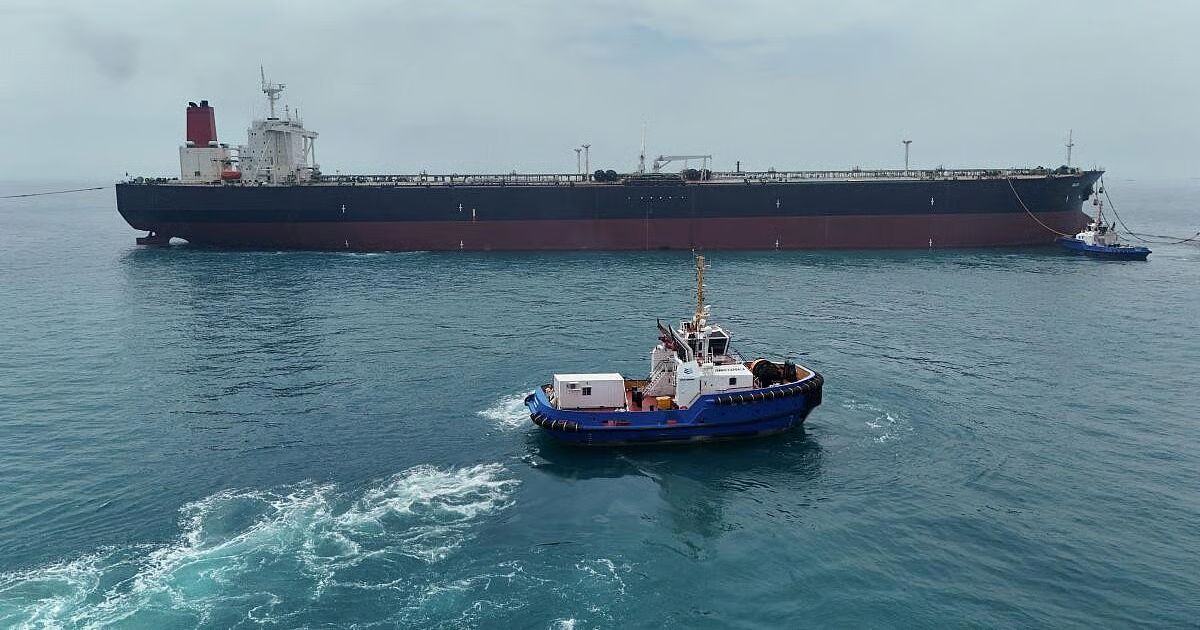
Three Indian-flagged crude tankers—Desh Vaibhav, Desh Vibhor, and Sanmar Herald—safely transited the volatile Strait of Hormuz carrying 8.6 lakh metric tonnes of crude oil. Manned by 94 Indian crew members, the vessels are heading to Gujarat and Odisha ports, securing critical domestic energy lines amid ongoing regional tensions.
NEW DELHI — In a major breakthrough for national energy logistics, three large Indian-flagged crude oil tankers successfully transited the highly volatile Strait of Hormuz on Saturday, June 20, 2026. Manned by a combined team of 94 Indian crew members, the massive vessels are carrying over 8.6 lakh metric tonnes (MT) of vital industrial feedstock directly toward domestic energy terminals. The development is highly critical today because the strategic Middle Eastern waterway remains a severe geopolitical flashpoint, where overlapping military standoffs, localized blockades, and a newly signed U.S.-Iran peace treaty have created volatile, high-risk conditions for international maritime supply lines.
High-Stakes Operations Ensure Continuity in Energy Lifelines
The coordinated maritime passage of the three primary cargo vessels—the Desh Vaibhav, Desh Vibhor, and Sanmar Herald—marks a vital operational victory for South Asian supply chains. According to a formal situational bulletin released by the Union Ministry of Ports, Shipping and Waterways, the fleet is transporting an aggregate load of approximately 8,60,865 MT of unrefined crude oil.
The successful transit follows an unstable period where prior geopolitical hostilities left at least 13 other Indian-flagged cargo ships temporarily stranded in the Gulf region. Analysts note that getting these tankers through the narrow chokepoint between Iran and Oman provides a much-needed stabilizer for domestic refineries, which rely heavily on consistent arrivals to maintain fuel manufacturing outputs.
Naval Geopolitics and the Fragile Gulf Truce
The timing of the convoy's exit highlights the extreme volatility currently governing global maritime trade. The successful passage occurred just as shipping lanes began slowly reopening under a tentative U.S.-led diplomatic agreement aimed at ending regional conflicts. According to updates published by U.S. Central Command, commercial shipping traffic through the strait expanded to 55 vessels on Saturday, moving more than 17 million barrels of oil in a single day.
However, structural risks remain elevated. Immediately after the Indian ships completed their crossing, Iran’s regional military commands threatened fresh targeted closures of the strait, alleging ceasefire implementation violations by external coalition forces. This continuous back-and-forth makes independent diplomatic coordination a critical factor in protecting national trade.
Direct Benefits to Citizens, Refiners, and Transnational Enterprises
The successful arrival of these energy lifelines prevents severe economic shocks that would otherwise filter down into the domestic economy:
For Everyday Consumers: Securing 8.6 lakh MT of crude oil helps buffer national oil storage pools, directly suppressing sudden inflationary spikes at retail fuel stations.
For Industrial Refiners: Facilities operating out of Gujarat and Odisha can maintain continuous refining schedules without facing expensive slowdowns caused by supply deficits.
For Logistics Operators: A predictable flow of crude cargo stabilizes maritime freight insurance premiums, preventing operational cost additions across international shipping frameworks.
Official Sources Section
The maritime cargo weights, transit tracking logs, destination schedules, and crew tallies presented in this news broadcast are verified directly through official notifications distributed by the Union Ministry of Ports, Shipping and Waterways, formal deployment reports from the Press Information Bureau, and maritime transit monitoring panels maintained by international tracking agencies.
Quote Section
"Three Indian-flagged crude oil tankers carrying over 8.6 Lakh MT of cargo with 94 Indian crew members have successfully transited the Strait of Hormuz and are en route to India," Union Minister for Ports, Shipping and Waterways Sarbananda Sonowal announced in a public statement. "According to officials, the government is working on the highest priority to safeguard our national maritime interests and actively coordinating with relevant agencies to guarantee the absolute safety of our seafarers and energy lifelines."
Why It Matters
Because India relies on foreign production to meet more than 85 percent of its total crude oil needs, any extended disruption at the Strait of Hormuz poses an immediate threat to domestic economic stability. Ensuring that sovereign-flagged vessels can safely move through active military corridors allows the state to preserve structural market predictability, safeguard the lives of merchant mariners, and shield consumer fuel costs from global geopolitical shocks.
Key Facts at a Glance
Successful Safe Transit: Three Indian-flagged crude tankers successfully navigated the high-risk Strait of Hormuz chokepoint on Saturday.
Massive Hydrocarbon Volume: The combined fleet is carrying 8,60,865 metric tonnes of unrefined crude oil back to domestic processing centers.
Sovereign Fleet Integrity: A total of 94 Indian merchant mariners are safely on board across the three vessels, with zero injuries reported.
Strategic Gate Destinations: The cargo will be discharged at critical refinery hubs, including Vadinar and Sikka ports in Gujarat and Paradip port in Odisha.
Fluid Regional Security: The operation concluded amid a fragile U.S.-Iran treaty, which remains vulnerable due to shifting regional military commands.
FAQ Section
Which specific vessels completed the transit through the Strait of Hormuz?
The three Indian-flagged vessels that completed the safe transit are the Desh Vaibhav (carrying 2,86,572 MT), the Desh Vibhor (carrying 2,88,893 MT), and the Sanmar Herald (carrying 2,85,400 MT).
When are the crude oil tankers expected to arrive at Indian ports?
The Desh Vaibhav and Desh Vibhor are both on track to dock at Vadinar and Sikka ports in Gujarat on June 24, 2026. The Sanmar Herald is scheduled to reach Paradip port on India's eastern coast by July 1, 2026.
Why is the Strait of Hormuz considered an essential energy lifepoint for India?
The narrow waterway handles a vast share of global oil exports. Because India imports the vast majority of its petroleum products, keeping this specific passage free of conflict is essential to prevent internal fuel shortages and inflationary resource shocks.
Source: Official communication logs published by the Union Ministry of Ports, Shipping and Waterways and operational tracking registries hosted via the Press Information Bureau.