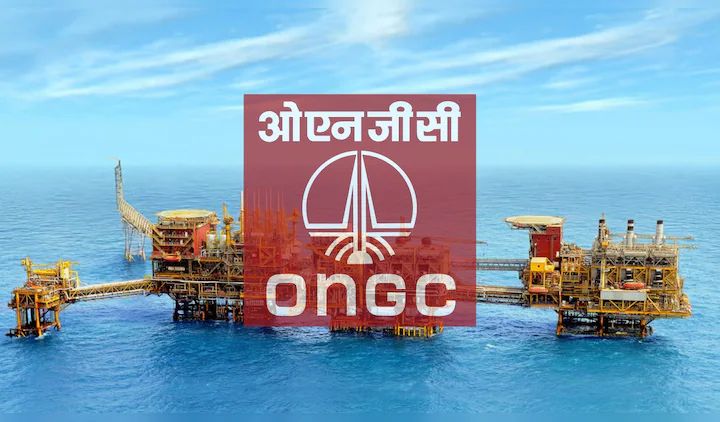
State-owned Oil and Natural Gas Corporation (ONGC) has announced a ₹1 trillion investment plan to explore deepwater and ultra-deepwater blocks by FY31. Announced by Chairman Arun Kumar Singh on August 31, 2026, the ambitious initiative targets drilling 87 wells to boost domestic hydrocarbon output.
Backed by official corporate statements, Oil and Natural Gas Corporation has committed a massive capital outlay to accelerate deepwater exploration.
Stepping up efforts to secure national energy independence and counteract legacy output drops, Oil and Natural Gas Corporation Limited (ONGC) has unveiled an aggressive multi-year capital expenditure plan. According to official announcements made by company leadership in New Delhi on August 31, 2026, India's largest upstream oil producer plans to invest ₹1 trillion (approximately $10.51 billion) over the next five financial years through FY31 to explore domestic deepwater and ultra-deepwater blocks.
The extensive operational blueprint involves drilling a total of 87 deepwater and ultra-deepwater wells, aligning closely with the central government's newly approved Samudra Manthan national offshore exploration scheme.
Evaluating the Five-Year Drilling Roadmap and Financial Strategy
Executing complex subsea drilling operations requires synchronized capital deployment and phased progression. According to official corporate disclosures and regulatory briefings, key structural highlights of the investment plan include:
Phased Drilling Schedule: ONGC plans to progressively scale up its drilling activity, starting with 8 deep and ultra-deepwater wells in FY27, advancing to 10 wells in FY28, 20 wells in FY29, 22 wells in FY30, and concluding with 27 wells in FY31.
Capital Allocation: The company intends to commit approximately ₹20,000 crore annually, leveraging incentives and framework support from the ₹84,084-crore Samudra Manthan federal initiative.
Addressing Output Decline: The core strategic driver is to discover fresh commercial reserves to offset declining production trends observed in mature legacy fields, such as the Krishna Godavari basin.
Technical Partnerships: To bridge technological complexities in ultra-deepwater environments, ONGC is actively engaging global energy operators like BP and Shell for technical service frameworks and commercial support.
Why It Matters
The practical implications of large-scale deepwater exploration impact both macroeconomic stability and domestic energy security. For industrial consumers and the broader economy, successful offshore discoveries reduce reliance on volatile imported crude oil and insulate domestic markets from geopolitical supply shocks. For institutional investors, ONGC's decisive pivot toward capital-intensive subsea expansion signals a commitment to long-term reserve replacement despite near-term depletion pressures in onshore and shallow-water fields.
Key Facts at a Glance
Executing Entity: Oil and Natural Gas Corporation (ONGC).
Total Investment: ₹1,00,000 crore (approx. $10.51 billion) over five years through FY31.
Drilling Target: 87 deep and ultra-deepwater wells.
Policy Alignment: Backed by the Central Government's Samudra Manthan scheme.
FAQ Section
What is the primary objective of ONGC's ₹1 trillion investment plan?
The investment aims to fund an extensive deepwater and ultra-deepwater drilling campaign of 87 wells by FY31 to discover new reserves and arrest declining domestic crude oil and natural gas production.
How is the deepwater exploration program funded?
While ONGC plans to commit approximately ₹20,000 crore annually from its internal resources, the initiative also incorporates policy and financial support structured under the government's ₹84,084-crore Samudra Manthan scheme.
How many wells does ONGC plan to drill each year?
The rollout scales progressively: 8 wells in FY27, 10 wells in FY28, 20 wells in FY29, 22 wells in FY30, and 27 wells in FY31.
Where can stakeholders track official updates on ONGC's capital expenditure?
Official corporate announcements, financial statements, and regulatory updates are published regularly on the BSE India Portal, NSE India Portal, and ONGC Official Investor Relations Website.
Source: The Economic Times, Business Standard, NDTV Profit, The New Indian Express