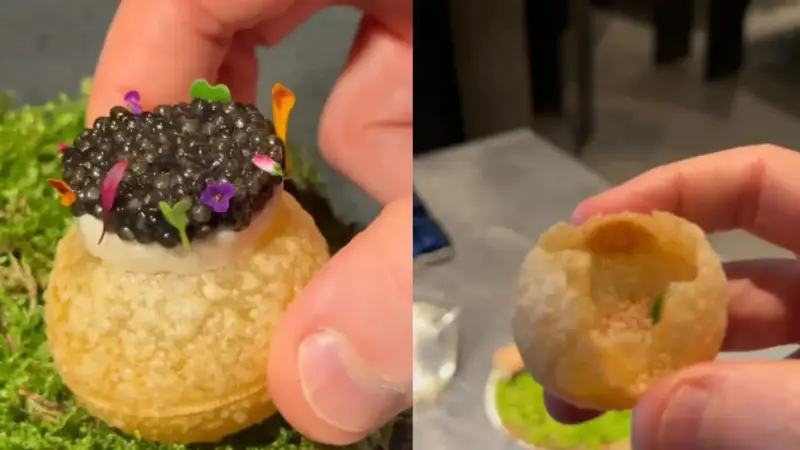
A Danish Michelin-star restaurant has discovered pani puri, or rather, a version of it. A photo of its “caviar puri” has gone viral, leaving Indian social media both amused and mildly offended, with one question cutting through the noise: where, exactly, is the pani in this puri.
The dish shows a delicate, hollow puri-style shell topped with a generous spoon of caviar and artful garnishes. It looks expensive, meticulous, very tasting-menu. What it does not look like, at least to Indian eyes, is pani puri, the noisy street snack you eat standing at a cart, juice dripping down your wrist as you ask for “thoda aur teekha.”
When Street Food Meets Fine Dining
This is hardly the first time global fine dining has “reimagined” Indian street food, but pani puri hits a particularly emotional nerve. For many Indians, it is not just a snack; it is a ritual, a memory of after-school treats, college evenings and chaotic market lanes. Seeing it stripped of its spicy, tangy pani and turned into a pristine canapé feels, at best, incomplete and, at worst, like cultural cosplay.
The Puri, The Pani And The Point
The joke online writes itself: a pani puri without pani is just an overpriced, hollow mathri. But underneath the memes is a genuine question about where the line sits between homage and appropriation. Is this caviar puri a playful nod to Indian chaat, or does it turn a messy, affordable food into a status symbol that forgets its roots
Internet As The New Food Critic
As images circulate, desi users are reclaiming the narrative the way they know best: jokes, side-by-side comparisons and proud declarations that no Michelin plate can beat the five-rupee golgappa from a trusted thela. It is a reminder that in the age of social media, diners in Mumbai and Lucknow get as much say on what pani puri “really” is as any European chef.
Why This Moment Resonates
This small flare-up sits inside a larger trend: global restaurants mining Indian and South Asian food for inspiration while local voices insist on being part of the conversation. The caviar puri might be pretty, but for many Indians, the real luxury is still standing at a crowded stall, counting how many puris you got and haggling for that extra sukha at the end.
Chaat Culture Reaction Highlights
- Viral “caviar puri” sparks jokes about missing pani and street authenticity
- Social media pushes back against fine-dining reinventions of Indian snacks
- Debate revives questions of homage versus appropriation in global menus
- For many Indians, the real pani puri remains the five-rupee golgappa at the corner stall
Sources: Social Media Reactions, Food Culture Commentary, Restaurant Presentation Descriptions