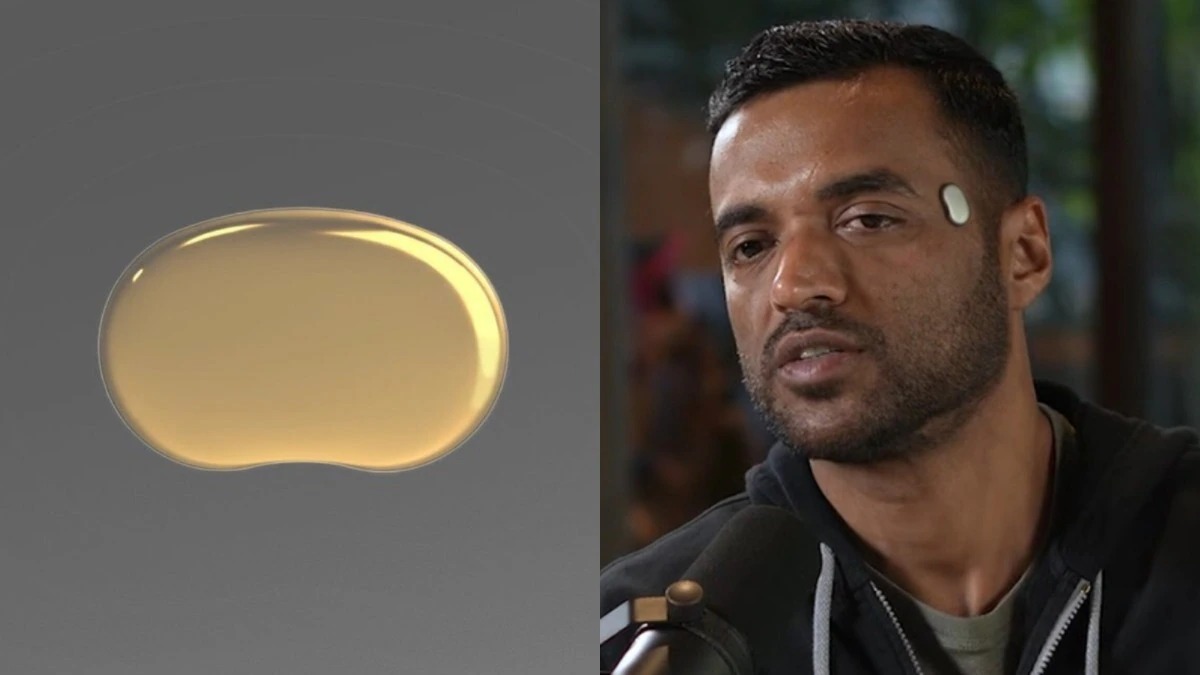
Former Zomato CEO Deepinder Goyal plans to launch his “Temple” wearable within the next 6 to 12 months. Retailing at approximately $1,000, the device targets high-performers by measuring metabolic “entropy” via the forehead. The company intends to support the product's wellness claims with peer-reviewed studies ahead of its public debut.
NEW DELHI — Deepinder Goyal, the co-founder of Zomato and former CEO of Eternal Ltd., has provided a fresh update on his highly anticipated health-tech venture, the “Temple” wearable. In a recent interview, the tech entrepreneur indicated that the forehead-worn device is on track for a commercial launch within the next six to 12 months.
The bean-shaped wearable, which has been the subject of significant public curiosity since Goyal was first spotted wearing it, is designed to provide real-time insights into the body’s metabolic state. According to details shared by the company, the device aims to move beyond traditional heart-rate-based tracking by directly measuring a proprietary biomarker referred to as “entropy.”
Breaking New Ground in Health Tech
Unlike conventional fitness trackers that utilize heart rate as a proxy for metabolic activity, Temple is engineered to monitor physiological signals directly from the superficial temporal artery. Goyal claims this approach offers a more accurate representation of how the body handles metabolic and sympathetic demands, including responses to stress, recovery, sleep, and physical exercise.
“Heart rate was supposed to be the proxy for metabolic rate. We found the real thing,” Goyal stated, emphasizing that the project began as a personal scientific endeavor to better understand his own physiology.
The development team characterizes entropy as the cost the body pays to remain functional, noting that healthy individuals typically maintain lower entropy levels at rest, with specific surges during activity followed by recovery. The device’s ability to read these signals non-invasively is intended to help high-performing individuals—including athletes, executives, and founders—optimize their long-term health and aging processes.
Launch Strategy and Regulatory Path
The upcoming rollout is expected to position Temple as a wellness-focused product. To support the device's scientific claims, Goyal confirmed that the company plans to release peer-reviewed studies alongside the launch.
While currently being positioned for the wellness market, the company has not ruled out future medical applications. According to officials, the device may eventually undergo medical regulatory approval as the team introduces more advanced features. This measured approach reflects the company’s intent to bridge the gap between experimental biohacking and validated medical technology.
Regarding the timeline, Goyal acknowledged the challenges of product development, noting, "Maybe 6 to 12 months. But I've been saying that for the last 18 months. So I don't know."
Market Positioning and Pricing
Temple is not intended for the mass market; rather, it is being pitched as a high-end “human instrument” for users who take a serious, data-driven approach to their physiology. The device is expected to retail at approximately $1,000 (roughly ₹1 lakh).
The anticipation surrounding the device has been bolstered by its appearances in public settings, most notably when badminton star PV Sindhu wore the device during the 2026 Uber Cup in April. With over 1 lakh early-access applications submitted for the initial batch of 100 units as of May 2026, market interest in the project remains robust.
Why It Matters
For the broader wearable technology sector, Temple represents a significant shift from simple activity tracking to deeper physiological monitoring. If the device’s claims regarding the “entropy” biomarker are validated through peer-reviewed research, it could set a new benchmark for how health-conscious consumers and athletes track their recovery and metabolic longevity.
Key Facts at a Glance
Launch Window: Expected within 6 to 12 months.
Target Price: Approximately $1,000 (approx. ₹1 lakh).
Key Innovation: Uses the "entropy" biomarker to measure metabolic rate directly via the superficial temporal artery.
Target Audience: High-performing individuals, including athletes and executives, rather than mass-market consumers.
Early Interest: Over 1 lakh applicants for the first batch of 100 units.
FAQ
What is the "Temple" device?
Temple is a bean-shaped, forehead-worn wearable designed to measure the body’s metabolic state and entropy in real time.
How does it differ from a smartwatch?
Unlike standard wearables that use heart rate as a proxy for metabolic health, Temple monitors signals from the superficial temporal artery to provide direct data on metabolic and sympathetic stress.
Is the device medically approved?
Not yet. It will initially launch as a wellness device supported by peer-reviewed studies, with potential plans to seek medical regulatory approval for future iterations.
Who is the target user?
The device is aimed at high-performers, such as athletes and founders, who prioritize data-driven physiological management.
Source: Bloomberg, The Economic Times, Temple Official Website, Digital Health News