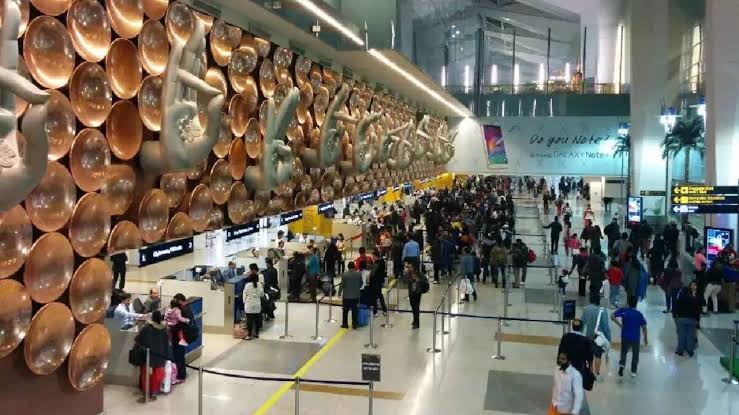
Delhi International Airport Limited has operationalised Pier C at Terminal 3, expanding annual international passenger handling capacity by 50 percent to 31 million. Activated ahead of the 18th BRICS Leaders' Summit in New Delhi, the converted pier enhances wide-body gate capacity, mitigates terminal congestion, and streamlines diplomatic and commercial transit.
NEW DELHI — Delhi International Airport Limited (DIAL) began progressively operationalising Pier C at Terminal 3 on Wednesday night, September 9, 2026, boosting Indira Gandhi International Airport's annual international passenger-handling capacity by 50 percent. The infrastructure upgrade increases the hub's cross-border threshold from approximately 20 million to 31 million passengers per annum (MPPA). Airport authorities completed the phased rollout ahead of the 18th BRICS Leaders' Summit scheduled for September 12–13 in the capital. The expansion provides critical apron, boarding, and processing flexibility to handle incoming heads of state, official delegations, and elevated regular commercial air traffic.
Infrastructure Overhaul and Terminal Reconfiguration
Indira Gandhi International Airport operator DIAL confirmed that the operationalisation of Pier C follows the receipt of all requisite statutory, security, and aerodrome clearances. A pier serves as a direct extension from the central passenger terminal, providing dedicated aircraft contact stands, aerobridges, and passenger boarding lounges.
Terminal 3 historically operated with four piers: Piers A and B handled international flights, while Piers C and D accommodated domestic operations. The strategic conversion of Pier C shifts the facility balance to three international piers and one domestic pier. Under the phased launch schedule, Pier C begins by processing international flight arrivals on Wednesday night before expanding to accommodate both international arrivals and departures starting Thursday evening, September 10.
The structural retrofit includes enhanced support for wide-body, long-haul aircraft and next-generation twin-aisle jets commonly deployed by global carriers. To create terminal space for the physical reconfiguration, airport authorities coordinated with home carriers in late 2025, relocating select domestic flights operated by Air India and Air India Express to Terminal 2.
Coordination Ahead of the 18th BRICS Summit
The operational launch coincides with heightened administrative and security preparations across the National Capital Territory for the BRICS Leaders' Summit. Aviation authorities anticipate a concentrated volume of unscheduled government aircraft, diplomatic delegations, and summit attendees arriving concurrently with peak scheduled commercial traffic.
To mitigate airside congestion and ground delays, DIAL formulated an integrated operational plan alongside key government stakeholders, including:
The Central Industrial Security Force (CISF) for terminal and perimeter defense.
The Bureau of Civil Aviation Security (BCAS) for regulatory oversight.
The Bureau of Immigration (BOI) to staff dedicated summit clearance lanes.
Customs authorities, ground-handling agencies, and international air carriers.
Specialized parking aprons, isolated landing slots, and fast-track immigration counters have been established to isolate official diplomatic delegations while maintaining normal terminal clearance timelines for regular commercial passengers.
Impact on Commercial Aviation and Passengers
The capacity increase addresses rising traffic figures across India’s primary international gateway. Operational data covering April through July 2026 recorded 6.9 million international travelers passing through Delhi, representing steady growth alongside domestic volumes of 19.5 million.
For regular international passengers, the addition of Pier C reduces tarmac bus transfers, improves boarding bridge availability, and decreases peak-hour immigration processing queues. For airlines, the expanded gate allocation provides additional turnaround efficiency and wide-body gate access during nighttime departure banks to Europe, North America, and East Asia.
Official Statements
"We have undertaken comprehensive preparedness measures in close coordination with all our security and operational stakeholders to ensure that the airport is able to efficiently manage the anticipated increase in international traffic while maintaining the highest standards of safety, security, and passenger experience," said Pradeep Panicker, Chief Executive Officer of Delhi International Airport Limited (DIAL).
"The operationalisation of Pier C further strengthens our international handling capability at Terminal 3 and provides us with additional flexibility during this important global event. Our teams are working round-the-clock to ensure seamless airport operations and a smooth experience for all passengers and visitors," Panicker added.
Why It Matters
The activation of Pier C directly affects long-term hub operations and near-term diplomatic transit:
National Aviation Strategy: Aligns with the Ministry of Civil Aviation's objective to develop Delhi into a premier global transit hub competing directly with Gulf mega-airports for long-haul transfer traffic.
Airport Fluidity: Prevents ground bottlenecks during large multilateral summits, ensuring ordinary air travel remains insulated from high-security diplomatic movements.
Long-Haul Capability: Expands Terminal 3's contact gates for wide-body aircraft, allowing international carriers to scale operations into India without gate shortages.
Key Facts at a Glance
Capacity Growth: Annual international passenger capacity rises 50 percent, from approximately 20 MPPA to 31 MPPA.
Pier Reallocation: Terminal 3 transitions to three international piers (A, B, C) and one domestic pier (D).
Rollout Schedule: International arrivals commenced the night of September 9; dual arrival and departure operations launch the evening of September 10, 2026.
Event Catalyst: Inauguration timed ahead of the 18th BRICS Leaders' Summit hosted in New Delhi on September 12–13, 2026.
Participating Agencies: Operations coordinated across DIAL, CISF, BCAS, the Bureau of Immigration, and airline ground handlers.
Frequently Asked Questions
Why was Pier C converted from domestic to international use?
Pier C was converted to accommodate rising long-haul travel demand and to fulfill Delhi Airport’s hub expansion strategy, addressing bottleneck constraints across international boarding gates.
When will commercial passengers begin using Pier C?
International arrival operations began progressively on the night of September 9, 2026, with full departure and arrival flight processing beginning the evening of September 10, 2026.
Will the BRICS Summit disrupt scheduled passenger flights at Terminal 3?
Aviation and security agencies have set up dedicated immigration counters, distinct arrival lanes, and designated aircraft parking bays for official summit delegates to ensure scheduled commercial travel remains uninterrupted.
Source: