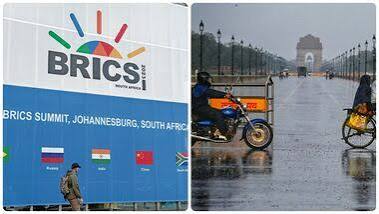
New Delhi will operate under a regulated traffic grid during the BRICS Summit 2026 from September 11 to 13 at Bharat Mandapam. Rather than a shutdown, authorities have regulated 35 central roads, diverted DTC buses, maintained Metro connectivity, and cleared emergency corridors, keeping suburban transport and airport links accessible.
NEW DELHI — The Delhi Police and municipal authorities have issued a comprehensive traffic advisory regulating movement across more than 35 arterial corridors and establishing 22 primary diversion points in the capital from September 11 to 13, 2026, as India hosts the 18th BRICS Summit at Bharat Mandapam. Contrary to online speculation suggesting a complete lockdown of the capital, authorities confirmed that New Delhi will remain functional under a zoned transit protocol designed to balance security for foreign heads of state with public connectivity. The regulations come as leaders and delegates from 11 member nations—including Brazil, Russia, China, and South Africa—convene in the capital, requiring dedicated security corridors connecting VIP hotels to the primary venue at Pragati Maidan.
Controlled Zones and Road Closures in Central Delhi
The security grid centers heavily around the New Delhi district and the C-Hexagon encircling India Gate, designated as the "Controlled Zone" during the summit window. Movement towards Mathura Road, Bhairon Marg, and Purana Quila Road will be restricted to authorized summit motorcades and local residents carrying verified government identity cards.
Traffic heading from East and South Delhi will be rerouted away from Mathura Road and Tilak Marg onto alternative routes, including Bahadur Shah Zafar Marg, Indraprastha Marg, and the Barapullah elevated corridor. Key intersections such as Mandi House, Patel Chowk, Neela Gumbad, and the Lodhi Road roundabouts will experience phased traffic stoppages during motorcade movements. Commuters traveling between north and south sectors of the capital are advised to utilize the Ring Road and Ashram Chowk or transit via the western arterial bypasses of Rani Jhansi Marg and Panchkuian Road.
Public Buses, App-Based Cabs, and Commercial Vehicles
Public transportation services will undergo tactical modifications rather than blanket suspensions:
Delhi Transport Corporation (DTC) Buses: City bus services will remain operational across the outer districts of the National Capital Region (NCR) but will terminate short of the central New Delhi area. Routes traversing the C-Hexagon and Mathura Road will be terminated or diverted along the Ring Road.
App-Based Taxis (Uber, Ola, and Meru): Ride-hailing services will operate across Delhi-NCR. However, commercial cabs without verified destination bookings within New Delhi (such as pre-booked hotel reservations or residential drop-offs for registered residents) will not be permitted past police perimeter checkpoints in the Controlled Zone.
Interstate and Heavy Goods Vehicles (HGVs): Non-essential commercial trucks will not be allowed entry into the capital between midnight on September 11 and midnight on September 13. Heavy transit traffic will be rerouted along the Eastern Peripheral Expressway and Western Peripheral Expressway. Vehicles carrying essential supplies—including milk, vegetables, medical oxygen, and pharmaceuticals—will receive uninterrupted access via dedicated logistics corridors.
Delhi Metro Rail and Airport Connectivity
The Delhi Metro Rail Corporation (DMRC) network will function as the primary passenger backbone during the summit period. All metro lines, including the Yellow, Blue, and Violet lines, will operate under normal weekend timetables, though entry and exit gates at select central stations, particularly the Supreme Court metro station adjacent to Bharat Mandapam, will remain closed to the general public.
Travelers commuting to Indira Gandhi International Airport (IGI Airport) and major railway terminals have been instructed to rely on rail transit rather than road corridors:
Air Passengers: The Delhi Metro Airport Express Line (Orange Line) connecting New Delhi Railway Station directly to Terminal 3 (T3) will run at increased frequency. Commuters traveling by private vehicle from Gurugram to Terminal 1 (T1) and T3 must navigate via the Urban Extension Road II (UER II) and the tunnel link to bypass Sardar Patel Marg and Dhaula Kuan.
Railway Hubs: Direct access routes to New Delhi Railway Station (NDLS), Old Delhi Railway Station (ODRS), and Hazrat Nizamuddin Railway Station remain active, though passengers must account for additional verification delays at approach roundabouts.
Official Sources
Operational details and route protocols cited in this article were verified through:
Quote Section
"The capital city is not under a shutdown. Essential medical services, passenger rail connections, metro services, and supply chains will operate continuously. Diversions on specific arterial roads are designed strictly to ensure smooth, secure passage for visiting international delegations while maintaining alternative corridors for citizens."
— According to officials at the Delhi Traffic Police headquarters.
Why It Matters
Hosting the BRICS Summit requires balancing diplomatic protocol with urban functionality. For the more than 20 million residents of the National Capital Region, understanding these transit protocols prevents disruptions to air travel, medical appointments, and daily commutes. The measures ensure that while the city center handles high-security diplomatic convoys, business supply chains and public transport across Delhi's peripheral and suburban sectors continue with minimal friction.
Key Facts at a Glance
Event & Dates: 18th BRICS Summit hosted at Bharat Mandapam, Pragati Maidan, from September 11 to 13, 2026.
Road Diversions: Over 35 major roads regulated and 22 diversion points established across New Delhi and South Delhi.
Public Transit: Delhi Metro remains fully operational except for passenger access at Supreme Court station; DTC buses diverted from the central zone.
Airport Transit: Passengers are advised to use the Airport Express Line or designated UER II and Ring Road vehicular detours.
Frequently Asked Questions
1. Will New Delhi be completely shut down during the BRICS Summit 2026?
No. The capital is not under a shutdown. Restrictions are concentrated in central New Delhi around Bharat Mandapam, while suburban, residential, and commercial districts across North, West, East, and South Delhi remain open.
2. Can I book and use Uber or Ola cabs in Delhi?
Yes. Ride-hailing services will operate throughout the NCR. However, entry into the New Delhi district will require showing proof of residence or a confirmed booking (such as a hotel or flight ticket) at police checkpoints.
3. Are DTC buses running during the summit?
Yes, but routes passing through the New Delhi district, India Gate C-Hexagon, and Mathura Road will be curtailed or diverted to the Outer Ring Road and central terminal edges.
4. How can I reach Indira Gandhi International Airport (IGI)?
Authorities strongly recommend the Delhi Metro Airport Express Line. Motorists from South Delhi and Gurugram should use the UER II link or the Dhaula Kuan–Rao Tula Ram Marg bypass, avoiding Sardar Patel Marg.
5. How will emergency services and ambulances operate?
Emergency medical vehicles have dedicated green corridors. Police personnel stationed at diversion points are under orders to facilitate immediate right-of-way for ambulances.
6. Are schools, colleges, and government offices closed?
Government offices, educational institutions, and private establishments located inside the designated New Delhi Controlled Zone will observe closures or remote work protocols. Establishments across outer districts operate normally.
7. Is the Delhi Metro functioning normally?
Yes. Metro trains will run across all lines. Only the Supreme Court station near the venue will experience restricted passenger access during summit sessions.
8. Can private vehicles enter central New Delhi?
Private vehicles will be permitted only for verified residents, hotel guests with valid reservations, and accredited summit staff upon identity verification at designated security gates.
9. Are railway stations accessible?
Yes. Access to New Delhi, Old Delhi, and Nizamuddin railway stations remains open, though travelers are advised to depart early and carry valid train tickets for perimeter inspections.
10. What are the rules for commercial trucks and delivery vehicles?
Heavy commercial trucks are banned from entering Delhi and will be diverted around peripheral expressways, except those carrying verified essential medical and food commodities.
Source: Delhi Police, Delhi Traffic Police, Delhi Metro Rail Corporation (DMRC), Ministry of External Affairs (MEA), Government of India, and the Government of National Capital Territory of Delhi (GNCTD).