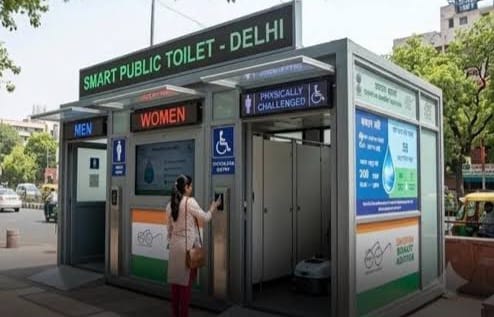
The Delhi government has approved ₹266.26 crore to construct 500 modern public toilet blocks equipped with solar panels,CCTV cameras, and sanitary pad vending machines.Aimed at upgrading urban sanitation, the project is part of a larger plan by the MCD and Tourism Department to build 2,000 smart facilities across the capital.
In an initiative to upgrade urban sanitation and civic infrastructure, the Delhi government's Expenditure Finance Committee (EFC) has officially approved ₹266.26 crore for the first phase of constructing 500 modern public toilet blocks. Announced on September 14, 2026, the project addresses long-standing complaints regarding inadequate public sanitation facilities across the national capital. This development comes as urban local bodies step up efforts to modernize public amenities, making commercial markets, transit zones, and heritage locations more accessible for daily commuters and visitors.
Infrastructure and Advanced Features
The newly approved public toilet blocks will integrate smart technology and sustainable architecture to meet contemporary urban standards. According to government releases, each facility will feature solar panels for energy efficiency, closed-circuit television (CCTV) cameras for enhanced security, and mechanical ventilation systems.
Furthermore, the design prioritizes inclusive access by incorporating dedicated ramps and amenities for Divyangjan (differently-abled persons). To cater specifically to women's hygiene needs, the blocks will be equipped with automated sanitary pad vending machines and sanitary pad incinerator disposal units. Commercial integration, such as small kiosks for drinking water and daily essentials alongside caretaker rooms, is also built into the layout to ensure continuous maintenance.
Implementation Strategy and Rollout Plan
The execution of the project will span multiple municipal and state agencies to ensure rapid deployment. Chief Minister Rekha Gupta recently noted that the overarching plan involves building 2,000 modern public toilets across Delhi within a year, with the Municipal Corporation of Delhi (MCD) and the Tourism Department constructing 1,000 units each.
The initial batch of 500 units funded by the recent EFC approval will be overseen by the Delhi Tourism and Transportation Development Corporation (DTTDC). Sites have been strategically identified based on footfall data, prioritizing major commercial markets, parks, highway corridors, and transit junctions like Civil Lines, Anand विहार, and AIIMS campus areas.
Impact on Citizens, Consumers, and Visitors
The deployment of these modern facilities directly impacts millions of residents, daily wage earners, shoppers, and international tourists who frequently face a shortage of clean sanitation options in public spaces. By ensuring round-the-clock caretaker presence and robust security features like CCTV surveillance, the initiative aims to make public restrooms safer for women and families.
For local businesses and market associations, improved civic infrastructure translates to a more welcoming shopping environment, potentially boosting foot traffic in commercial districts.
Official Sources and Administrative Framework
According to official announcements from the Delhi government, administrative approvals were cleared through the Expenditure Finance Committee following budgetary allocations for fiscal year 2026–27.
Organizers stated that the DTTDC and MCD will coordinate execution and long-term operations to maintain service quality and hygiene standards across all deployed blocks.
"The development of these modern public convenience complexes marks a vital step in upgrading Delhi's civic infrastructure, ensuring safety, hygiene, and accessibility for every citizen and visitor..."
Why It Matters
The rapid urbanization of the national capital region demands resilient public utilities that keep pace with population growth. Upgrading sanitation infrastructure directly correlates with public health outcomes, reduction of open sanitation issues, and the enhancement of urban aesthetics.
By integrating green energy elements like solar panels and prioritizing women's health utilities, the project establishes a progressive benchmark for municipal development in India.
Key Facts at a Glance
Financial Outlay: ₹266.26 crore approved for the first phase of 500 modern public toilet blocks.
Executing Agencies: Led by the Delhi Tourism and Transportation Development Corporation (DTTDC) and the Municipal Corporation of Delhi (MCD).
Key Amenities: Solar panels, CCTV security, sanitary pad vending/incinerator machines, ramps, and caretaker rooms.
Broader Scope: Part of a larger city-wide initiative targeting 2,000 modern public toilets within a year.
Frequently Asked Questions
Where will the first 500 modern public toilet blocks be built?
The initial 500 blocks are being installed across high-density markets, tourist hubs, major transit corridors, and high-footfall public zones identified by the Tourism Department.
What security and safety measures are included in these toilets?
Each facility will feature active CCTV camera surveillance, integrated mechanical ventilation, outdoor video display boards, and dedicated 24/7 onsite caretakers.
Are these facilities accessible for differently-abled citizens?
Yes, all approved blocks feature standardized architectural ramps and dedicated interior provisions to ensure seamless accessibility for Divyangjan.
When is the project expected to be completed?
The Delhi government has outlined a target to execute the broader 2,000-unit rollout across municipal and tourism jurisdictions within a one-year timeframe.
Source: Delhi Government Official Press Release, Expenditure Finance Committee (EFC) Filings, Municipal Corporation of Delhi (MCD) Announcements, Delhi Tourism and Transportation Development Corporation (DTTDC)