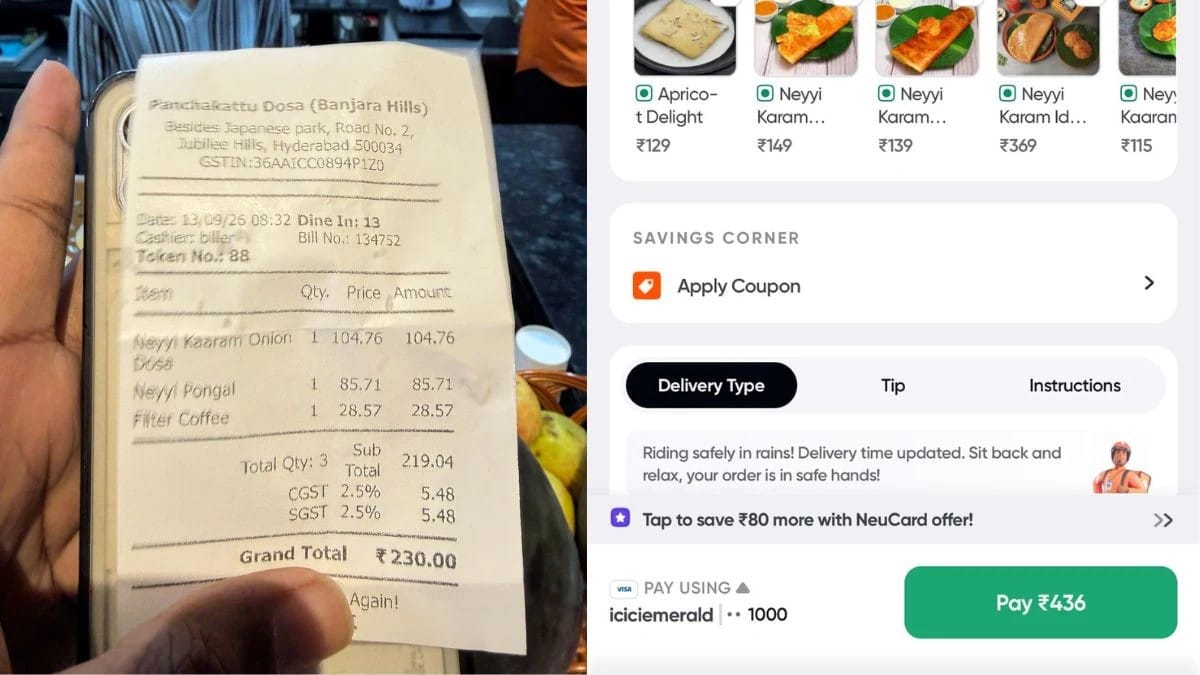
A viral social media post comparing a Rs 230 restaurant bill in Hyderabad to a Rs 436 Swiggy cart for the exact same meal has sparked a debate on delivery app mark-ups, restaurant commissions, and the true cost of digital convenience.
A customer in Hyderabad highlighted a stark price discrepancy after finding that a meal purchased directly at a local eatery cost Rs 230, while the exact same items ordered through the food delivery platform Swiggy totaled Rs 436 before discounts. The comparison, shared on the social media platform X by user @idlebrainjeevi, detailed items from Panchakattu Dosa located in Hyderabad's Banjara Hills neighborhood. The post quickly drew widespread attention, drawing focus to the structural pricing gaps between dine-in services and digital aggregation platforms amid growing consumer consciousness over household expenditures.
Breakdown of the Bill Discrepancy
According to the physical restaurant bill provided in the viral comparison, individual menu items were priced moderately. A Neyyi kaaram onion dosa was listed at Rs 104, a Neyyi pongal at Rs 85, and a special filter coffee at Rs 28. With Goods and Services Tax (GST) applied, the final offline total came to Rs 230.
By contrast, the same items listed on the Swiggy application displayed a noticeable mark-up prior to any coupon or promotional code application. The onion dosa was listed at Rs 149, the pongal at Rs 115, and the filter coffee at Rs 120, bringing the subtotal before delivery fees and taxes to Rs 436. This created an absolute difference of Rs 206 for the exact same food items. Industry analysts note that restaurants frequently list higher menu prices on third-party aggregation apps to offset high commission rates charged by delivery platforms.
Consumer Reactions and Economic Context
The post triggered an extensive online discussion concerning consumer economics, inflation, and the viability of digital convenience. Social media users split into distinct viewpoints regarding the value proposition of food delivery services.
Several users argued that the mounting costs make regular digital ordering financially unsustainable, suggesting that traveling to local eateries or dining in is vastly more economical. Conversely, defenders of delivery platforms emphasized that the price gap accounts for operational overhead, packaging, delivery personnel wages, and the immense time saved by avoiding traffic and wait times. Furthermore, digital commerce experts pointed out that regular app users often leverage loyalty perks, bank offers, and promotional coupons that substantially mitigate the upfront sticker price shown in unadjusted app carts.
Impact on Digital Diners and Food Tech Platforms
The viral nature of the restaurant bill versus Swiggy bill comparison underscores shifting consumer scrutiny toward digital platform economics:
Consumers: Everyday shoppers are becoming more analytical about hidden mark-ups, delivery fees, and platform service charges embedded in digital orders.
Restaurants: Local dining establishments continue to face a delicate balancing act between absorbing aggregator commission fees and passing menu inflation onto online customers.
Delivery Platforms: Companies like Swiggy face ongoing pressure to justify service charges while maintaining user retention amidst rising price sensitivities.
Official Sources Section
Data regarding the itemized menu pricing, tax components, and app-based cost margins was referenced from public user documentation and consumer disclosures shared via official social media channels. Background context on restaurant aggregation commissions and delivery logistics is derived from industry reports published by the National Restaurant Association of India and market evaluations by Swiggy Corporate.
"Organizers stated that platform pricing structures reflect a combination of merchant commission adjustments, logistics management, and operational maintenance required to sustain app-based delivery ecosystems."
Why It Matters
The discussion highlights a broader economic reality for urban households navigating inflation and digital convenience. While food delivery apps provide undeniable time-saving benefits, the cumulative impact of inflated menu items, packaging fees, and taxes means consumers pay a significant premium for doorstep delivery. Understanding these cost drivers helps diners make informed choices between dining out and ordering in.
Key Facts at a Glance
Dine-In Total: The physical restaurant bill for an onion dosa, pongal, and filter coffee totaled Rs 230 including GST.
Online Platform Total: The identical items on Swiggy amounted to Rs 436 before promotional coupons.
Price Variance: The absolute difference between the two purchasing methods stood at Rs 206.
Location: The transaction originated from Panchakattu Dosa in Banjara Hills, Hyderabad.
Frequently Asked Questions
Why are food items more expensive on delivery apps than at restaurants?
Restaurants frequently increase menu prices on third-party platforms to compensate for the commissions charged by delivery aggregators like Swiggy and Zomato.
Did the viral Swiggy bill include discounts or coupons?
No, the Rs 436 total reflected the unadjusted cart price before applying any promotional codes, discounts, or bank offers.
Are delivery charges included in the Rs 206 price difference?
The baseline price gap primarily stems from higher item-level menu pricing on the app, independent of additional delivery fees or surge charges that may apply at checkout.
How can consumers reduce costs when ordering online?
Diners can minimize online food expenses by utilizing platform-specific discount coupons, loyalty membership benefits, credit card reward offers, or choosing pickup options when feasible.
Source: Swiggy Corporate, National Restaurant Association of India