The Delhi government has formulated a new draft groundwater policy mandating water meters on all domestic and commercial borewells. Replacing the legacy flat-fee system with volumetric extraction tariffs, the framework offers a low-cost regularization pathway for unauthorized wells while enforcing strict fines for non-compliance
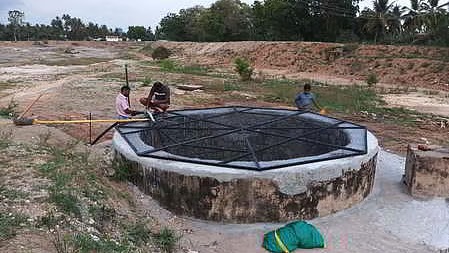
NEW DELHI — The Delhi government has finalized a comprehensive new draft policy that makes water meters mandatory for all domestic and commercial borewells across the national capital. Formulated by state power and water administrative bodies, the upcoming regulatory framework introduces continuous volumetric monitoring and consumption-linked usage tariffs for legal extraction. Crucially, the policy establishes a streamlined compliance mechanism to trace, register, and regularize the hundreds of thousands of unauthorized borewells currently operating inside private residential and industrial premises.
Shifting From Fixed Approvals to Volumetric Billing
The proposed structural guidelines mark a major shift in how the capital regulates its rapidly depleting subterranean water tables. Under the regulatory system managed since 2010, applicants extracting groundwater paid only a nominal, one-time processing fee of ₹500. Once initial clearance was granted by district advisory panels, municipal bodies possessed no administrative mechanism to audit, track, or limit the volume of water drawn from the ground.
The new policy eliminates the unchecked one-time approval model. According to senior state executives, every operational tube well and borewell connection must be retrofitted with a certified water flow meter. Consumers will transition to a recurring monthly or quarterly billing system, paying specific tariffs tied directly to the exact quantity of gallons extracted from local aquifers.
Simplified Regularization Pathway for Unauthorized Extractors
A primary objective of the draft framework is mapping out the vast network of unregistered extraction units operating beyond the municipal grid. While official enforcement data submitted to the National Green Tribunal (NGT) shows that 15,962 illegal borewells were detected and sealed over the past year, water department officials acknowledge the actual number of hidden wells inside private households likely reaches the hundreds of thousands.
To bring these unmapped structures under state supervision, the Delhi Government is rolling out a simplified regularization process. Homeowners and commercial entities operating unauthorized lines can obtain an official No-Objection Certificate (NOC) by submitting an application and paying a basic regularizing fee. To ensure field data accuracy, the state is preparing to initiate a comprehensive door-to-door physical verification survey to document private borewell infrastructure alongside standard municipal piped water lines.
Escalating Penalties and Federal Consultations
While the policy aims to simplify permissions for legitimate water users—especially in peripheral colonies where infrastructure bottlenecks limit piped municipal supplies—it retains heavy financial penalties to deter ongoing non-compliance. The baseline environmental penalty for illegal extraction remains set at ₹1 lakh.
In critical groundwater zones, financial penalties escalate rapidly based on pump capacity and extraction timeframes. For instance, operating an unauthorized commercial pump for eight hours daily over a one-year period within an over-exploited zone will incur a penalty of approximately ₹9.5 lakh.
To finalize the pricing framework and ensure legal harmony, the Delhi Jal Board (DJB) has shared the text of the draft policy with the Central Ground Water Board (CGWB) under the Union Ministry of Jal Shakti. The federal body is evaluating the proposed tariff slabs to match nationwide ecological conservation metrics before the final public notification.
Socio-Economic Impact on Businesses and Local Consumers
The transition to a mandatory metered model has direct financial and operational impacts for commercial units, real estate developers, and manufacturing facilities dependent on groundwater. Businesses will see operational costs rise as they adjust to recurring water extraction bills. For individual citizens, particularly those residing in unauthorized or tail-end colonies lacking municipal piped water, the regularization clause offers immediate relief from the threat of sudden administrative line sealing.
However, consumer groups also note that mandatory meter retrofitting creates an immediate up-front hardware cost for private households. On an ecological level, capping excessive extraction through economic pricing is expected to slow down the alarming drop in Delhi's water table, helping to stabilize the city's long-term resource security.
Official Sources Section
The policy measures, draft clauses, and fiscal frameworks cited in this report are based on official directives from the Delhi Power Department, legislative announcements made by the Delhi Water Ministry in the State Assembly, and consultation papers submitted directly to the Central Ground Water Board (CGWB).
Quote Section
"Under the new system, every borewell connection will be metered and consumers will pay according to the amount of groundwater extracted. The policy will also provide a pathway for regularising existing unauthorised borewells."
— Senior Delhi Government Official
"According to officials, the current framework established in 2010 provided a massive regulatory gap, as a one-time processing payment of ₹500 offered zero tracking capability over subsequent multi-year extraction volumes."
Why It Matters
This policy shift transforms groundwater from a free, unmonitored private asset into a strictly audited public resource. By connecting actual volumetric consumption directly to recurring financial charges, the state creates a clear economic incentive for businesses and residential complexes to conserve water and install rainwater harvesting systems. Additionally, the regularization window offers a practical path for citizens to formalize their private utilities without facing heavy, retroactive fines.
Key Facts at a Glance
Mandatory Metering: Every domestic, industrial, and commercial borewell in Delhi must feature a functional water flow meter.
Volumetric Billing: The old flat-rate, one-time fee model is replaced by a recurring usage tariff linked to actual water extraction volumes.
Amnesty Pathway: The draft framework introduces a simplified, low-cost regularization system for hundreds of thousands of existing illegal borewells.
Deterrence Matrix: Unregistered extraction in critical, over-exploited zones will continue to face steep environmental penalties of up to ₹9.5 lakh.
FAQ Section
Who is required to install a water meter under the new draft policy?
Every individual household, commercial business, and industrial unit operating a private tube well or borewell inside the borders of Delhi will be legally required to install a certified meter.
How can property owners regularize an existing illegal borewell?
Property owners can take advantage of a simplified regularization window by paying a nominal fee to secure an official No-Objection Certificate (NOC), avoiding severe fines or line sealing.
What are the financial penalties for continuing to run an illegal borewell?
The baseline fine starts at ₹1 lakh, but the penalty scales aggressively depending on the local aquifer status and pump run-time, reaching up to ₹9.5 lakh per year in critical water zones.
Source: Delhi Jal Board Official Web Portal, Central Ground Water Board (CGWB) Information System, Delhi State Government Environment Department Notices.