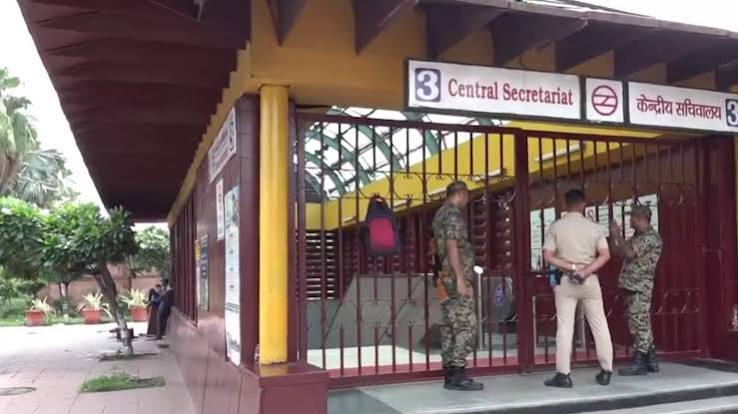
The Delhi Metro Rail Corporation has closed 18 stations in central Delhi on July 25, 2026, due to ongoing protests at Jantar Mantar. While entry and exit are restricted, interchange facilities remain open at Rajiv Chowk, Mandi House, and Central Secretariat. Commuters face significant transit delays as security measures persist.
NEW DELHI – The Delhi Metro Rail Corporation (DMRC) has confirmed that 18 metro stations will remain closed to the public starting at 7:30 a.m. on Saturday, July 25, 2026, as security restrictions remain in place across the national capital. This marks the fourth consecutive day of transit disruptions linked to ongoing demonstrations at Jantar Mantar.
The closures are a direct response to heightened security arrangements regarding the protest led by the Cockroach Janta Party (CJP) concerning the ongoing NEET examination controversy. While the stations are inaccessible for entry and exit, the DMRC has confirmed that interchange facilities will remain operational at three major junctions to prevent a complete breakdown of the city's transit network.
Restricted Access and Interchange Availability
According to the official DMRC advisory, the affected stations include Lok Kalyan Marg, Rajiv Chowk, Patel Chowk, Ramakrishna Ashram Marg, Barakhambha Road, Supreme Court, Seva Teerth, Janpath, Mandi House, Central Secretariat, ITO, Delhi Gate, Indraprastha, Khan Market, Jor Bagh, Shivaji Stadium, Jhandewalan, and New Delhi.
Despite these widespread closures, the DMRC has maintained that passengers can still use the interchange facilities at Rajiv Chowk, Mandi House, and Central Secretariat. However, commuters are strictly prohibited from exiting or entering the station premises at these locations. Additionally, operations on the Airport Express Line have been restricted, with services currently limited to the stretch between Dhaula Kuan and Yashobhoomi Dwarka Sector 25.
Impact of Security Measures on Commuters
The prolonged nature of these restrictions has significantly impacted daily life for thousands of office-goers, students, and legal professionals in central Delhi. With major stations shuttered, many residents have been forced to rely on road transport, resulting in severe traffic congestion and longer travel times across the capital.
The closure of the Supreme Court metro station has also presented logistical challenges for the legal community. Reports indicate that the Supreme Court Bar Association has previously approached the apex court, citing the difficulty lawyers and litigants face in accessing the court premises due to the transit limitations.
Security agencies continue to maintain a heavy presence near Jantar Mantar, the epicenter of the CJP-led agitation. At Janpath station, personnel have taken additional security steps, including covering glass panels at entrances, following reports of graffiti in the area.
Official Sources
The Delhi Metro Rail Corporation (DMRC) serves as the primary source for all service-related updates. The organization has consistently communicated these closures through official channels, including their social media platforms, citing the necessity of regulating crowd movement and ensuring public safety amid civil unrest.
Why It Matters
These disruptions highlight the ongoing tension between maintaining public order and ensuring the mobility of millions of residents in one of the world's busiest capital cities. As protests over systemic issues like the NEET examination continue, the reliance on the Delhi Metro becomes even more critical. The inability to use central transit hubs exacerbates the economic and social strain on the city, as students and workers struggle to reach their destinations in a timely manner.
Key Facts at a Glance
Total Closures: 18 metro stations are currently closed for entry and exit.
Interchange Hubs: Connectivity remains available at Rajiv Chowk, Mandi House, and Central Secretariat.
Cause of Disruption: Heightened security measures due to CJP protests at Jantar Mantar.
Duration: Restrictions have been in effect for four consecutive days and will continue until further notice.
Frequently Asked Questions
Are all metro lines affected?
No, the closures are specifically focused on stations in central Delhi near the protest sites. Travelers should check the official DMRC website for specific line status.
Can I switch trains at Mandi House?
Yes, interchange facilities are still available at Mandi House, Central Secretariat, and Rajiv Chowk, even though entry and exit are prohibited.
When will these stations reopen?
The DMRC has stated the closures will remain until further instructions are received from authorities.
Where can I find the latest travel updates?
Commuters are advised to monitor the official DMRC X (formerly Twitter) account and their mobile application for real-time service alerts.
Source: Delhi Metro Rail Corporation (DMRC), The Economic Times, The Hindu, Cityairnews.