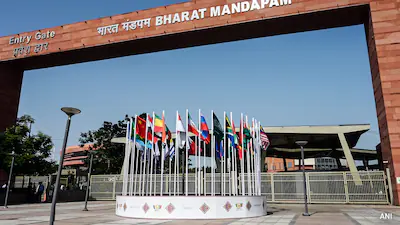
Delhi deployed 7,000 security personnel and 4,800 traffic police ahead of the 18th BRICS Summit at Bharat Mandapam. The multi-tiered security apparatus features 500 CCTV cameras, anti-drone coverage, school holidays, and traffic rerouting across 35 major roads to manage foreign dignitary movements smoothly across the national capital.
NEW DELHI — Indian law enforcement and intelligence agencies deployed a massive security grid across the capital on Thursday as Delhi gears up for BRICS Summit proceedings, stationing 7,000 security personnel and 4,800 traffic cops along critical transit corridors, hotels, and summit facilities. The comprehensive apparatus surrounds the 18th BRICS Leaders' Summit scheduled for September 11 to 13 at the Bharat Mandapam convention complex. The extensive deployment reflects the operational scale required to safeguard high-profile heads of state and foreign delegates while coordinating movement across one of the world's most congested metropolitan centers.
Multi-Layered Security Ring and Elite Deployments
To insulate the summit venue, the Ministry of Home Affairs and the Delhi Police established a concentric security perimeter spanning a five-kilometer radius around Bharat Mandapam. The outer cordon comprises armed personnel from the Delhi Police and central paramilitary forces, while inner sensitive zones, podiums, and VIP holding areas are staffed by the National Security Guard (NSG) and the Special Protection Group (SPG).
Technical surveillance operates from a specialized central command post at the Tughlaq Road police station, which integrates feeds from more than 500 high-definition CCTV cameras. The network oversees key arterial approaches throughout the New Delhi district, monitoring motorcade routes between Indira Gandhi International Airport, designated VVIP hotels, and the summit venue.
Bomb Detection and Disposal Squads (BDDS), specialized canine units, and anti-drone teams equipped with radio-frequency jammers have been deployed on rooftops surrounding Pragati Maidan to counter airborne or ground threats. Access into Bharat Mandapam remains restricted to authorized personnel carrying biometric accreditation badges verified by automated entry gates.
Traffic Diversions and Citywide Operational Adjustments
Managing vehicular flow during sustained dignitary transit requires direct interventions by Delhi's traffic management wing. As Delhi gears up for BRICS Summit sessions, approximately 4,800 traffic personnel have taken charge of 22 strategic diversion points and regulated movement across more than 35 arterial roads.
Corridors including Mathura Road, Bhairon Marg, Purana Quila Road, and stretches of the Ring Road face intermittent traffic freezes during motorcade transits. Authorities established real-time GPS tracking across official convoys to dynamically clear lanes without locking down neighboring roads for long durations.
To minimize civilian disruption, the Delhi government declared a holiday for public and private schools as well as administrative government offices on Friday, September 11. Private corporations operating across Central and South Delhi have been advised to shift employees to remote work protocols to ease road congestion.
Civic and Infrastructure Readiness
Supporting the law enforcement perimeter, municipal authorities and airport operators have executed operational enhancements across transit hubs:
Civil Aviation Transit: Delhi International Airport Limited (DIAL) designated specialized immigration counters at Terminal 3 for summit delegations and expanded parking bays for international state aircraft.
Hospitality Security: Approximately 10 luxury hotels—including the Taj Mahal Hotel, The Oberoi, and ITC Maurya—are guarded under high-level perimeter protocols, with liaison teams coordinating directly with foreign security details.
Urban Beautification: The New Delhi Municipal Council (NDMC) installed floral fountains and planted over 15,000 ornamental displays along motorcade routes and the BRICS Friendship Rose Garden in Chanakyapuri.
Public Transit Access: The Delhi Metro Rail Corporation (DMRC) will operate normally, serving as the recommended alternative for commuters navigating around restricted surface roads.
Impact on Citizens, Businesses, and Commuters
The operational measures affect diverse segments of Delhi's urban ecosystem:
For Daily Commuters: Motorists face localized diversions and travel delays in New Delhi, prompting high transit reliance on metro rail lines.
For Commercial Establishments: Markets in Connaught Place and Khan Market maintain normal pedestrian access, though commercial delivery vehicles face restricted operating windows during daytime hours.
For Logistics and Freight: Inter-state heavy transport vehicles not carrying essential supplies are diverted onto peripheral expressways around Delhi.
For International Delegations: Seamless transit between the diplomatic quarter and convention venues ensures the summit itinerary proceeds on schedule.
Official Sources
Operational protocols, security details, and public travel advisories were formally released through bulletins issued by the Delhi Police and confirmed in joint press statements from the Ministry of Home Affairs and the Ministry of External Affairs. Commercial transit arrangements were coordinated with Delhi International Airport Limited.
Quote Section
"The district police and paramilitary formations have put in place an exhaustive, multi-layered security grid addressing law and order, counter-sabotage, and anti-terror contingencies," stated Sachin Sharma, Deputy Commissioner of Police (New Delhi). "Multiple rounds of briefings and operational rehearsals ensure seamless coordination across agency lines while keeping public inconvenience to an absolute minimum."
Why It Matters
Hosting an expanded BRICS assembly—featuring 11 member nations and multiple partner delegations—tests the administrative and security capabilities of the host capital. Executing precise security protocols without paralyzing municipal infrastructure underscores India's logistical readiness to coordinate major geopolitical summits, safeguarding international state dignitaries while maintaining institutional continuity in a megacity of over 30 million residents.
Key Facts at a Glance
Total Security Deployment: Around 7,000 personnel from Delhi Police, paramilitary forces, NSG, and SPG.
Traffic Management: 4,800 traffic cops managing 22 diversion points and curbs across more than 35 roads.
Primary Event Venue: Bharat Mandapam, Pragati Maidan, New Delhi, during the September 11–13 summit dates.
Surveillance Infrastructure: Over 500 CCTV cameras linked to a command room at Tughlaq Road police station.
Public Closures: Schools and administrative government offices closed on September 11, with work-from-home advisories issued to private firms.
Frequently Asked Questions
Why are security and traffic restrictions intensified in Delhi?
The measures safeguard heads of state, foreign ministers, and international delegations attending the 18th BRICS Leaders' Summit at Bharat Mandapam, ensuring safe transit between hotels, transit hubs, and the convention center.
Will the Delhi Metro remain functional during the BRICS Summit?
Yes. Delhi Metro services are scheduled to run normally across the network, providing an alternative transit route for commuters looking to avoid surface road curbs.
Are schools and commercial offices open on Friday, September 11?
Government offices and schools in the capital will remain closed on September 11 to reduce vehicular traffic. Private offices in Central Delhi have been encouraged to operate remotely.
Which roads are most affected by traffic diversions?
Roads surrounding Pragati Maidan—such as Mathura Road, Bhairon Marg, and central New Delhi roundabouts—face periodic stoppages and rerouting during VVIP motorcade passages.
Source: Official security circulars issued by the Delhi Police, national diplomatic updates from the Ministry of External Affairs, transit advisories from the Delhi Traffic Police, and operational statements by the Ministry of Home Affairs.