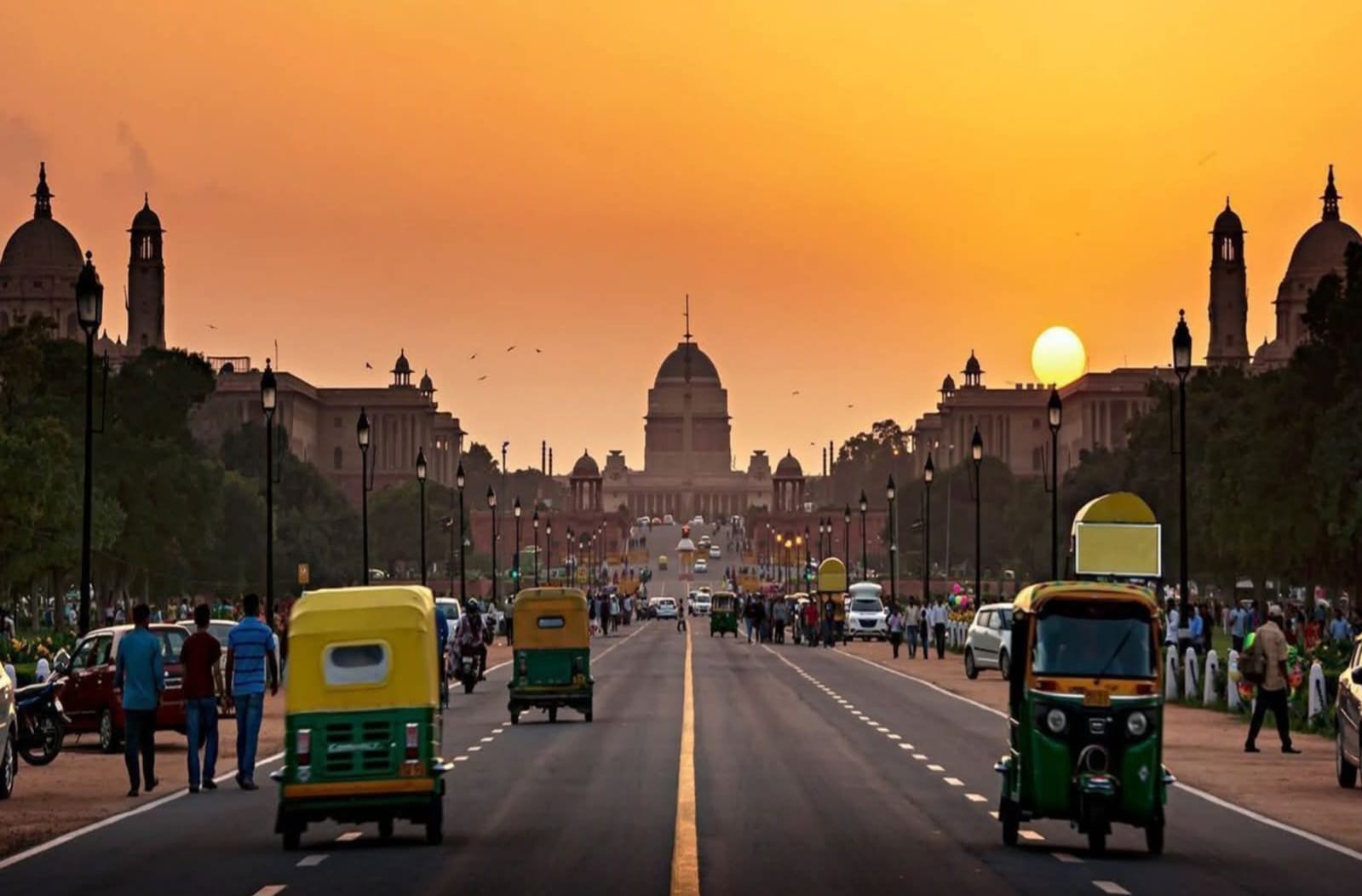
Delhi records lowest AQI of 2026 today, July 8, with an index of 39, placing the city in the "Good" category. Driven by heavy monsoon rains and strict emission controls, PM2.5 levels dropped to 22 $\mu\text{g/m}^3$, offering residents a rare day of completely clean air.
NEW DELHI — In a historic environmental milestone for the national capital, Delhi records lowest AQI of 2026 today, July 8, 2026, as atmospheric pollution levels plummeted into the pristine "Good" category. Data from real-time monitoring networks confirmed that the city's ambient Air Quality Index (AQI) dropped to an exceptional low of 39. This drastic reduction in airborne particulates is highly significant today as it provides millions of metropolitan residents with unprecedented relief from chronic urban smog, driven by heavy seasonal rainfall and strong easterly winds that have effectively cleansed the capital’s airshed.
Detailed Atmospheric Data and Pollutant Breakdown
Particulate Matter Metrics Touch Record Lows
According to the latest continuous ambient air quality data monitored on July 8, 2026, both major particulate pollutants fell comfortably within the strict safety limits defined by the National Ambient Air Quality Standards (NAAQS). Fine respirable particles, which typically pose severe respiratory risks during the winter crop-burning seasons, recorded minor concentrations across all primary monitoring stations.
The specific pollutant concentrations recorded today include:
PM2.5 Levels: Measured at just 22 micrograms per cubic meter, well below the standard 24-hour safety threshold of 60 $\mu\text{g/m}^3$.
PM10 Levels: Tracked at 34 micrograms per cubic meter, indicating a nearly dust-free lower atmosphere.
Gaseous Pollutants: Carbon Monoxide (CO) was tracked at 301 parts per ppb, while Nitrogen Dioxide and Ozone remained at negligible fractions of 5 ppb and 31 ppb respectively.
Multi-Year Context and the 2026 Environmental Trajectory
Building on a Cleaner First Half of the Year
The milestone where Delhi records lowest AQI of 2026 today does not stand as an isolated anomaly. Instead, it follows a broader multi-month trend of progressive air quality improvements documented throughout the current calendar year.
Earlier this year, the Commission for Air Quality Management (CAQM) reported that the combined January-to-May block for 2026 achieved its lowest average pollution index in eight years—excluding the unique, artificial 2020 pandemic lockdown period. During the first five months of 2026, the city registered an average baseline AQI of 211, beating out the 214 recorded in 2025, 231 in 2024, and 243 back in 2018.
Meteorological Shifts and Policy Enforcement
While the early weeks of January 2026 were marred by severe winter inversions and heavy localized smog, the region underwent what climatologists call a "spring pivot". This shift was bolstered by aggressive regulatory enforcement.
The sudden plunge to a single-day record of 39 today was accelerated by intense monsoon cloudbursts moving across northern India, which mechanically washed down suspended dust and vehicular emissions from the troposphere. These natural weather patterns have successfully amplified long-term administrative policies, such as the mandatory transition of industrial zones to piped natural gas (PNG) and the strict regulation of construction dust across the National Capital Region (NCR).
Broader Impact on Citizens, Health, and Local Commerce
Public Health and Citizen Welfare
For the general public, the announcement that Delhi records lowest AQI of 2026 today translates to a substantial drop in immediate environmental health threats. Medical experts note that an AQI under 50 allows vulnerable demographics—including young children, asthmatic patients, and elderly citizens—to engage in outdoor physical activities without the risk of inhaling fine carbon soot or heavy mineral dust.
Economic and Business Continuity
From an economic perspective, sustained "Good" air quality days prevent the trigger of emergency industrial lockouts or transport curbs under the Graded Response Action Plan (GRAP). Logistics businesses, real estate developers, and infrastructure contractors can maintain full operational continuity without the sudden threat of government-mandated project halts that frequently disrupt regional supply chains during high-pollution months.
Official Sources Section
The meteorological findings, particulate counts, and historical data points featured in this coverage are authenticated by official environmental monitoring institutions:
Official Statements
"The air quality in New Delhi is rated as Good with an AQI value of 39 on July 8, 2026. PM2.5 levels are at 22 µg/m³ and PM10 at 34 µg/m³, both within safe limits, indicating an optimal atmosphere across the national capital."
— According to officials tracking the Central Pollution Control Board real-time feeds.
"The steady progress observed this year, capped by today's historic low, validates our phased mandates on clean fuels and dust suppression. However, long-term vigilance across neighboring states remains imperative as we approach the autumn transition."
— Environmental Compliance Representatives during an afternoon briefing.
Why It Matters
Experiencing an air quality index of 39 proves that Delhi's dense airshed is capable of atmospheric rejuvenation when natural monsoon cleansing aligns with structural green energy reforms. This milestone sets a vital empirical benchmark for environmental scientists and urban planners, demonstrating that the capital can realistically achieve international clean-air standards under optimal meteorological and regulatory conditions.
Key Facts at a Glance
Historic Annual Low: Delhi records lowest AQI of 2026 today, July 8, with the index touching a pristine value of 39.
Pristine Category: The national capital officially entered the "Good" atmospheric tier, an occurrence historically rare for the city.
Particulate Reduction: Fine particle markers dropped significantly, with PM2.5 measured at 22 $\mu\text{g/m}^3$ and PM10 measured at 34 $\mu\text{g/m}^3$.
Monsoon Catalyst: The sudden drop was driven by intense pre-monsoon and seasonal rain showers acting alongside strict industrial fuel mandates.
FAQ Section
Q: What exactly triggered the drop where Delhi records lowest AQI of 2026 today?
A: The record-low index of 39 was triggered by heavy seasonal monsoon downpours that washed away particulate matter, combined with strong winds and strict enforcement of clean fuel norms for local industries.
Q: What is considered a "Good" AQI according to Indian environmental standards?
A: An Air Quality Index ranging between 0 and 50 is classified as "Good," indicating that the air poses minimal to no health risks to human health.
Q: How does today's air quality compare to the pollution levels seen earlier in January 2026?
A: Today's air is drastically cleaner. In January 2026, low wind speeds and winter inversions trapped pollutants, causing the average PM2.5 levels to spike over 211 $\mu\text{g/m}^3$.
Source: Real-time environmental data logs compiled by the Central Pollution Control Board and audited historical performance records from the Commission for Air Quality Management on July 8, 2026.