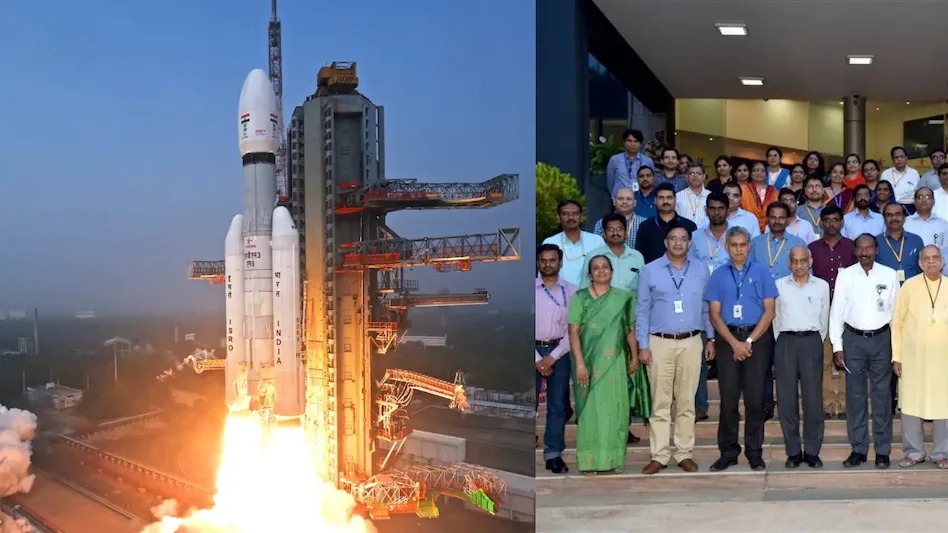
The Department of Space has tightened exit rules for ISRO scientists following the resignation of over 100 technical personnel. The new policy halts routine approvals by local center directors, requiring all retirement and resignation requests from strategic teams like the Gaganyaan mission to be cleared directly by headquarters.
NEW DELHI — In a major administrative intervention aimed at safeguarding India's strategic aerospace programmes, the Department of Space (DoS) has significantly tightened resignation and voluntary retirement rules for scientists and technical personnel. The emergency policy update was formally issued via an internal memorandum on Tuesday, July 14, 2026.
The regulatory tightening directly follows official intelligence indicating that an estimated 100 to 120 specialized Group 'A' scientific and technical personnel have recently resigned from the Indian Space Research Organisation (ISRO). The sudden wave of high-profile departures has raised serious concerns within the central government regarding talent retention and workflow continuity for time-sensitive strategic missions, including the flagship Gaganyaan human spaceflight programme.
Sudden Brain Drain Impacts Premium Satellite Centres
According to operational data disclosed by institutional sources, the core of the staffing exodus is heavily concentrated within two of ISRO's most critical engineering hubs. Internal tracking reveals that approximately 80 scientists and technical engineers resigned from the U R Rao Satellite Centre (URSC) in Bengaluru, while at least 20 senior personnel exited the Vikram Sarabhai Space Centre (VSSC) located in Thiruvananthapuram.
The collective resignations include several high-ranking project leaders who possess highly specialized, non-substitutable institutional knowledge. Among the documented departures are:
Victor Joseph, the standing Project Director for the heavy-lift LVM-3 launch vehicle at VSSC.
The serving Project Director for the SpaDeX space docking experiment mission at URSC.
Aditya Rallapalli, who functioned as the primary Project Manager for simulations and validation work during the successful Chandrayaan-3 lunar mission.
Space policy analysts note that losing key personnel right as these programs enter validation stages creates structural operational friction that cannot be quickly resolved by entry-level recruitment.
Centralizing the Exit Approval Architecture
The newly enforced Department of Space mandate effectively repeals a decade-old administrative protocol. Under a previous 2020 decentralization policy, individual ISRO center directors and unit heads were granted full autonomous authority to independently review and approve resignation and voluntary retirement requests up to the Scientist/Engineer-SG level.
The fresh directive explicitly strips local centers of this autonomous power. Under the revised guidelines, local directors are prohibited from routinely processing or accepting exit requests from Group 'A' personnel tied to projects of national importance.
Instead, center heads must put together a comprehensive impact assessment and forward the request along with their specific engineering recommendations directly to the Department of Space headquarters for a final administrative decision. The policy establishes that scientists must fully discharge their assigned mission responsibilities before they can be officially relieved from duty.
Private Sector Expansion Challenges Public Retentions
Industry observers attribute the acceleration of scientist departures to the rapid maturation of India's commercial space tech sector. Since the historical deregulation of the domestic space ecosystem in 2020, private firms and startups—including Skyroot Aerospace, Agnikul Cosmos, and Pixxel—have raised significant venture capital.
These private space enterprises are aggressively hiring from public laboratories, offering highly competitive corporate salaries, international stock options, faster engineering execution cycles, and greater operational flexibility compared to standard government structures.
Furthermore, internal operational feedback indicates growing dissatisfaction among some research tiers regarding administrative bottlenecks and extended timelines for high-visibility missions. Government records placed before Parliament show that ISRO is already navigating 1,636 scientific and technical vacancies against a total sanctioned workforce. This structural shortage increases the daily workload on remaining mission teams.
Official Sources Section
Workforce metrics, policy changes, and internal memos cited in this investigative report are sourced directly from statutory filings submitted by the Department of Space to the Parliament of India, official administrative circulars issued by the Indian Space Research Organisation (ISRO), and regional personnel tracking logs from the Ministry of Personnel, Public Grievances and Pensions.
Quote Section
Government officials are downplaying concerns of a systemic human resource crisis, describing the directive as an administrative measure to ensure operational continuity.
According to officials at the Department of Space, the change is designed to ensure major public investments are successfully delivered. In a press briefing, Union Minister of State for Science and Technology Jitendra Singh stated that:
"ISRO possesses an enduring institutional culture of continuity. The memorandum is not indicative of a structural crisis, but is intended to ensure that decisions concerning strategic personnel exits are evaluated at a much more mature level by central authorities."
Acknowledging the recent talent movement, ISRO Chairman V. Narayanan added:
"Yes, a lot of people go, but that's part of every large organization. The move isn't only to retain, but also to ensure that important projects don't suffer all of a sudden. If someone is still going, someone else will step up and take responsibility."
Why It Matters
For citizens, domestic defense investors, and international space agencies, the tightening of exit rules emphasizes the intense geopolitical stakes surrounding India's modern space race. Because delays to the Gaganyaan human spaceflight mission could impact timelines for India's planned space station, the government is prioritizing institutional continuity over employee mobility to maintain its global standing.
Key Facts at a Glance
Policy Suspension: The Department of Space has officially blocked ISRO center directors from routinely accepting scientist resignations.
Mass Exits: An estimated 100 to 120 senior scientists recently resigned to join the rapidly expanding private aerospace sector.
Flagship Impact: The exits directly affected primary teams managing the Gaganyaan human spaceflight mission and the SpaDeX docking project.
Centralized Control: All future voluntary retirement and resignation requests must be routed directly to the Department of Space for final approval.
Recruitment Countermeasure: To offset ongoing talent loss, ISRO plans to induct more than 1,000 new engineers in the next recruitment cycle.
FAQ Section
Why is the Department of Space tightening exit rules for ISRO scientists?
The policy was updated following a sudden wave of resignations among senior scientists. The rule change is designed to prevent sudden staffing shortages that could disrupt critical national projects like the Gaganyaan human spaceflight mission.
Which specific ISRO facilities have seen the most departures?
The departures have been heavily concentrated within the U R Rao Satellite Centre (URSC) in Bengaluru, which reported around 80 resignations, and the Vikram Sarabhai Space Centre (VSSC) in Thiruvananthapuram, which saw approximately 20 scientists leave.
Where are the departing space scientists moving to?
Most senior engineers are transitioning into India's rapidly growing private space technology ecosystem. Private startups are attracting government talent by offering higher corporate compensation packages, performance bonuses, and faster project development timelines.
Source: Department of Space (DoS) Administrative Orders; Indian Space Research Organisation (ISRO) Personnel Desk; Lok Sabha Unstarred Question Database (February 2026 Workforce Metrics).