Skyroot Aerospace’s maiden launch of the Vikram-1 rocket has drawn widespread praise from space experts, who call the private orbital vehicle a dedicated "cab to orbit". Utilizing 3D-printed engines and a restartable upper stage, the system provides flexible, on-demand custom positioning for small satellite payloads.
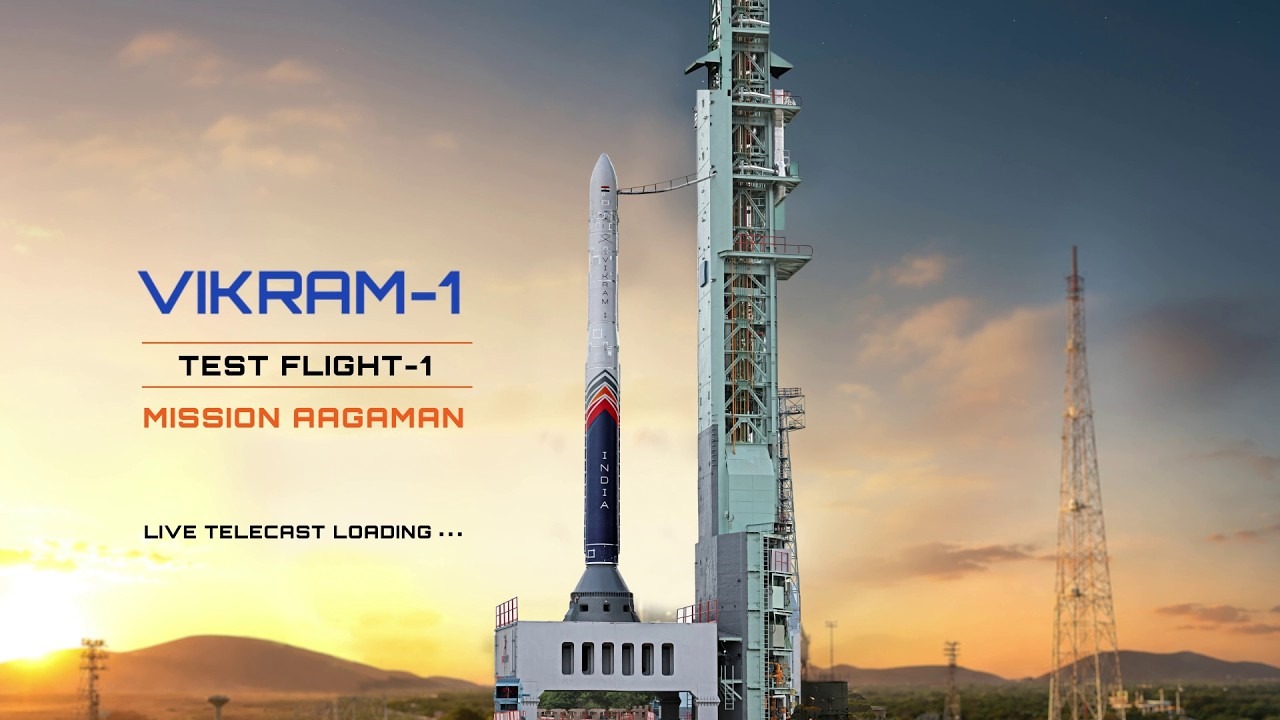
SRIHARIKOTA — Top aerospace analysts and space experts have officially designated the newly integrated Vikram-1 launch vehicle as the ultimate "cab to orbit" for the global small satellite sector. The commercial classification comes as Hyderabad-based aerospace startup Skyroot Aerospace prepared for its historic maiden orbital flight on Saturday, July 18, 2026, at 11:30 AM IST.
Launched from the first launch pad at the Indian Space Research Organisation’s (ISRO) Satish Dhawan Space Centre (SDSC-SHAR), the development marks the first time a private domestic entity has attempted an orbital-class flight independent of a state-developed vehicle framework. Christened "Mission Aagaman" (Sanskrit for arrival), the seven-story-tall rocket represents a major structural shift in how specialized payloads reach precise low Earth orbits.
Disruption of the Small Satellite Launch Market
The specialized designation of a "cab to orbit" stems directly from the distinct architecture of Vikram-1’s upper injection system. Historically, educational institutions, private tech firms, and small-scale commercial operators had to rely on "rideshare" programs structured by massive government rockets like the Polar Satellite Launch Vehicle (PSLV) or international commercial alternatives.
Under traditional rideshare models, secondary payloads are tethered to the flight path and scheduling demands of a primary anchor satellite. This dynamic frequently deposits small payloads into sub-optimal drop zones far from their intended operational coordinates.
According to statements from the Indian National Space Promotion and Authorization Center (IN-SPACe), the Vikram-1 architecture breaks this bottleneck through its multi-restartable liquid-fueled upper stage, known as the Orbit Adjustment Module (OAM). While the lower three stages use traditional high-thrust solid propulsion to exit the denser atmosphere, the upper OAM can shut down and reignite its thrusters multiple times mid-flight.
This specific maneuvering capability allows the launch vehicle to ferry multiple distinct customer payloads into unique, highly customized heights and orbital inclinations during a single 16-minute mission profile.
Technical Specifications: 3D Printing and Carbon Composites
Engineering logs maintained by the development teams indicate that the 24-meter-tall orbital vehicle features notable structural innovations. The outer hull is constructed entirely from high-tensile, lightweight carbon-composite materials rather than heavier standard metal alloys, significantly minimizing structural weight.
Internally, the vehicle relies on a highly advanced manufacturing foundation. The liquid engines operating the upper stage are entirely 3D-printed in-house using specialized superalloys.
The combination of additive manufacturing and advanced composite modeling dramatically reduces part assembly counts and shortens fabrication schedules. As a result, Skyroot aims to scale production to a regular cadence of one orbital launcher per month from its specialized Hyderabad campuses.
Payloads, Commemorations, and Broader Commercial Impact
For commercial space enterprises, the success of the Aagaman test flight opens a reliable pipeline for ongoing launches. The current manifest features a diverse array of international and domestic cargo, including the proprietary SCOPE satellite, the SOLARAS S3 imaging satellite developed by Bengaluru-based Grahaa Space, and a technology demonstration payload from German engineering outfit DCUBED. Additionally, the vehicle houses Cosmoserve Space’s "Embrace" robotic arm, designed to capture orbital debris.
The historic flight also carries significant national symbols. Tucked inside the payload fairing alongside a lab-grown "Diamond Lotus" is an official handwritten postcard from Prime Minister Narendra Modi bearing the message "Vande Mataram," alongside commemorative notes from active Indian astronauts.
Official Sources Section
Launch parameters, institutional clearances, vehicle design matrices, and tracking logs referenced in this article are drawn directly from public mission brief registries published by Skyroot Aerospace, project tracking dashboards at IN-SPACe, and launch pad interface reports from the Indian Space Research Organisation (ISRO) communication center.
Quote Section
The maiden orbital launch is viewed by national leadership as a pivotal milestone for India's evolving private aerospace framework.
According to officials monitoring the tracking radars at Sriharikota, the vehicle successfully cleared all pre-launch digital loop checks. Highlighting the strategic value of the program on the social platform X, Prime Minister Narendra Modi stated:
"A historic new frontier for India's space journey! At 11.30 am today, Skyroot Aerospace will undertake the maiden orbital launch of Vikram-1, India's first privately developed launch vehicle. This four-stage rocket is designed to provide rapid and on-demand launch services... it highlights the talent, determination and entrepreneurial spirit of India's youth."
Reflecting on the unique market opening, Skyroot Aerospace Co-founder and CEO Pawan Kumar Chandana added:
"The small satellite launch market is deeply constrained on the supply side. At the same time, the demand for services enabled by satellites in space will only continue to grow, and that is where Skyroot's opportunity lies. The 'cab' market is what we want to put our mark on with the Vikram series. There are very few opportunities for customers to reach customized orbits today."
Why It Matters
For global telecommunications providers, climate researchers, and commercial satellite operators, the launch of Vikram-1 offers a practical shift in deployment logistics. By operating as a dedicated "cab to orbit," this privately built system frees operators from the rigid scheduling and delivery limits of massive rideshare rockets. This capability enables faster network rollouts and lowers entry barriers for new space technology investments.
Key Facts at a Glance
Historic Liftoff: Vikram-1 marks the first-ever privately developed orbital-class rocket to attempt a satellite deployment flight from Indian soil.
The 'Cab' System: A restartable liquid-fueled upper stage allows the vehicle to drop multiple distinct satellites into custom orbits during a single run.
Innovative Engineering: The vehicle utilizes an all-carbon composite hull structure combined with 3D-printed internal engine parts.
Payload Manifest: Mission Aagaman carries diverse technology demonstrators from German and Indian startups alongside symbolic postcards from national pioneers.
Future Target: Skyroot plans to optimize its supply chain to scale up production to a steady cadence of one rocket launch per month.
FAQ Section
Why do aerospace experts refer to the Vikram-1 as a "cab to orbit"?
Traditional large rockets act like public buses, forcing small payloads to share a ride and drop off at a single location determined by a massive anchor satellite. Vikram-1 operates like a private taxi; its restartable upper motor allows it to maneuver mid-flight and drop separate payloads off at precise, individual orbital drop zones.
What are the primary structural differences between Vikram-1 and state-built rockets?
Unlike standard metallic launch systems, Vikram-1 features an exceptionally light, high-strength all-carbon composite outer hull. Additionally, its specialized upper stage engines are built using advanced 3D-printing manufacturing techniques to shorten assembly timelines.
What type of satellites is this rocket built to carry?
Vikram-1 is a dedicated small-satellite launcher optimized to carry a maximum total weight of 350 kilograms into Low Earth Orbit (LEO). It is primarily designed for Earth observation, micro-gravity research instruments, and private communication constellations.
Source: Skyroot Aerospace Mission Aagaman Press Briefs; IN-SPACe Authorization and Regulatory Registry; Satish Dhawan Space Centre (SDSC-SHAR) Technical Launch Manifesto (July 2026).