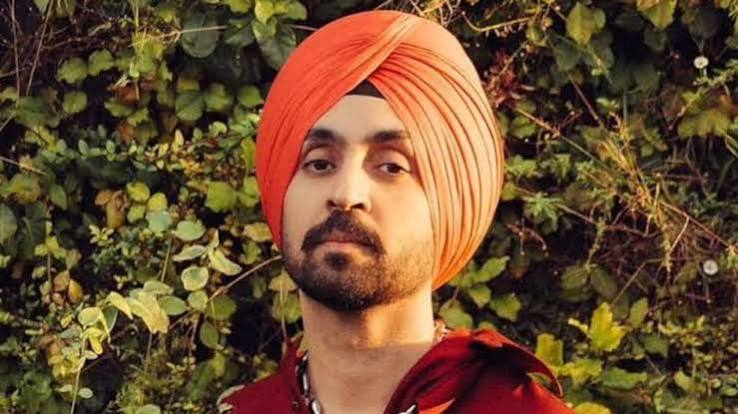
Diljit Dosanjh has revealed that his rise to global stardom began with humble gigs at birthday parties and weddings for ₹5,000. Driven by childhood poverty, he accepted any available work to gain financial security before strategically shifting focus to his own concerts to shed professional stigma and build a sustainable career
MUMBAI — Before filling stadiums worldwide and becoming the first Punjabi artist to perform at Coachella, singer-actor Diljit Dosanjh navigated a challenging path marked by deep financial instability. In a recent interview on the podcast Q with Tom Power, the performer shared intimate details of his early career, revealing how he spent his formative years performing at birthday parties and weddings to escape the cycle of poverty.
Dosanjh, who hails from the village of Dosanjh Kalan in Punjab, described his upbringing in a "below-average" household where basic necessities, including medical care, were often out of reach. These early hardships, he noted, instilled in him a relentless work ethic and a practical approach to his nascent music career in the early 2000s.
The Foundation of a Musical Career
Following the release of his debut album Ishq Da Uda Ada in 2002, Dosanjh initially sought to establish himself through traditional recording avenues. However, he quickly realized that album sales alone could not provide the financial security his family desperately needed. When approached by music companies to perform at local birthday parties, he set aside his hesitations to prioritize economic stability.
"I didn't say no to anybody," Dosanjh recounted. "If someone offered Rs 5,000, Rs 10,000, Rs 15,000, I said yes. I went everywhere day and night."
The artist described this period as a vital learning ground. While he was once reluctant to take on private bookings, he soon viewed live performances as an essential "path" toward independence. He characterized the accumulation of income during this time as addictive, providing him the means to escape the precarious financial circumstances of his childhood.
Shifting From Weddings to Concerts
Dosanjh’s eventual withdrawal from the wedding circuit was a deliberate career move. He noted that some senior artists in the Punjabi music industry looked down upon those who performed at such private events, creating a perception that he was limited to the wedding and social gathering niche.
Rather than conforming to these expectations, Dosanjh pivoted his focus toward building his own solo concert tours. This transition allowed him to redefine his identity as a performer, moving from a hired hand at private events to a global stage presence capable of hosting arena-sized shows.
Official Context
The artist's candid reflections highlight the trajectory from a local performer to a pan-India icon. Dosanjh’s rise is well-documented, beginning with his 2002 debut and gaining momentum through hits like Lak 28 Kudi Da (2011) and blockbusters such as Jatt & Juliet (2012). His most recent cinematic milestone includes his role in the 2026 film Main Vaapas Aaunga.
Why It Matters
Dosanjh’s story offers a look at the grit required to break into the entertainment industry from a non-privileged background. By normalizing the "grind" of early-career performing arts, he has resonated with a generation of fans who view his success as a testament to perseverance. For the music industry, his journey serves as a case study on how artists can leverage traditional revenue streams, like private event bookings, to transition into sustainable, independent touring careers.
Key Facts at a Glance
Early Income: Dosanjh began his career accepting gigs at weddings and birthdays for as little as ₹5,000.
Motivation: His drive was fueled by childhood poverty, with a primary goal of achieving financial security for his family.
Career Pivot: He intentionally stopped wedding performances after facing criticism from senior artists, choosing instead to focus on organizing his own ticketed concerts.
Global Impact: Dosanjh has since evolved into an international star, marking appearances at Coachella and global venues.
FAQ
Why did Diljit Dosanjh perform at birthday parties early in his career?
He accepted these gigs because his family faced extreme financial hardship, and live performances provided the steady income that album sales could not guarantee at the time.
Did he enjoy performing at weddings?
While he initially had reservations, he eventually realized the significant financial opportunity in the field, calling it "amazing" and vital to his early stability.
Why did he eventually stop doing private events?
He wanted to shed the stigma associated with being seen as only a "wedding singer" and sought to prove he could command his own dedicated concert audiences.
Source: Q with Tom Power podcast, Telegraph India, The CSR Journal, Britannica