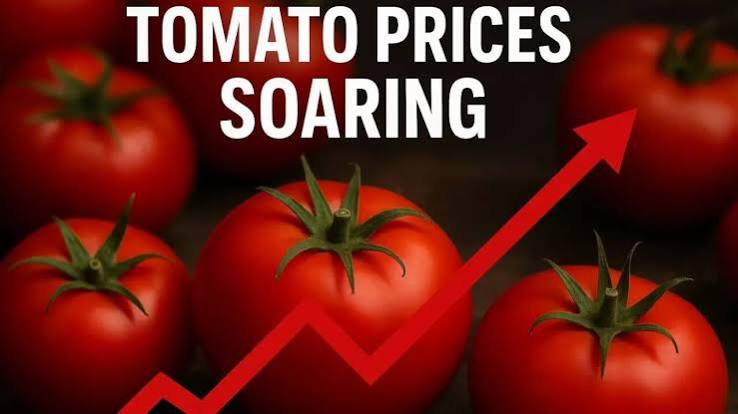
Tomato prices across India have surged due to intense heatwaves disrupting crop production and supply chains. With retail rates climbing significantly above last year’s averages, the government is intervening to stabilize supplies while experts highlight the growing impact of extreme weather on national food security and inflation.
NEW DELHI — Indian households are facing a significant spike in the price of tomatoes as a prolonged heatwave and erratic weather patterns severely impact crop production. Data from the Price Monitoring Division of the Department of Consumer Affairs indicates that tomato prices in the national capital have nearly doubled in recent weeks, jumping from approximately ₹30 per kilogram in mid-May to over ₹90 per kilogram in some retail markets by late June.
The surge is not limited to Delhi; cities such as Mumbai and Ranchi have also reported steep year-on-year price increases exceeding 50% to 70%. The volatility is being driven by a confluence of adverse climatic conditions, including intense summer heat that has disrupted flowering and reduced fruit formation, effectively tightening the supply of this essential staple.
Climatic Impact on Agriculture
Agriculture experts note that tomatoes, typically cultivated as a rabi (winter) crop, are highly sensitive to high temperatures. Extreme heat causes delicate blossoms to dry up and fall before fruit can set, leading to substantial yield losses. According to the India Meteorological Department (IMD), the 2026 summer season saw an above-normal number of heatwave days across east, central, and northwest India, which has placed significant stress on vegetable crops, including tomatoes, chilies, and brinjal.
In regions like Goa, which rely heavily on supplies from neighboring states like Karnataka, traders report that harsh weather in farming hubs has caused production to plummet. "The heat has disrupted the entire production and supply chain," a local trader stated, noting that procurement from major hubs like Belagavi has become increasingly difficult.
Supply Chain Volatility
The current price volatility reflects a broader structural issue in India's agricultural supply chain. While the Ministry of Agriculture projected tomato production at 21.46 million tonnes for the 2025-26 crop year—a 4.19% increase from the previous year—the spatial distribution of the crop means that weather-related disruptions can cause immediate, localized shortages.
To compensate for faltering supplies in northern and central India, markets have increasingly relied on southern hubs such as Madanapalle in Andhra Pradesh. However, the increased distance has added significant transportation costs, further inflating retail prices. Government efforts to curb the spike have included increased procurement and the operation of subsidized outlets, such as those run by the Goa State Horticulture Corporation Limited, which have provided some relief by selling tomatoes at controlled rates.
Official Sources
The Ministry of Consumer Affairs and the Price Monitoring Division continue to track the inflation of essential commodities. The India Meteorological Department (IMD) has provided early warning forecasts regarding the heatwave's intensity, which authorities utilized to assess potential impacts on agriculture. Further data on inflation trends is monitored by the Ministry of Statistics and Programme Implementation.
Quote Section
"Our suppliers have projected a very tough season. With a serious tomato shortage at their level, it would be difficult to accommodate enough tomatoes for local consumption," a market vendor in Goa noted regarding the supply constraints from neighboring states.
According to officials from the Ministry of Consumer Affairs, the surge is primarily a seasonal issue, and the Centre is taking steps to ensure adequate supply in retail markets to stabilize prices.
Why It Matters
The rise in tomato prices is a key contributor to India’s food inflation metrics, which reached 4.78% in May 2026. Because tomatoes are a staple in almost every Indian household, price spikes have a disproportionate impact on lower-income families. Furthermore, economists warn that extreme weather is no longer an episodic shock but a structural drag on the economy, impacting productivity and food security.
Key Facts at a Glance
Retail Spike: Tomato prices in Delhi have risen significantly, with some localities reporting rates as high as ₹92 per kilogram.
Production Stress: Extreme heat is causing "flower drop" and reducing overall yields in key agricultural states.
Inflation Impact: Tomato inflation reached 48.43% in May 2026, significantly affecting the national food inflation rate.
Supply Shift: Markets are increasingly dependent on southern production hubs to meet demand, increasing logistics and transportation costs.
FAQ
Why are tomato prices rising right now?
Prices are rising due to a combination of intense heatwaves, which damage crop yields, and supply chain disruptions that have reduced the volume of fresh produce reaching major markets.
Is this price hike expected to last?
The government describes the issue as seasonal; however, experts note that climate-related disruptions are becoming more frequent, potentially leading to more consistent volatility in the future.
What is the government doing to help?
The government is monitoring prices and managing supplies through agencies like the Price Monitoring Division. Additionally, some states are offering subsidized tomatoes through horticulture corporations to provide relief to consumers.
Source: Ministry of Consumer Affairs, India Meteorological Department, The Times of India, The Hindu