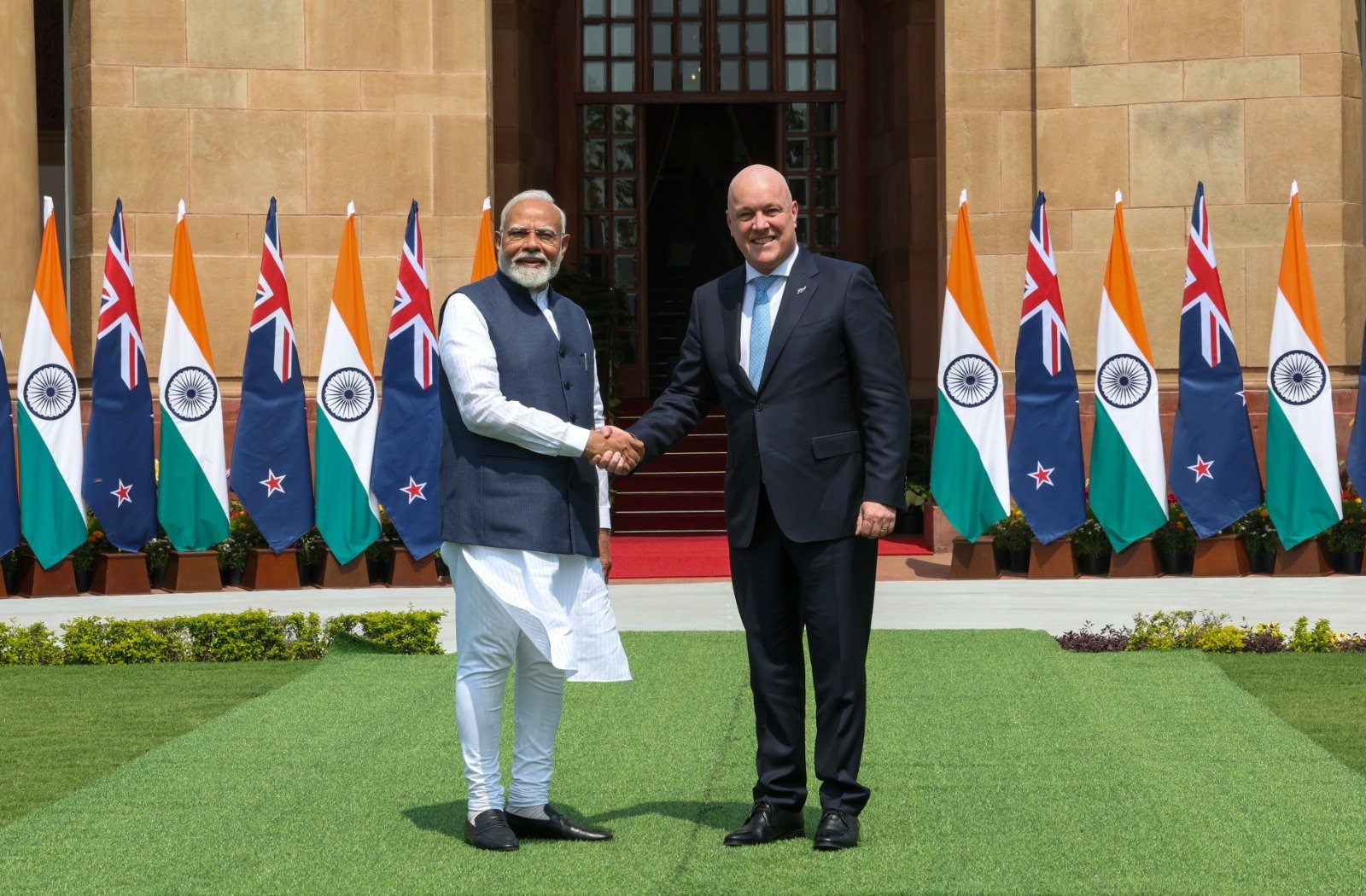
Indian Prime Minister Narendra Modi will conduct a historic state visit to Auckland, New Zealand, from July 10–11, 2026. Marking the first Indian prime ministerial visit in 40 years, the summit aims to capitalize on the April 2026 Free Trade Agreement, eliminating tariffs on 95% of exports.
WELLINGTON — New Zealand Prime Minister Christopher Luxon announced on Friday, July 3, 2026, that Indian Prime Minister Narendra Modi will embark on his first official visit to New Zealand next week. The historic state visit, scheduled for July 10 to July 11 in Auckland, marks the first time a sitting Indian Prime Minister has visited the country since Rajiv Gandhi’s diplomatic trip in 1986. The high-profile summit comes directly on the heels of a monumental Free Trade Agreement (FTA) signed between the two nations in April 2026, positioning economic integration and diaspora relations at the forefront of the discussions.
Historic Bilateral Framework Reshapes Indo-Pacific Trade
The upcoming diplomatic mission follows an accelerated period of engagement between Wellington and New Delhi. Prime Minister Luxon previously traveled to India in March 2025 to lay the groundwork for bilateral negotiations. According to the New Zealand Government's official release, the two leaders are slated to engage in extensive dialogues spanning trade and investment, maritime security, digital technology, education, tourism, and multilateral geopolitical challenges.
The centerpiece of the visit remains the recently finalized New Zealand-India Free Trade Agreement. The trade pact is engineered to systematically eliminate 95% of all tariffs on New Zealand goods entering the Indian market. Officials confirmed that 57% of New Zealand’s current exports will achieve immediate tariff-free status from the first day of the agreement's implementation, providing a significant boost to export-driven sectors.
Economic Impact and Diaspora Engagement
For New Zealand businesses and international investors, the diplomatic convergence serves as a major gateway into a consumer market of 1.4 billion people. Trade Minister Todd McClay previously stated that the two-way trade volume between India and New Zealand is on a trajectory to double within the coming years. Furthermore, the Wellington administration has committed to fostering up to $20 billion USD in capital investments into India over the next 15 years.
Beyond commercial parameters, the summit heavily highlights cultural ties. Kiwi-Indians constitute approximately 6% of New Zealand's total population. Community organizers in Auckland are preparing a massive diaspora reception titled "Kia Ora Modi," with venues such as Eden Park and the Spark Arena under evaluation to accommodate crowds projected to exceed 20,000 attendees.
Official Sources Section
The framework of the visit has been formally validated through official updates provided by:
Executive Statements
"Prime Minister Modi's visit is historic, with this being the first to New Zealand by an Indian Prime Minister in 40 years. India is one of the world's largest and fastest-growing economies, and a country of enormous importance to New Zealand's prosperity. We are taking the two countries' relationship to the next level with our New Zealand-India Free Trade Agreement."
— Christopher Luxon, Prime Minister of New Zealand
According to Trade Minister Todd McClay, the high-quality FTA actively caters to New Zealand consumers seeking diversified market access while unlocking critical opportunities to elevate domestic wages and generate community-level employment.
Why It Matters
The integration offers distinct, measurable outcomes for key sectors:
For Exporters: The elimination of 95% of trade tariffs dramatically lowers entry barriers for agricultural, technological, and manufacturing goods.
For the Workforce: Increased trade volume is projected to directly expand employment opportunities within the logistics, freight, and supply chain industries.
For Consumers: A broader exchange of goods and services ensures enhanced market supply, lowering prices on imported high-quality commodities.
Key Facts at a Glance
First in 40 Years: Narendra Modi becomes the first Indian Prime Minister to visit New Zealand since 1986.
Tariff Reductions: The April 2026 FTA removes tariffs on 95% of New Zealand exports over its implementation timeline.
Immediate Access: 57% of exported items will experience zero tariffs from day one.
Targeted Growth: The bilateral trade expansion aligns with New Zealand’s structural objective to double its total global export value by 2034.
FAQ Section
When will Prime Minister Narendra Modi arrive in New Zealand?
Prime Minister Modi is scheduled to land in Auckland on Friday, July 10, 2026, and will conclude the official state visit on Saturday, July 11, 2026.
What are the primary focus areas of the bilateral talks?
The discussions will center tightly around trade implementation, foreign direct investment, maritime security operations, technology transfers, global logistics, and tourism development.
How does the Free Trade Agreement affect the dairy sector?
While the FTA slashes 95% of overall product tariffs, dairy access historically remained a sensitive point of negotiation; final implementations will outline the specific phase-out periods for agricultural quotas.
Source: New Zealand Government Press Releases, Ministry of External Affairs India, Reuters News Agency.