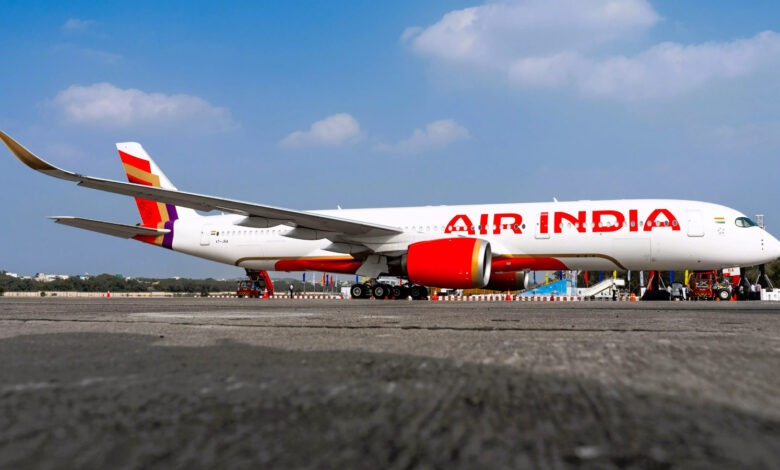
Air India has reduced its long-haul international fuel surcharges by up to 39% effective July 1, 2026. Spurred by a decline in global crude oil prices below $70 per barrel, surcharges dropped to $200 for North America and Australia, and $125 for European and UK routes.
NEW DELHI — Air India has significantly reduced its fuel surcharge on key long-haul international routes. The decision, implemented quietly from July 1, 2026, follows a noticeable cooling in global crude oil and Aviation Turbine Fuel (ATF) benchmarks. According to industry sources, the adjustments provide sharp relief to passengers flying to North America, Europe, the United Kingdom, and Australia, sectors that have faced steep surcharges since geopolitical tensions flared in West Asia earlier this year.
Calibrated Reductions to Enhance Passenger Affordability
The adjusted ticketing structure marks the first systematic downward revision since Air India introduced wide-ranging levies in April 2026. Information obtained from airline industry sources reveals that the fuel surcharge for flights operating to North America and Australia has been cut to $200 per ticket, down from the previous peak of $280.
Concurrently, passengers booking travel to Europe and the United Kingdom will see the surcharge drop to $125 per ticket from its earlier high of $205. This reduction represents a downward adjustment of approximately 28.5% for Pacific and transatlantic routes, and up to 39% for European destinations.
Global Oil Market Softening Drives Fare Adjustments
The dynamic shift in airline pricing models mirrors the structural decompression of international oil metrics. When Air India originally enforced the levies on April 7, global jet fuel prices had experienced a near-100% surge, rising to an average of $195.19 per barrel by late March from under $100 in February. This sudden volatility was triggered by active disruptions in key shipping lanes and localized geopolitical confrontations.
However, data from the International Air Transport Association (IATA) and energy desks indicates that crude oil prices dropped beneath $70 per barrel by June 30, marking their lowest settlement since the regional flashpoints began. Given that jet fuel accounts for roughly 40% to 45% of an Indian carrier's aggregate operating expenses, the continuous cooling of spot fuel markets has allowed management to recalculate its passenger pass-through costs without jeopardizing standard yield metrics.
Broader Aviation Sector Ripple Effects
Air India's structural reduction is heavily expected to influence other domestic international operators, such as InterGlobe Aviation (IndiGo) and Akasa Air, both of which had introduced similar cost-mitigation mechanisms in early Q2. Under existing commercial guidelines, airlines are encouraged to dynamically adjust secondary pricing structures to reflect underlying cost movements fairly for consumers.
While fuel surcharges on domestic flight legs and shorter regional international destinations remain unchanged for now, financial analysts anticipate that domestic legs will likely undergo independent adjustments if ATF prices stabilize below institutional baselines through late Q2. Simultaneously, Air India’s budget subsidiary, Air India Express, confirmed it has fully restored its critical West Asia flight network, resuming regular services to locations such as Kuwait and Salalah as regional operating environments normalize.
Official Sources Section
The pricing changes, operational specifics, and global fuel benchmarks cited in this economic brief are gathered from:
Industry distribution desks and commercial ticketing networks.
Market updates from the International Air Transport Association (IATA)
Global trading logs archived by the Press Trust of India (PTI).
Public route network restoration filings from Air India Express.
Quote Section
"The fuel surcharge cess, a crucial component of the airfare, has been reduced by Air India from July 1. The reduction will definitely be passed on to the customers. Even if it goes down by a small figure, it would be substantial savings for the public as even 10 per cent on a ticket fare of ₹1 lakh will work out to ₹10,000 for a flyer."
— Airline Industry Source via Press Trust of India
"According to officials familiar with the pricing recalibration, legacy carriers are currently adopting a strategic approach, closely tracking crude stability to determine if additional structural rollbacks are viable heading into the winter travel booking cycle."
Why It Matters
The implementation of lowered fuel surcharges introduces critical shifts across multiple travel and consumer segments:
For Leisure Travelers: Exorbitant international ticket prices are set to immediately soften, minimizing the cost overhead for multi-passenger family bookings on long-haul flights.
For Corporate Budgets: Lowered transcontinental travel fees directly optimize quarterly corporate travel expenses, improving business cross-border mobility.
For the Aviation Industry: Improved passenger affordability encourages higher load factors during the shoulder travel season, driving non-ticket ancillary revenues for hub airports.
Key Facts at a Glance
Effective Date: The revised, lowered international fuel surcharges became officially active for bookings starting July 1, 2026.
Western Route Discounts: Surcharges on flights to Europe and the UK dropped from $205 down to $125.
Long-Haul Reductions: Levies on routes connecting North America and Australia were lowered to $200 per ticket from $280.
Fuel Component Impact: Aviation turbine fuel continues to dictate operational margins, commanding up to 45% of total airline costs.
FAQ Section
Will these fuel surcharge cuts automatically apply to tickets that were already purchased?
No, the revised fuel surcharges apply strictly to new tickets issued on or after July 1, 2026. Pre-existing bookings completed under the previous tariff grid are not retroactively eligible for partial refunds.
Are Air India's domestic Indian flight ticket prices dropping as well?
The current round of surcharge reductions applies exclusively to long-haul international routes, specifically North America, Australia, Europe, and the UK. Domestic fuel grids remain unchanged for the time being.
Are other Indian carriers like IndiGo reducing their international fares?
While IndiGo has not issued an official announcement, industry rules typically see competing airlines roll back similar surcharges to maintain market competitiveness as fuel operational costs ease.
Source: International Air Transport Association Statistical Portal, Press Trust of India Aviation Bulletins, Air India Corporate Distribution Archives.