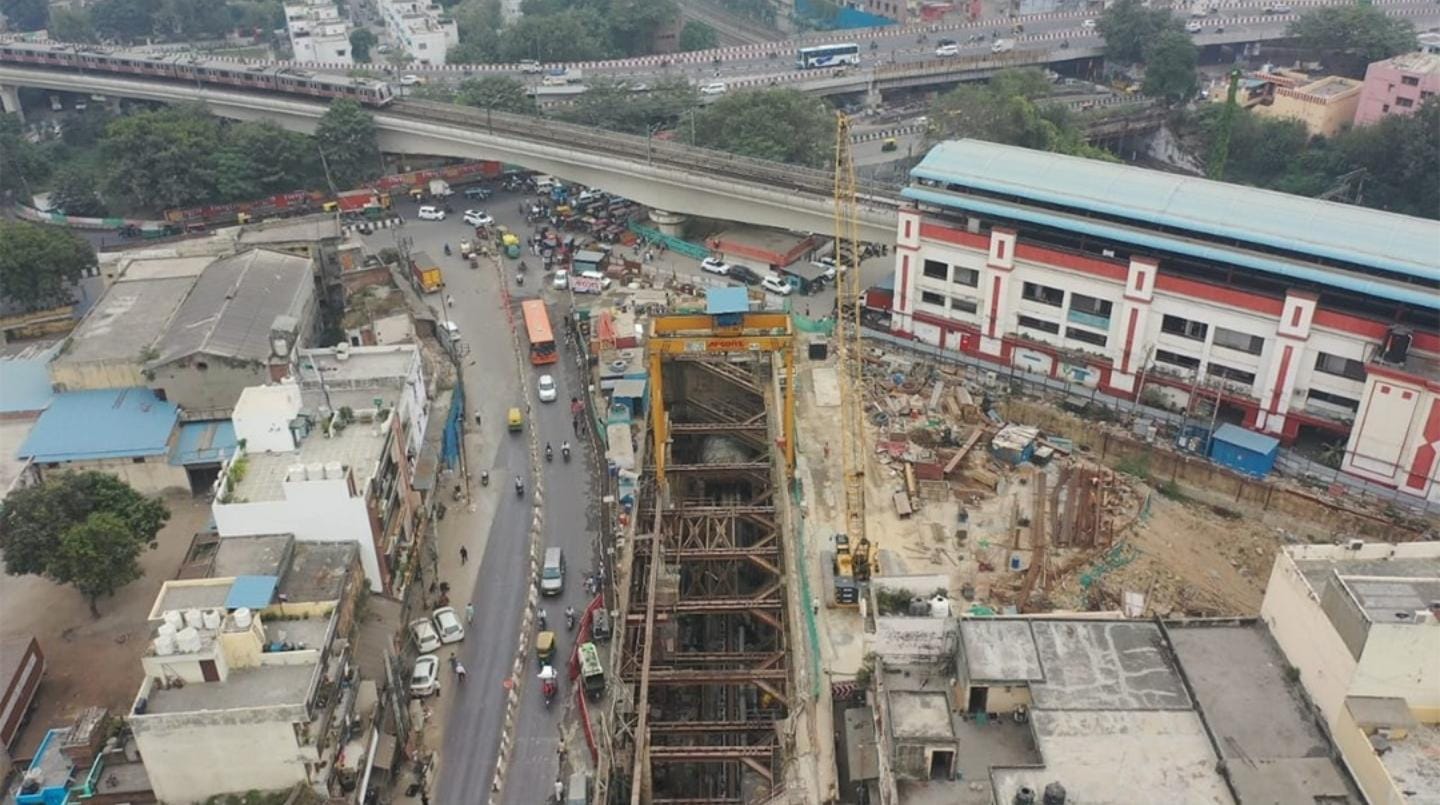
The Delhi Metro Rail Corporation completed an engineering milestone by placing a 58-meter steel span across NH-9 and the Delhi–Meerut Expressway near Noida Electronic City. Erected without interrupting highway traffic, the structure forms part of a new train reversal facility aimed at boosting Blue Line frequency.
NOIDA — The Delhi Metro Rail Corporation (DMRC) has achieved a significant engineering milestone by placing a mammoth 58-meter DMRC steel span across National Highway 9 (NH-9) and the Delhi–Meerut Expressway near the Noida Electronic City Metro station. The successful erection of the heavy steel structure, located on the extension of the Blue Line, was completed without halting or disrupting vehicular movement on one of the busiest highway corridors in the National Capital Region. The new structure forms part of an operational extension designed to facilitate train reversal and turnback facilities, enhancing line capacity and service frequency.
Technical Feat Executed Over Busy Expressway Lanes
The installation of the 58-meter DMRC steel span between Piers 384 and 385 posed substantial technical and logistical challenges for project engineers. Positioned directly over the multi-lane expressway, the site presented spatial constraints, including an active overhead high-tension power line situated directly adjacent to Pier 384.
Engineers maneuvered the massive steel structure into place beneath the operational electrical line while maintaining an uninterrupted flow of traffic on the highway below. To minimize ground-level disruptions, components of the DMRC steel span were prefabricated off-site, transported via heavy trailers, and systematically launched using specialized heavy-duty cranes and temporary support trestles.
Enhancing Operational Capacity and Line Reversal
The primary objective of installing the DMRC steel span is the creation of an advanced train reversal facility beyond the current Blue Line terminal at Noida Electronic City. Currently, trains ending their trips at the terminal require dedicated track space to switch directions for return trips.
The new viaduct extension allows trains to move past the station, switch tracks smoothly, and re-enter service without creating bottlenecks. This operational enhancement will significantly improve train turnaround times, allow DMRC to decrease headways between services, and maintain consistent train frequency across the entire Blue Line corridor.
The completed project will also lay the preliminary ground structure for potential future extensions toward Sahibabad and Indirapuram in Ghaziabad.
Timeline and Next Phases of Construction
The placement of the 58-meter girder represents the first stage of a two-span installation project over the expressway corridor. DMRC plans to launch a second, larger 73-meter steel span across the adjacent section in the coming months to complete the overhead viaduct connection.
According to project timelines, the civil construction phase for the reversal infrastructure is expected to finish by the end of 2026. Following civil completion, engineering teams will initiate track laying, signaling setup, and 25 kV AC overhead electrification (OHE) installation.
Temporary traffic detours on local service roads near Sector 62, Noida, and Indirapuram remain managed in coordination with local traffic police and the National Highways Authority of India (NHAI) to ensure safety during ongoing support work.
Official Sources Section
According to official regulatory submissions and project updates released by the Delhi Metro Rail Corporation, civil engineering teams successfully executed the installation of the DMRC steel span in coordination with the National Highways Authority of India and local traffic management authorities.
Quote Section
"According to officials from the Delhi Metro Rail Corporation, the launching of the 58-meter steel span across the Delhi-Meerut Expressway was executed under complex engineering conditions without interrupting daily traffic flow. Officials stated that the new reversal facility will resolve operational constraints at the Noida Electronic City terminal and significantly improve service efficiency across the Blue Line."
Why It Matters
The successful placement of the heavy girder over an active 14-lane expressway demonstrates advanced urban infrastructure execution that avoids widespread commuter traffic jams. For daily commuters across Delhi, Noida, and Ghaziabad, the completed reversal facility will reduce waiting times, increase train availability, and establish essential transit infrastructure for future regional metro connectivity.
Key Facts at a Glance
Span Dimensions: The installed steel girder spans 58 meters across NH-9 and the Delhi-Meerut Expressway.
Zero Traffic Interruption: Construction was executed without stopping daily highway vehicular traffic.
Second Span Planned: A additional 73-meter DMRC steel span will be placed in a subsequent phase.
Operational Goal: Creates a turnback/reversal facility past Noida Electronic City Metro Station.
Civil Completion Target: Structural civil works are scheduled for completion by late 2026.
FAQ Section
What is the purpose of the new steel span near Noida Electronic City?
The DMRC steel span forms an elevated viaduct extension designed to serve as a train reversal facility, allowing Blue Line Metro trains to change directions efficiently.
Was expressway traffic stopped during the installation?
No, DMRC engineers positioned the 58-meter steel span across NH-9 and the Delhi-Meerut Expressway without closing the highway or disrupting vehicular traffic flow.
Are there more steel spans left to install?
Yes, DMRC plans to erect a second, 73-meter steel span over the highway corridor in the coming months to complete the viaduct section.
When will the Blue Line reversal facility be fully operational?
Civil construction is targeted for completion by late 2026, after which track laying, system signaling, and electrical work will be finalized.
Source: Delhi Metro Rail Corporation, National Highways Authority of India.