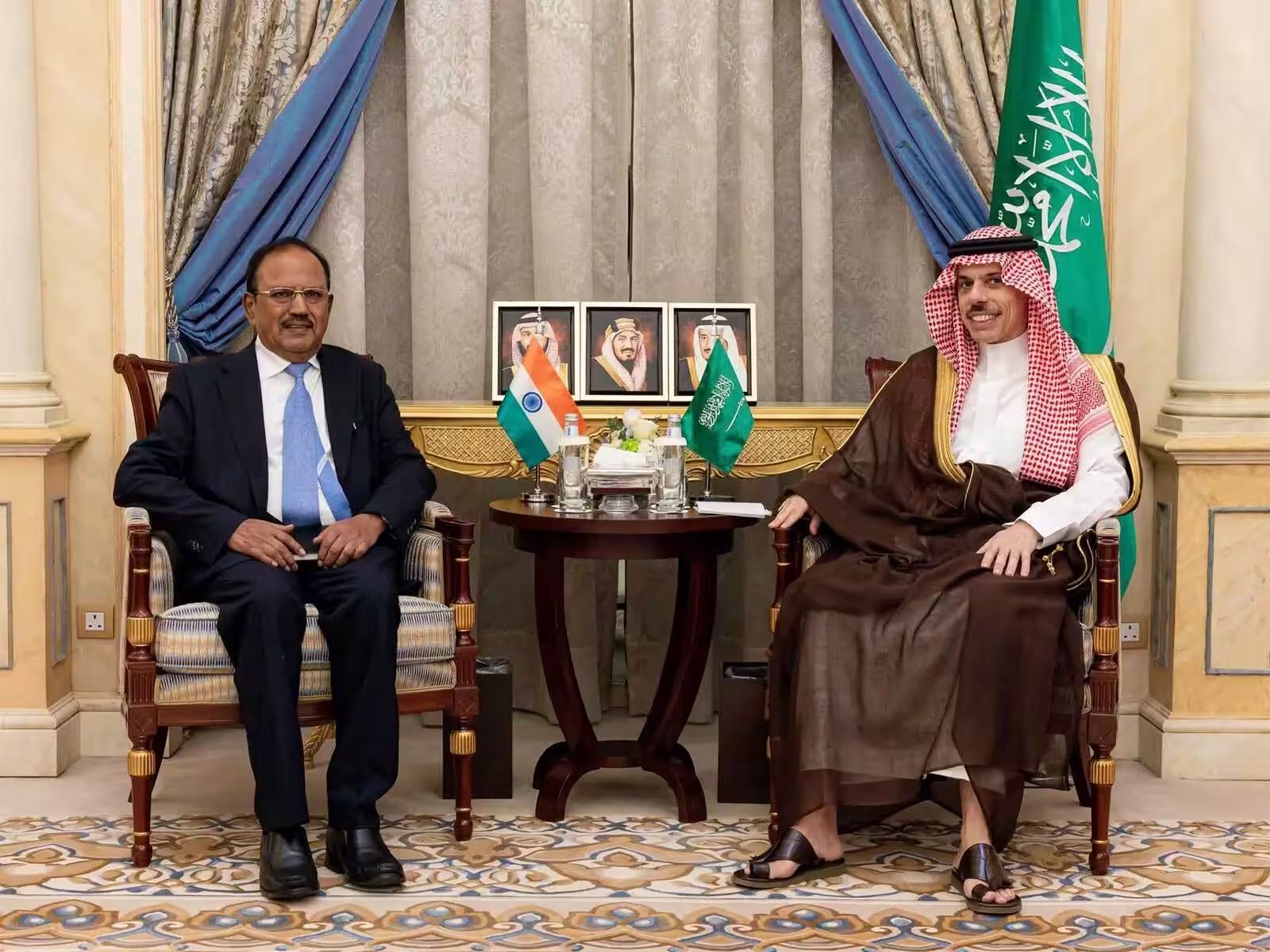
National Security Advisor Ajit Doval visited Riyadh to meet top Saudi leadership, including Foreign Minister Prince Faisal bin Farhan and Energy Minister Prince Abdulaziz bin Salman. The high-level talks focused on reinforcing bilateral strategic ties, safeguarding critical energy supplies, and protecting vital maritime corridors amid regional tensions.
National Security Advisor Ajit Doval visits Riyadh to review bilateral ties and safeguard energy corridors amid escalating West Asian tensions.
National Security Advisor (NSA) Ajit Doval traveled to Riyadh on July 20, 2026, for a high-level diplomatic visit to meet with senior Saudi leadership. According to official announcements by the Ministry of Foreign Affairs of Saudi Arabia and the Embassy of India in Riyadh, Doval held strategic talks with Foreign Minister Prince Faisal bin Farhan, Energy Minister Prince Abdulaziz bin Salman, and National Security Advisor Dr. Musaed Al-Aiban.
The discussions focused intensely on strengthening bilateral strategic partnerships, enhancing energy security, and protecting vital maritime corridors. This visit marks Doval's third trip to the Kingdom in 2026, coming at a critical time as ongoing conflicts in West Asia and emerging maritime embargoes threaten key global shipping lanes and fuel supply chains essential to India's economy.
Strategic Focus on Energy Security and Maritime Corridors
The high-level deliberations in Riyadh addressed mounting regional instability, specifically focusing on safeguarding critical sea lanes. With disruptions affecting traffic through the Strait of Hormuz and recent threats in the Red Sea gateway near the Bab al-Mandab Strait, ensuring uninterrupted crude oil flows has become a paramount priority for New Delhi.
According to official readouts, both nations reviewed progress within the India-Saudi Arabia Strategic Partnership Council framework. The talks emphasized coordinated diplomatic and logistical measures to protect commercial vessels and ensure the safety of international maritime corridors utilized for energy transit.
Impact on Energy Supplies, Businesses, and Overseas Citizens
For Indian consumers, industrial enterprises, and energy investors, security in Gulf shipping routes directly dictates domestic fuel pricing and inflation stability. Saudi Arabia remains one of India's primary suppliers of crude oil and petroleum products.
Furthermore, safeguarding the region's stability directly impacts the welfare of the approximately 2.6 million Indian nationals residing and working in Saudi Arabia. Continuous high-level diplomatic outreach ensures robust contingency planning and institutional protection for this massive expatriate workforce.
Why It Matters
For India's macroeconomic stability, maintaining a secure energy supply line from West Asia is non-negotiable. NSA Doval's proactive diplomatic engagement reinforces bilateral defense and intelligence coordination, ensuring that critical supply chains and millions of overseas Indian workers remain insulated from regional conflict spillovers.
Key Facts at a Glance
Visitor: National Security Advisor Ajit Doval.
Host Nation: Saudi Arabia (Riyadh).
Key Officials Met: Foreign Minister Prince Faisal bin Farhan, Energy Minister Prince Abdulaziz bin Salman, and NSA Dr. Musaed Al-Aiban.
Core Agenda: Enhancing energy security, protecting maritime corridors, and reviewing bilateral strategic partnership.
Frequently Asked Questions
What was the primary purpose of NSA Ajit Doval's visit to Saudi Arabia?
The visit aimed to review bilateral relations, strengthen the strategic partnership, and discuss cooperation on energy security and maritime corridor protection.
Which senior Saudi officials did NSA Doval hold talks with?
Doval met with Foreign Minister Prince Faisal bin Farhan, Energy Minister Prince Abdulaziz bin Salman, and National Security Advisor Dr. Musaed Al-Aiban.
Why is Saudi Arabia strategically important to India?
Saudi Arabia is one of India's largest suppliers of crude oil and hosts approximately 2.6 million Indian expatriates, making it vital for both energy security and diaspora welfare.
Source: Ministry of Foreign Affairs, Kingdom of Saudi Arabia, Embassy of India in Riyadh, Ministry of External Affairs, Government of India, The Hindu, ANI News