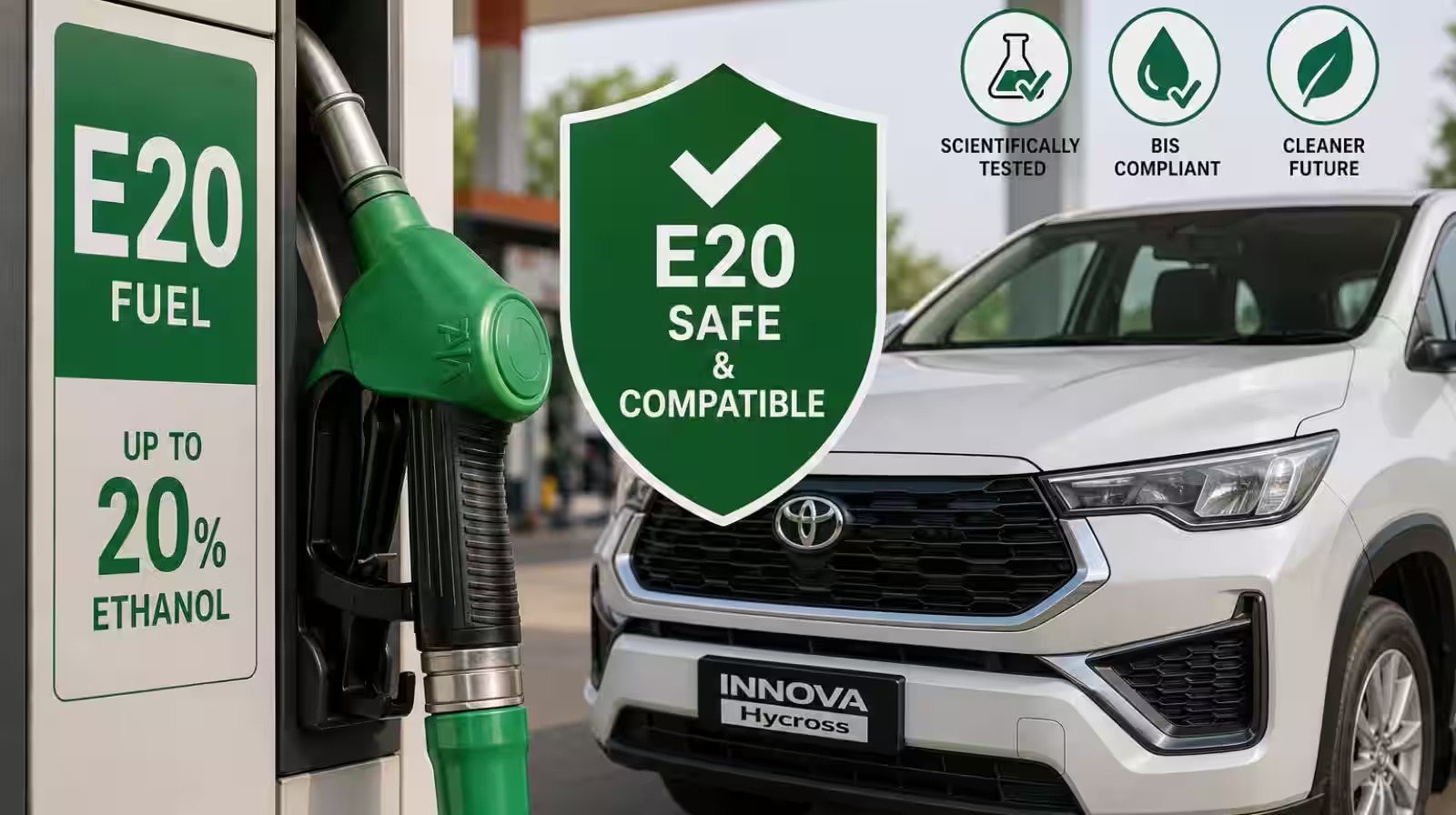
Toyota’s Vikram Gulati has addressed public concerns regarding E20 petrol, confirming that fuel efficiency loss is limited to 2-4%. He dismissed claims of engine damage as myths, highlighting the ethanol programme's role in boosting the rural economy, reducing import dependency, and enhancing vehicle performance through higher octane levels.
Toyota Kirloskar Motor’s Country Head Vikram Gulati clarifies that mileage reductions with E20 fuel are marginal, countering widespread consumer concerns regarding vehicle damage.
As India’s transition to E20 fuel—petrol blended with 20% ethanol—continues to gain momentum under the government’s green energy roadmap, concerns regarding fuel efficiency and engine health have surfaced among vehicle owners. Vikram Gulati, Country Head and Executive Vice President for Corporate Affairs and Governance at Toyota Kirloskar Motor, addressed these anxieties, stating that the impact of E20 petrol on mileage is limited to a minor 2–4% decrease.
The shift toward ethanol-blended fuel is a centerpiece of the Government of India’s strategy to reduce dependency on crude oil imports, enhance energy security, and provide an additional income stream for farmers. While the rollout has been met with both optimism and scrutiny, industry leaders are moving to separate technical reality from common misconceptions.
Addressing Myths on Vehicle Compatibility
A primary concern among the public involves the potential for E20 fuel to damage engine components in older vehicles. Gulati emphasized that these concerns are largely unfounded. Citing data from the Automotive Research Association of India (ARAI), he confirmed that the fuel blend is compatible with a broad range of vehicles, including those manufactured before the recent shift in emission norms.
"It is a myth that ethanol-blended petrol damages vehicles," Gulati noted, explaining that the automotive industry has conducted extensive testing to ensure that engines can handle the chemical composition of E20 fuel. Most vehicles sold in India since 2023 are explicitly E20-compliant, and a significant portion of older models also operate safely on the blend.
Why Performance Varies
While the energy density of ethanol is slightly lower than that of pure gasoline—leading to the cited 2–4% reduction in mileage—engineers highlight that ethanol's higher octane rating provides distinct performance benefits.
"Ethanol helps fuel burn more efficiently, which can lead to smoother acceleration and improved torque," industry experts have noted. In vehicles designed or tuned specifically for higher ethanol content, the fuel can actually result in a more responsive throttle, balancing out the slight loss in raw fuel economy.
Broader Economic and Environmental Impact
The ethanol blending programme is framed not just as an automotive shift, but as a critical economic driver for the nation. According to industry reports, the initiative has saved nearly ₹1.9 trillion in import costs since its inception, with a substantial portion of that capital flowing directly into the rural economy by supporting sugarcane and grain farmers who supply the raw materials for ethanol production.
Furthermore, as the country moves toward full compliance, the focus remains on decarbonization. By acting as an oxygenate, ethanol allows petrol to burn more completely, which helps reduce carbon monoxide and other particulate emissions, contributing to cleaner air quality in urban centers.
Why It Matters
The clarity provided by manufacturers is vital for consumers adjusting to the mandatory availability of E20 fuel at pumps nationwide. Understanding that the mileage drop is marginal helps debunk misinformation, while awareness of vehicle compatibility ensures that owners can maintain their engines without unnecessary concern.
Key Facts at a Glance
Marginal Impact: Mileage reduction when using E20 fuel is limited to approximately 2–4%.
Performance Factor: While ethanol has lower energy content, its higher octane rating can improve acceleration and engine combustion efficiency.
Economic Benefit: India’s ethanol programme has contributed nearly ₹1.9 trillion to the economy, primarily benefiting the agricultural sector.
Compatibility: Most vehicles produced in India post-2023 are fully E20-compliant, with many older models also capable of safely utilizing the blend.
FAQ
1. Does E20 fuel damage engines?
No. According to automotive experts and manufacturers, E20 fuel is safe for compatible vehicles. Engine issues occasionally reported by owners are often attributed to fuel contamination or maintenance issues rather than the ethanol blend itself.
2. How do I know if my vehicle is E20-compliant?
Most vehicles manufactured after April 2023 are designed to run on E20. You can verify your vehicle's compatibility by checking the owner’s manual, the inside of the fuel cap, or the manufacturer’s official website.
3. Will I notice a massive difference in mileage?
No. Studies suggest a marginal drop of only 2–4%, which is often imperceptible under normal driving conditions compared to the variations caused by traffic, tire pressure, and individual driving habits.
4. Why is India shifting to E20?
The shift aims to reduce the country’s high import bill for crude oil, support domestic farmers by creating a market for biomass-based ethanol, and significantly lower tailpipe emissions to meet environmental targets.
Official Sources